
Japanese physicist Yuichi Mori has been working on perfecting a method of “film farming” since 1995 when he created his company Mebiol.
Film farming gives us the ability to grow fruits and vegetables without the need for soil, pesticides, or other harmful chemicals, and uses 90% less water than conventional farming.
Mori uses a transparent polymer film made from permeable hydrogel, which happens to be an extremely absorbent material. The film’s surface has nano-sized pores that measure one-millionth of a millimeter in diameter. The film’s pores are small enough to block out viruses and bacteria, eliminating the need for harsh chemicals.
By using this method the plants can be grown on any flat surface, atop the film trapping and holding the water molecules. The roots spread to the sides underneath the film supporting and absorbing the water and nutrients. This stress causes the plants to create higher levels of phytochemicals, sugars, and amino acids, which in turn give the plants more flavor.
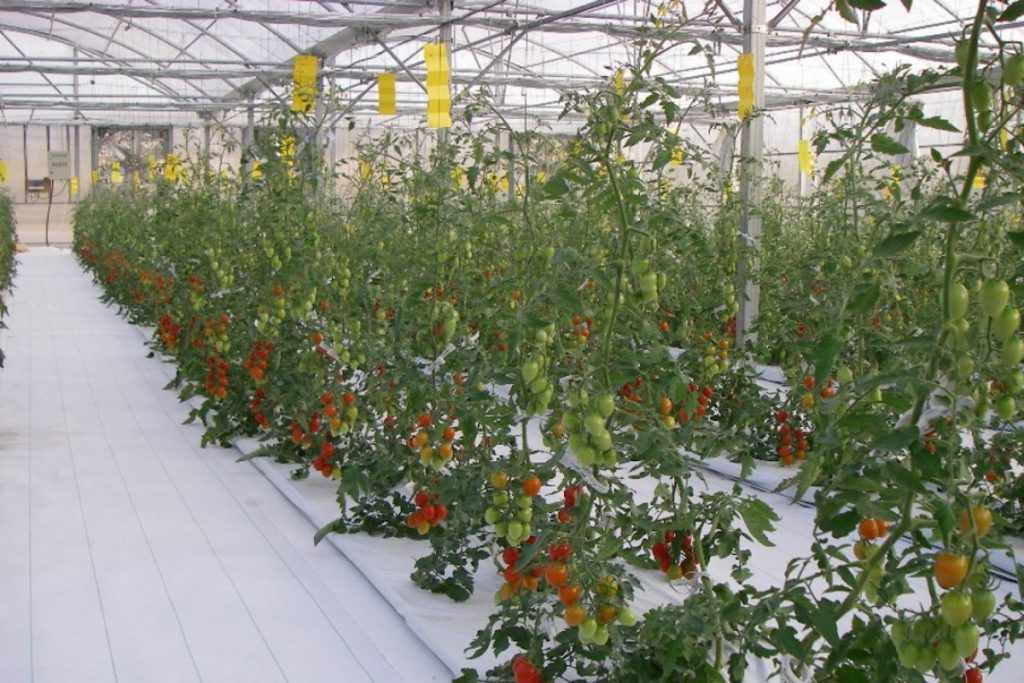
Mori came up with the idea when he was building an artificial kidney. Here he explains his process:
I adapted the materials used to filter the blood in renal dialysis treatments to the plant growth medium. Plants can solve many of society’s problems – from lifestyle diseases to environmental issues. I envisioned a world where we could take plants everywhere.
He started with just a small patch of grass on hydrogel film under LED lights, and then spent more than 10 years working with colleagues, before coming up with the current film farming method that can be used on a large scale.

Mori’s company, Mebiol, now has patents for the film farming in nearly 120 countries and is currently operating at more than 150 locations within Japan and one in China. He also has one operation in the United Arab Emirates, in the middle of the desert, with plans to export the technology to more of the Middle East and Europe later this year.
With the global population continuously growing, the world’s water supply continues to become of greater concern. It’s estimated that food production needs to increase by 50 percent by 2050 to feed the projected 9 billion people who will inhabit Earth.
We’ll need both food and water to ensure humanity’s survival and this technology gives us a lot more of both!
Mori’s final thoughts:
In many ways, plants are more remarkable than humans. I was always thinking of how to maximize the power of plants.


