
Nothing like this five-seater, all-electric, vertical take-off and landing tilt jet has ever existed before. It’s in the class of aircraft known as eVTOL (electric Vertical Take-Off and Landing) but otherwise, it is entirely unique. What sets it apart from other eVTOLs is the design. Rather than improving upon already thought up eVTOL models, the German startup, Lilium, redesigned the aircraft from scratch.
The Wings
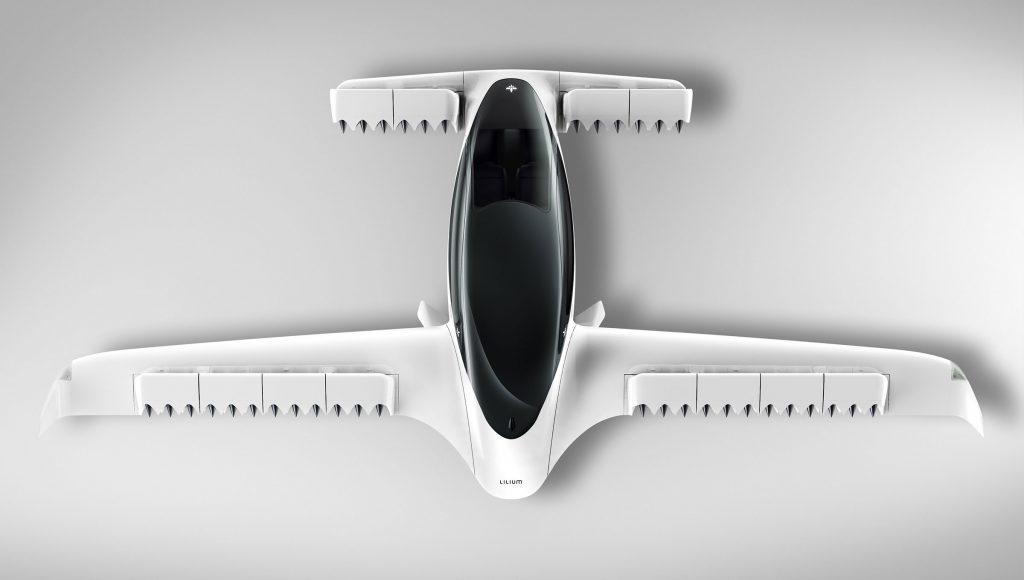
It features two sets of fixed wings rather than one like other aircraft. The main wings are positioned at the rear of the aircraft. They measure about 11m across. Each wing has four flaps.
The second set – the ‘canard’ wing (so-called because of its resemblance to a duck) – is located at the front. Each of the front wings has two flaps.
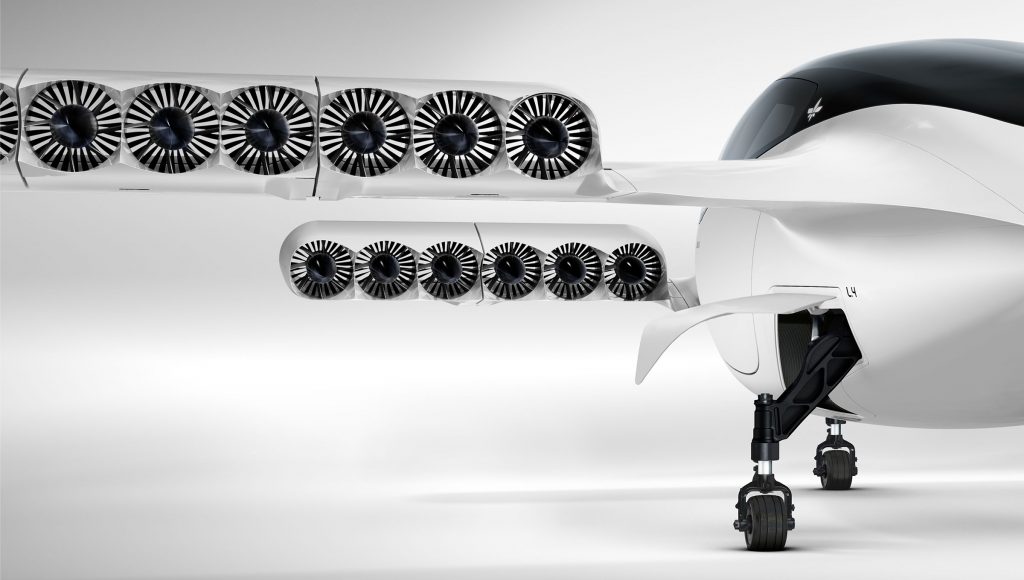
The flaps can each move independently. Mounted within each flap on all wings is three of the company’s pioneering all-electric jet engines. Mounting these engines into the flap allows them to pivot and change the direction of the thrust they create.
The reasons the aircraft has two wings:
- With one-winged aircraft, the wing has to go in the center, which makes accessing the cabin of the aircraft difficult for passengers.
- One wing also requires the design of the aircraft to be longer and include a tail to maintain stability – which isn’t great from a weight or ground-maneuverability perspective.
- Therefore, by redesigning the aircraft to have two wings – by introducing the shorter canard wing and pushing the bigger main wing to the back – they were able to generate more lift and control the aircraft more effectively. It also allows for a shorter body and conveniently easier access to the cabin for passengers.
36 Engines

The Lilium aircraft has a total of 36 small, electric ducted fans (engines). All the engines are nested within the tilting flaps in the wings. With these, it is capable of transitioning between drone-style VTOL hover and efficient, long-range winged aircraft modes. The engines just face downward for liftoff, landing, and hover, or tilt forward to draw air over the front and rear wings. This special feature makes the flight range longer and efficiency higher.
Simplicity Is Key
The company’s philosophy has always been that simplicity is key because “it makes the aircraft more robust, it makes it safer, it makes it easier to maintain and it lowers the cost to certify, manufacture and operate the aircraft.”
The one-of-a-kind Lilium Jet has no tail, no rudder, no oil circuits, no gearboxes, no variable pitch fan blades and only one moving part in the engines. The way it was designed eliminated the need for these components.
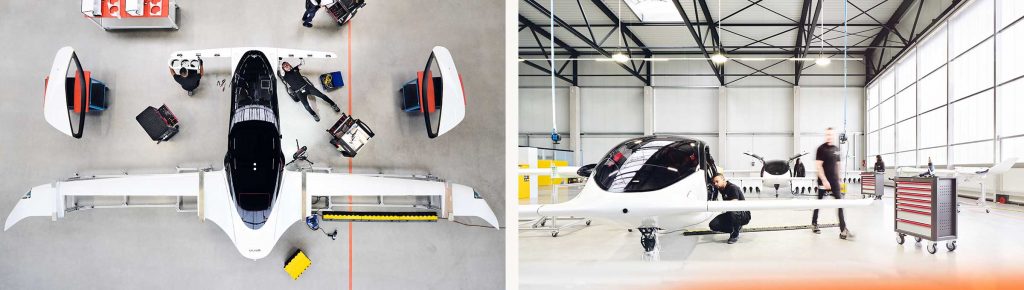
The plane is balanced as the engine casing (engine nacelles) performs the function of aerodynamic control surfaces and act like the ailerons and elevator of a normal aircraft. The company explains in a press release: “In pitch we control the balance with the canard wing, in roll we control with the main wing engine nacelles and in yaw we use the thrust of the engines to balance.”
Testing
Just six months after revealing their special aircraft, Lilium took to the skies, showing off speeds over 100 km/h (62 mph), and moving between VTOL and winged flight. You can see for yourself in the video below!
Coming Soon
So, when are we going to start seeing these things flying around the city? First, the company has to prove it has a way of avoiding catastrophic failure. Meaning, if the plane is going to crash, how can it be landed safely without harming anyone within the aircraft, and below it on the ground? The problem lies in how low the plane would be flying when used as a taxi service for short span flights. At high altitudes, it can glide land if moving too fast or use a ballistic ‘chute to bring the plane down slowly – but at low altitudes neither is possible.

Once it’s safety can be proven, it will have to get an aviation authority certification and provide a broader plan to address how these aircraft will best interact with city airspace when the 3D commuting revolution begins! Progress has already been remarkably fast so far meaning that the people behind this are very clever, they will surely figure all of this out, no problem.
The company has said they remain “on track to offer full passenger operations in several locations worldwide by 2025.” Obviously, all these final details are being taken care of. Within the decade you’ll be able to hail down a flying taxi that’ll quickly take you where you want to go!


