
Acting Interior Secretary David Bernhardt has announced that the U.S. Fish and Wildlife Service (FWS) will attempt to strip Endangered Species Act protections from gray wolves in the lower 48 states. Just an announcement occurred at a meeting of the North American Wildlife and Natural Resources Conference in Denver. However, an official proposal will be published in the Federal Register in the next few days, after which a public comment period will follow.

Bernhardt has been a key force behind the efforts by the Trump administration’s Department of Interior (DOI) to weaken the landmark conservation act. Although, this is not the first time in recent years that the FWS has attempted to delist gray wolves. During the Obama administration in 2013, there was also an attempt but it was struck down by federal courts. As of 2011, Gray wolves have already been delisted in the Northern Rockies region, including Montana, Idaho, eastern Washington, eastern Oregon, and northern Utah.
The debate over gray wolf protections reveals a tension between farmers, ranchers, and environmentalists regarding the wolf populations. Bonnie Rice of Sierra Club’s Our Wild America campaign was not pleased about this at all. She said in a statement:
“For over a hundred years, wolves have been needlessly persecuted. This is just one more example of the Trump Administration’s attacks on the Endangered Species Act and the vulnerable wildlife it protects. Wolves have barely started to recover in some areas, and still occupy only five percent of their historic range. Now is not the time to remove vital protections.”
Gray wolves were hunted nearly to extinction throughout America. It got to the point that there were only around 1,000 left in Minnesota when they were first granted protection in 1975. Since then, their numbers have slowly but steadily risen. There are more than 5,000 now living mostly in the Western Great Lakes and Northern Rockies regions, as well as Washington, Oregon, and California.
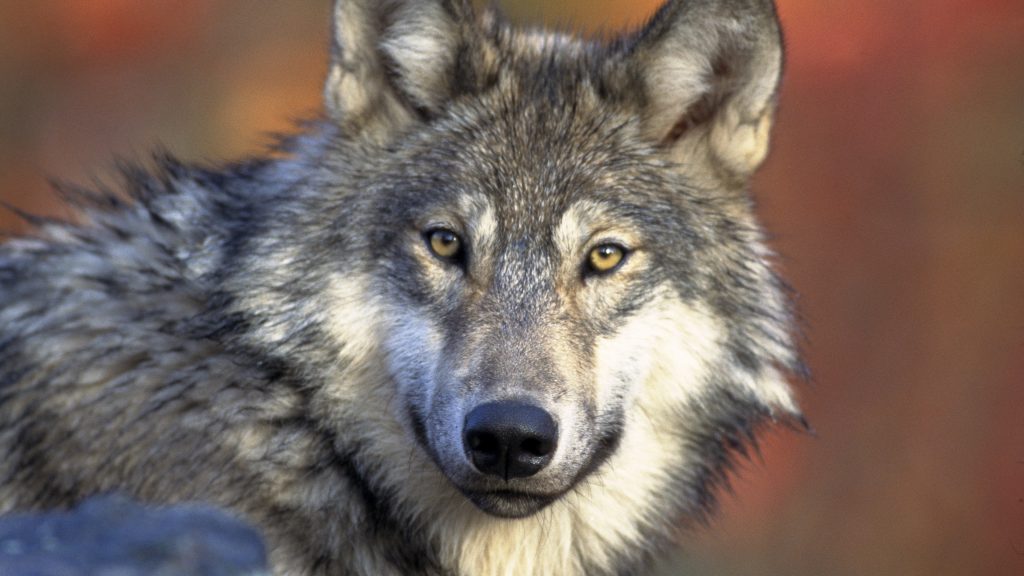
There are some people who think the population has recovered enough. These people are primarily ranchers and hunters who say the wolves are a threat to their livestock and game. For example, National Cattlemen’s Beef Association President Jennifer Houston and Public Lands Council President Bob Skinner released a joint statement in support of the proposal to delist the species.
On the other hand, wildlife advocates, think the species should be federally protected until it covers more of its historic range, which once extended across most of the lower 48 states. For now, they cover only five percent of their historic range, according to some conservation groups, while some analysts put the number at 15 percent. Furthermore, the advocates argue that wolves are in fact helpful for ecosystems, managing grazers like elk and protecting vegetation.
Animal Welfare Institute President Cathy Liss said in a statement emailed to EcoWatch:
“This attempt to eliminate crucial protections for gray wolves demonstrates an anti-predator bias that continues to influence wolf management decisions. The undeserved hostility toward wolves is not based on principles of sound scientific management. These apex predators play a vital role in ecosystems, contribute to a multibillion-dollar outdoor tourism industry, and are an iconic symbol of our beloved native wildlife.”
Michigan Technological University wildlife biologist John Vucetich said he was concerned what state management of their populations would entail. He says that the survival of the species would not be immediately threatened by delisting, but that it could be in the long run. “I do worry that some of the states could be overly aggressive and that wolves could fare worse than their current condition,” he said.
While Vucetich was questioning what state management could mean, Jamie Clark of Defenders of Wildlife was absolutely alarmed and uneasy even at the thought of it. “We don’t have any confidence that wolves will be managed like other wildlife,” she said. “We’re going to fight this in any way possible.”


