
Growing technological applications are expected to drive the growth of the photonics market. The demand for photonics is rising owing to its capabilities in converting optical signals into electronic signals. The market is projected to increase massively over the next few years as the photonics components market becomes even more valuable. This post will discuss what photonics is all about, who the leading players are and what the future looks like for the industry.
What Is Photonics?
Photonics is the science of controlling the flow of light. It is a branch of optics that deals with the generation, transmission, modulation, detection, and application of light in optical systems. Photonics technology has been applied to an incredibly diverse range of fields, including telecommunications, sensing, and imaging, using various Lasers and Optics. Photonics devices include lasers, telecommunications devices, and other imaging devices. But the potential for these photonic devices is vast, and in many areas of technology, the devices have been rapidly gaining traction. The market opportunity is high and mainly revolves around the construction and use of specialist equipment for a myriad of professional and academic applications.
How Is It Used?
Thanks to the accurate and non-invasive results photics can provide, it is used in several fields and industrial applications. These range from neuroscience to astronomy and have proved to be integral to many applications people take for granted these days.
Non-Destructive Testing
Non-destructive testing is the process of examining a material to detect flaws, defects, and other characteristics without the need to damage the object. The main advantage of non-destructive testing is that it provides more information about the state of a structure than destructive testing would. However, it can take longer to complete, and it may be more expensive than destructive testing. Nevertheless, phonics offers a reliable way to test a vast range of things without the need to disrupt their use.
Medical
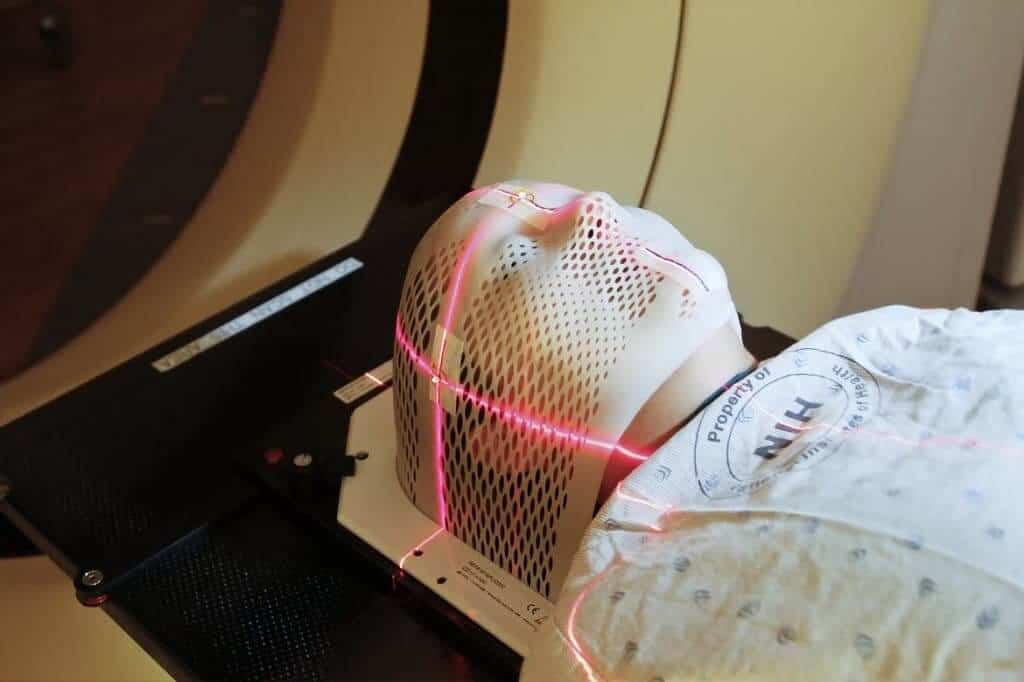
In the field of bioengineering, photonics is used to create high-resolution images of brain tissue. Photonics can be used for brain imaging because it can detect changes in neural activity by measuring the blood flow to a specific region of the brain. This can help doctors diagnose brain tumors and other diseases with more accuracy. Photonics also has many medical applications, like using lasers to remove cataracts from eyes or using infrared light to detect breast cancer cells in a mammogram.
Photonic Sensors
An electric signal is converted into light by a photonic sensor. They are used for a variety of applications, including:
- Lidar
- Laser-induced fluorescence
- Calorimetry
- Scintillation detection
- Spectroscopy
- Biological fluorescence detection
Many of these sensors are used extensively in industries such as alternative energy, autonomous driving, machine learning, optical networking, healthcare, and manufacturing automation.
Laser Diodes
Laser diodes are semiconductor lasers that emit light of a single wavelength. They are typically used as the light source in laser printers, barcode scanners, and optical disc drives. Laser diodes produce coherent light with a narrow spectrum focused on a tight beam. They have many advantages over other types of lasers, such as being more energy-efficient and more durable.
Photonic Integrated Circuits
Photonic Integrated Circuits (PICs) are a new type of integrated circuit made up of optical components. They can be used in a variety of ways, such as in telecommunications, defense, and high-speed computing. In the future, PICs will be used for more complex tasks that require high bandwidth data transfer. For example, they could help with medical imaging or processing large amounts of data.

Military
It should come as no surprise that one of the most significant applications of this technology comes from the military. While it is used for various applications, it is used most extensively in night vision technology. Specialist optics enable night vision equipment to intensify even the smallest amount of light to produce images on the visual or thermal spectrums.
Telecommunications
Photonic devices are used in telecommunications because they provide a more efficient way of transmitting data. The information is not converted from one form to another but instead transmitted in the form it was created. The photonic devices are made up of light emitters and receivers that can be connected to each other by optical fibers that transmit the light signals. This makes them more reliable and faster than traditional cables, which use electrons to transmit data.
Astronomy
In astronomy, photonics is used to detect and analyze light from distant stars that can’t be seen with the naked eye.
How Has The Photonics Industry Grown Over Time?
As you can see from the many industries it is used in; photonics is an essential technology. Moreover, due to the world’s reliance on technology and its thirst for ever-faster computers, the photonics market looks like it will expand enormously over the next few years. According to some reports the photonics market was valued at a truly staggering $589.82 billion in 2020 and is expected to double by 2026 with a compound annual growth rate (CAGR) of over 7% between 2021 and 2026. The growth can be attributed to an increase in demand for photonics devices in numerous industries, including those on the cutting edge of technology.
What Are Some of The Most Promising Applications For Photonics?
While already being implemented in various use cases, photonics looks set to revolutionize modern living. Some of the most innovative uses of photonics include:
- Quantum computing: Quantum computers are designed to be able to solve problems that are currently unsolvable by other computers. They are expected to be more powerful than any other form of computer and will have a considerable impact on society in the future. Because photons have outstanding low-noise properties and high-speed transmission, photonics is destined to play a pivotal role in such technologies.
- Autonomous vehicles: While it might take longer for the world to move to autonomous vehicles than initially expected, technologies such as Lidar (which relies on photonics) play a pivotal role in how these vehicles work.
- Manufacturing: As the world becomes ever more sophisticated, it needs the tools and equipment to keep up. This is where precision manufacturing comes in to create the tooling and hardware required to keep up with development.
The photonics industry is one of the largest globally and one of the least known. However, because it is used in a wide range of applications and only increasing in usefulness, the market looks set to grow even more over the next decade.


