
Plastic pack rings, also known as hi-cones or yokes, are a standard packaging device used around the globe for more than 50 years already. These rings are used to hold together multipacks of canned drinks, particularly beer. They have profoundly contributed to the growing amount of plastic pollution in the oceans and are a significant threat to marine life.
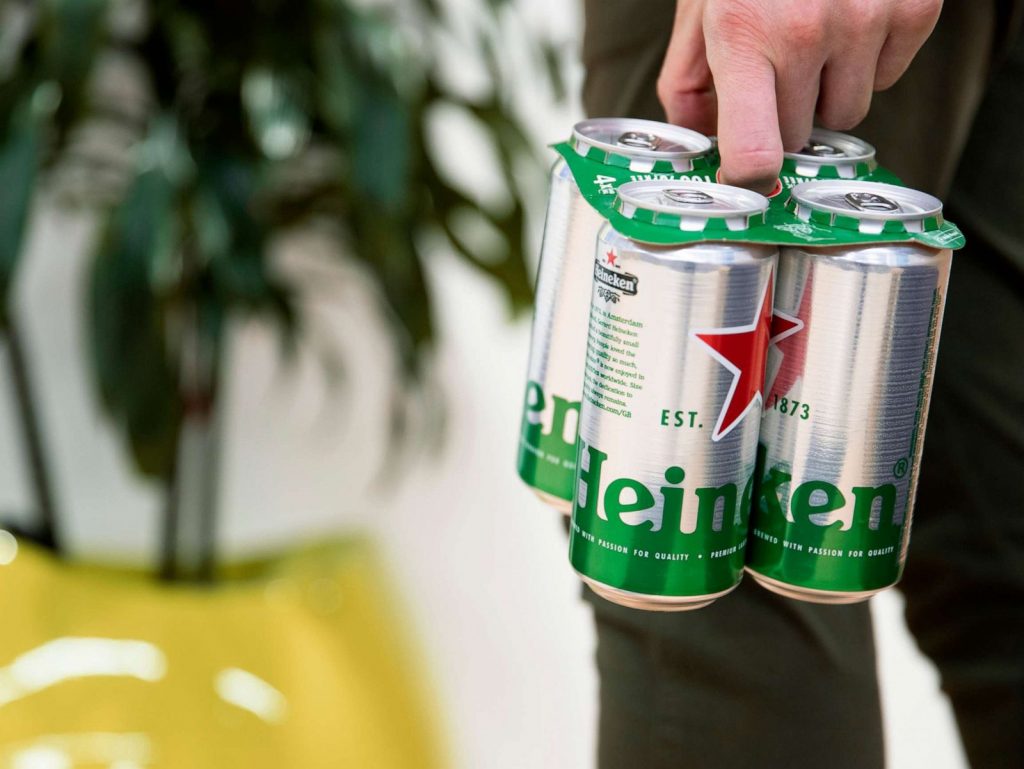
Thankfully, Heineken is closing its doors to single-use plastic rings and shrink wrap from billions of multipack cans. Now, the company is replacing all of the plastic with eco-friendly cardboard!
A spokeswoman from the Marine Conservation Society said, “This is an interesting development [from Heineken] and will help cut down the amount of plastic on our beaches and in our seas. These kinds of can yokes are regularly found on our beach cleans.”
Eliminating Plastic Packaging

These new can holders are made of recycled cardboard and are strong enough to take on the weight of a multipack. Heineken’s adoption of this cardboard alternative will lead to over 517 tons of plastic eliminated from the packaging of its brands.
The Dutch company has already invested £22m in new technology and production facilities at their sites in the UK. By April 2020, these sites should be ready to start rolling out the changes across the company’s most popular brands, including Heineken, Foster’s, and Kronenbourg 1664. Following after, all its other brands in multipack cans will change to the new material as well, such as Strongbow, Bulmer’s, Red Stripe, and John Smith’s. The company aims to accomplish this all by the end of 2021.
Out of the brewer’s 190 world markets, the UK is the first to introduce this new packaging. This change is a big step towards a less polluted future. The UK produces 530 million cans per year across all its brands; among these, Foster’s accounts for 150 million and Heineken 39.5 million.
The Demand for an Eco Alternative
After BBC One’s Blue Planet II series highlighted marine litter, the majority of the public has backlashed over plastic packaging. The public’s reaction has prompted manufacturers and supermarkets to take action and convert to eco-friendly products.
The head of marketing at Heineken, Cindy Tervoort, said, “It’s what our customers want and expect, and we have been working on and testing this innovation for three years.”
Additionally, Heineken claims that with the introduction of their new eco-friendly materials, carbon emissions associated with producing multipack cans will be cut by one third.
Other Brewers Finding Alternatives
In 2018, Carlsberg announced plans about replacing their rings with recyclable glue. Diegeo started to phase out plastic packaging from multipacks of its Guinness, Harp, Rockshore, and Smithwick’s beers and replaced it with cardboard packs.
In September 2019, Budweiser said that by the end of 2020, it would remove all single-use plastic pack rings from its entire selection of UK produced beer. This selection includes Budweiser’s bestselling brands such as Stella Artois, Budweiser, and Bud Light. Beyond packaging, Heineken is also tackling sustainability at the production level, converting beer waste into renewable energy to power its brewing operations.


