
A team from the Netherlands developed an experimental VTOL (vertical take-off and landing) aircraft that took flight for over three hours when tested.
VTOL drones are versatile; they combine the fast and efficient forward flight of a fixed-wing airplane with the vertical flight of a helicopter. This one, however, features an extended range because it has a fuel cell power system.
The aircraft was developed by engineers from the Netherlands’ Delft University of Technology, together with the Netherlands Coastguard and the Royal Netherlands Navy. It weighs 13 kg (29 lb), has a 3-meter (9.8 ft) wingspan, and includes 12 motor/propeller units across its two wings. Impressively, if several of the motors malfunction, it can reportedly still fly and land successfully.

The drone’s tail-sitter-type qualities enable its body to angle upwards when taking off and landing. This feature allows the propellers to function as a helicopter’s rotor blades. Regarding forward flight, the thrust is electronically redistributed to the 12 motors, causing the aircraft to even out into a horizontal position.
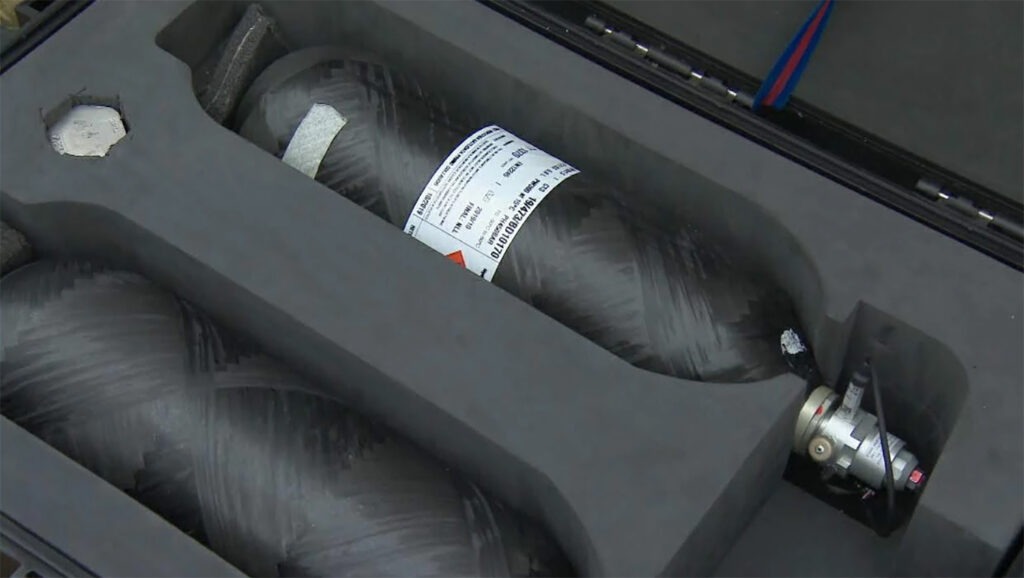
Finally, it features an 800-watt fuel cell, which is fed by a 300-bar, 6.8-liter carbon composite hydrogen cylinder. When the aircraft is in forwarding flight, the motors are powered exclusively by that fuel cell, which also recharges an onboard battery pack. Take-offs and landings require more power than cruising the skies; therefore, both the battery and the fuel cell power the motors during that time.
The team took the newly developed aircraft for a testing round on a coastguard ship off the Dutch coast. The drone took off from the deck, then flew over the ocean for 3.5 hours before making its way back to the vessel and landing gracefully.
The aircraft could ultimately find use in applications such as investigations, surveys, scouting, and inspections.


