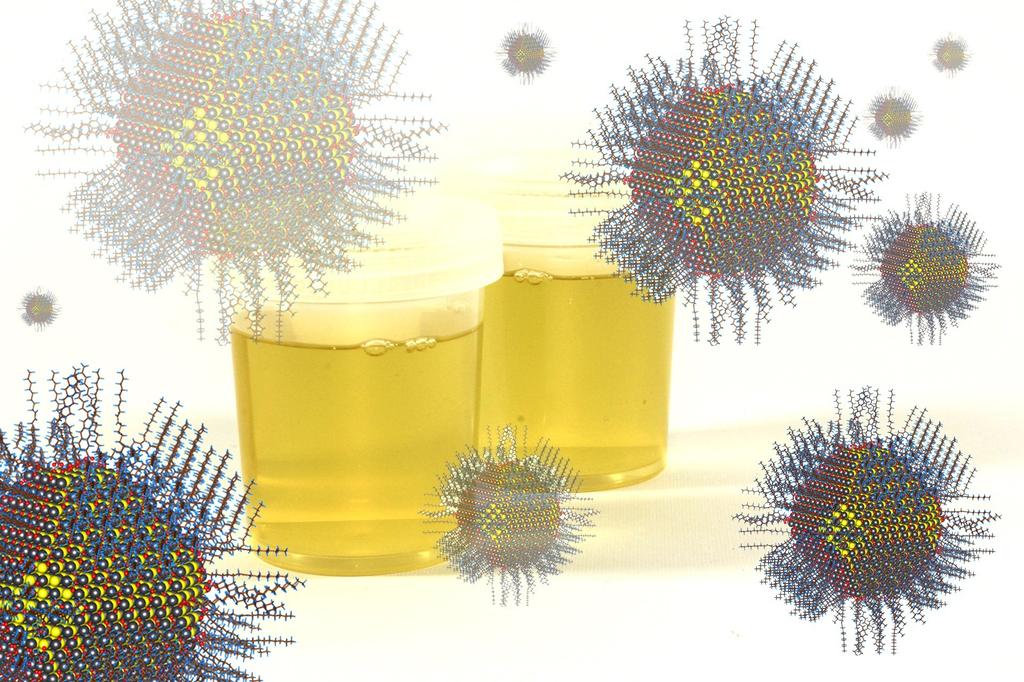
MIT researchers developed a nanoparticle-based approach for early diagnosis of lung cancer. It involves inhaling or injecting the sensors that react with the tumor cells in the body and enable a urine test to detect the presence of proteins linked to the disease. It’s a non-invasive and quick way to pick up on biomarkers and thus detect cancer early on.
Sangeeta Bhatia, who is a member of MIT’s Koch Institute for Integrative Cancer Research, said:
“If you look at the field of cancer diagnostics and therapeutics, there’s a renewed recognition of the importance of early cancer detection and prevention. We really need new technologies that are going to give us the capability to see cancer when we can intercept it and intervene early.”

Bhatia’s lab has been developing nanoparticles to detect disease for several years now. Her team has published many studies that show how the technique can be used to detect colon cancer, ovarian tumors, and pneumonia. Now, they’ve applied the approach to detecting lung cancer.
The nanoparticles detect illness by interacting with enzymes called protease. To detect cancer, the nanoparticles are coated with short protein fragments called peptides that are targeted by protease linked to cancer cells. Those protease enzymes help the tumor cells roam around the body by cutting through proteins of the extracellular matrix. In the case of pneumonia, the nanoparticles detect protease enzymes that are produced by microbes. When protease enzymes split the peptides, they release a biomarker that can be detected in a urine sample.
Lung cancer is usually diagnosed using computed tomography (CT) scans. Unfortunately, the scans reveal real tumors only about 5% of the time, and the rest are false positives. Some people (for example, heavy smokers) have to get screened regularly for lung cancer with CT. As you can imagine from the statistics, many of them end up having to perform biopsies when the CT scan detects benign nodules in the lungs and mistakes them for tumors.
Bhatia said:
“The CT scan is a good tool that can see a lot of things. The problem with it is that 95 percent of what it finds is not cancer, and right now you have to biopsy too many patients who test positive.”
In mouse model experiments, the nanoparticles for lung tumors revealed the presence of cancer as early on as five weeks in one strain of mice and 7.5 weeks in another. This is comparable to or better than the accuracy of CT scans, according to the researchers.
Their intention is for the urine test to complement existing diagnostics methods, not replace them. It would be an alternative to biopsy after a positive CT screening result, offering a non-invasive option to investigate further if there is cancer.
A second potential application would be to use the technology to monitor how well a treatment is working in patients who already have cancer and are on drugs or immunotherapies. The sensors could reveal if the person is on the right medication. Likewise, for pneumonia, the sensor could be used to gauge whether antibiotic therapy has successfully treated the infection.
Bhatia said:
“The sensors can help you distinguish between whether there are infection and inflammation, versus inflammation and no infection. What we showed in the paper is that when you treat with the right antibiotic, the infection goes down but the inflammation persists.”
A urine test is also cheaper and simpler to administer. Perhaps such a test could be useful in poor regions of the world.