
A spin-off company called Kenoteq, from the School of Energy, Geoscience, Infrastructure, and Society at Heriot-Watt University, has recently won the prestigious innovation award at the 2019 Scottish Resources Awards. Professor Gabriela Medero has worked for the past 10 years to create K-Briq, a construction brick made from 90 percent construction waste materials.
“I have spent many years researching building materials and have been concerned that modern construction techniques exploit raw materials without considering that they are amongst the largest contributors to carbon emissions. The amount of waste they produce is not sustainable long-term,” said Medero.
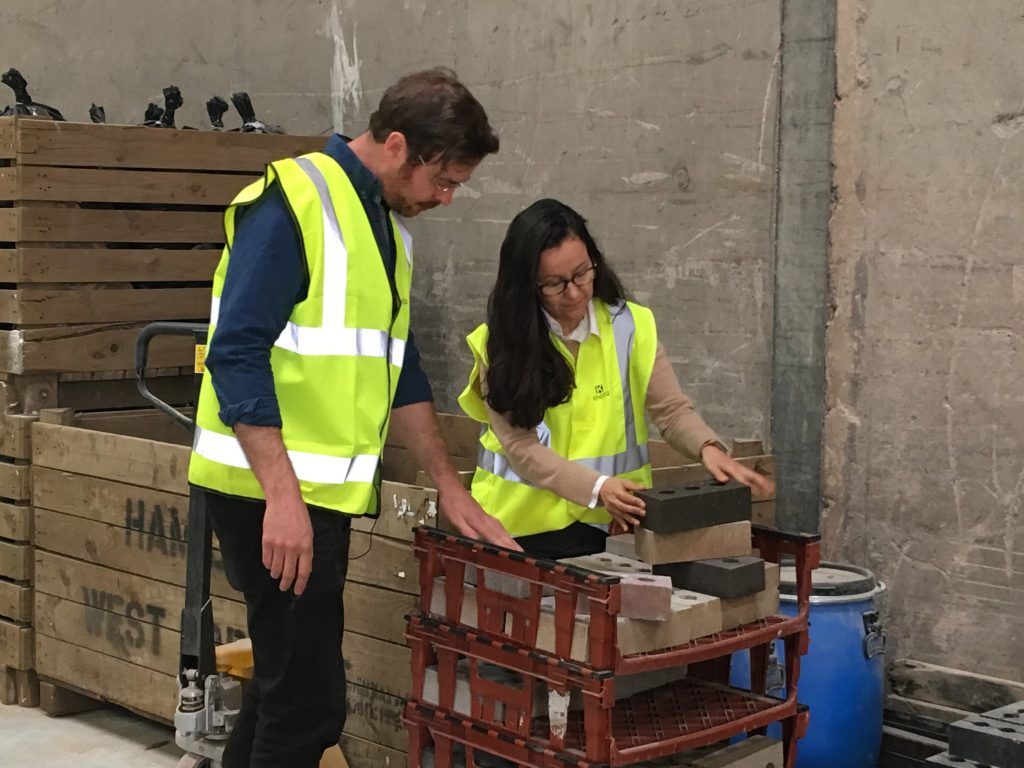
The K-Briq looks like a normal brick, and the weight is about the same, but they have better insulation properties. They can also be made in any color, according to Professor Medero.

She was a keynote speaker at the Scottish Resources Conference, where she explained the K-Briq:
We are extremely proud that Kenoteq has been recognized at these important awards. Because it is unfired, the K-Briq produces a tenth of the CO2 emissions of a traditional fired clay brick and requires less than a tenth of the energy in its manufacture. This year, we have invested in machinery that can produce three million bricks per year. We’ve also put thousands of bricks through rigorous testing so that the K-Briq is now commercially available to construction clients.
The K-Briqs will be produced on-site at Hamilton Waste & Recycling, and are a good example of a circular economy, eliminating the need to import and further reducing carbon emissions.
Dr. Sam Chapman is part of the team at Kenoteq, he explained the sustainable impact this can have on the building industry:
Up to 85 percent of bricks used in Scotland are currently being imported from England or Europe raising considerable questions about the long-term sustainability of the sector. We want to see this change as Scotland works towards lower emission and higher recycling targets. The Scottish government has set very high targets for housebuilding with 50,000 new homes earmarked for construction in the next three years. We hope Kenoteq will be part of those homes.
The Kenoteq K-Briqs have been selected for the construction of the Serpentine Pavilion 2020, which is celebrating its 50th anniversary and recognizes international artists. The pavilion is located in London’s Kensington Gardens and will feature various sustainable materials.
“We are proud to be scaling it up to meet both the needs of the construction industry and to support the sustainability targets of both the Scottish and UK governments,” said Medero.
Kenoteq receives funding and support from its partners at Zero Waste Scotland, Scottish Enterprise, and the Construction Scotland Innovation Centre.


