
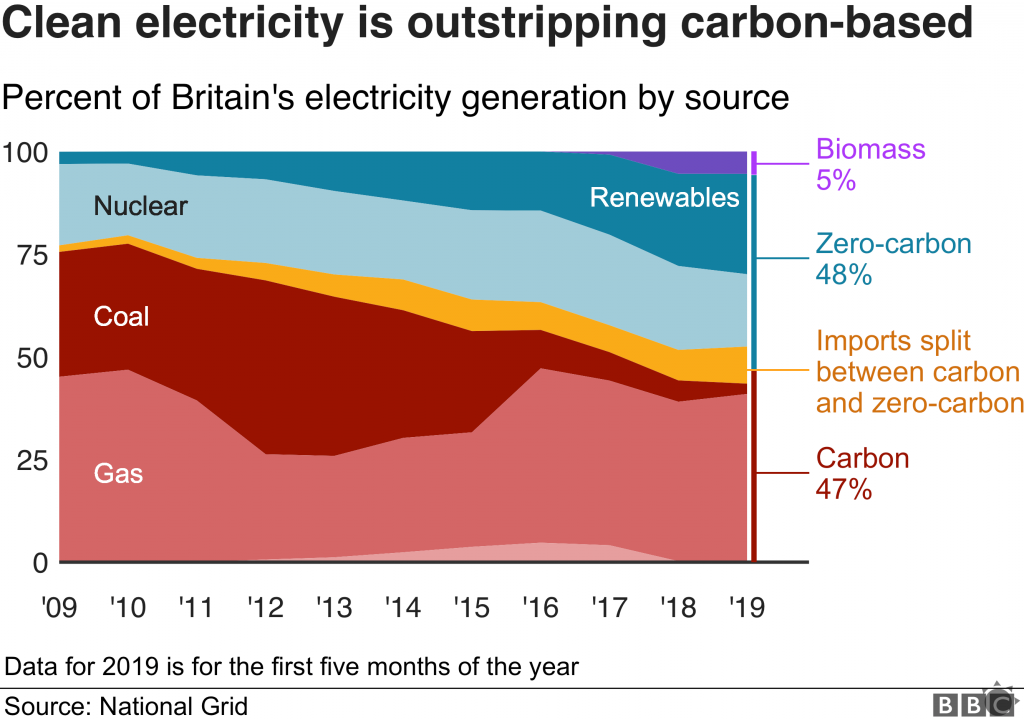
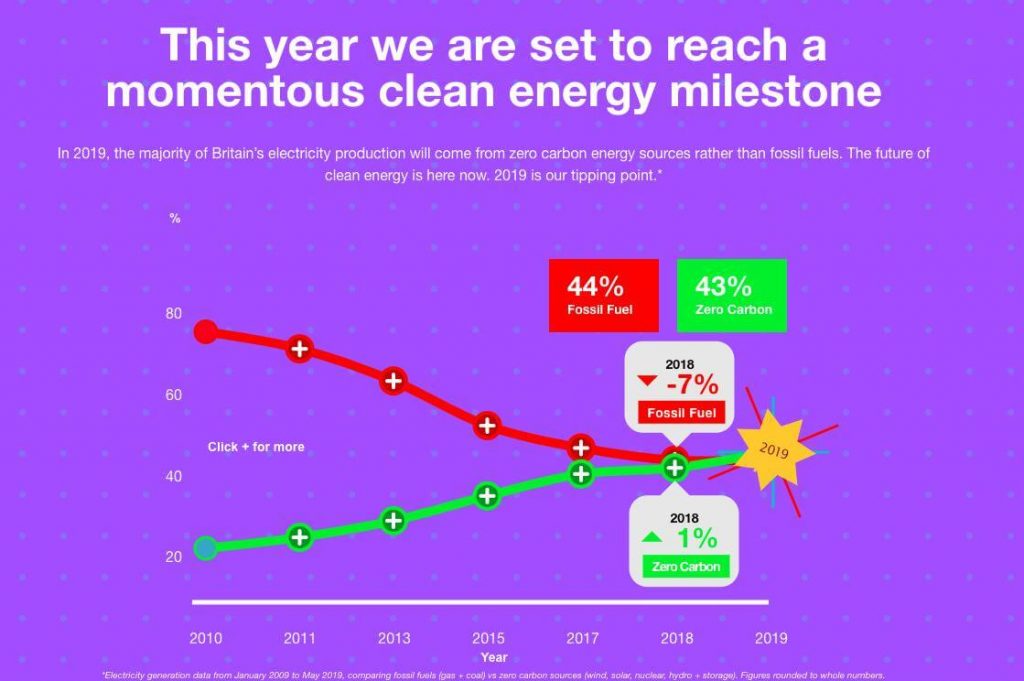
Official data from 2018 shows that for the first time in history low-carbon energy was used to generate more than half of the electricity used in the UK. Almost 53% of power generation last year was made up of renewable energy combined with nuclear reactors. These numbers from the government’s annual review of energy statistics show how renewable energy is rapidly rising, a very good thing if the trend continues.
 The UK’s capacity to generate power from the sun, wind, water, and waste grew by 10%. This increase pushed renewable energy sources to set a new record. Renewables alone met a third of the UK’s power generation. Meanwhile, the UK’s use of coal fell by a quarter to a record low of just 5%.
 In recent years there has been a string of record green energy records broken as the UK undertakes more renewable energy projects and shuts down old, polluting coal plants. For example, the winter that just passed was the greenest ever recorded due to windy weather and dwindling coal-fired power, said the National Grid. Coal and gas plants together made up less than 45% of the UK’s electricity last year as the rise of renewables edges them out.
 Emma Pinchbeck, the deputy chief executive of Renewable UK, said:
The record-breaking figures clearly show that investment in renewables and the government’s championing of offshore wind is delivering rapid change to our energy system. As well as helping keep prices down for consumers and boosting the competitiveness of our businesses, renewables are a huge economic opportunity, bringing employment and investment to all parts of the UK.
Earlier this year the government promised developers the chance to compete for a share of £557m of state subsidies in exchange for industry investment of £250m over the next 11 years. The deal could help offshore wind grow to 30% of the UK’s electricity by 2030. By achieving such a milestone, the UK would be on track towards its 2050 target to cut emissions from the economy to net zero.
 However, ministers have refused to lift a block on support for new onshore wind farms, which are unable to compete for subsidies even though they are one of the cheapest forms of electricity.
Pinchbeck said:
To achieve its net zero ambitions, the new government needs to go further and faster – and the first steps should be removing the barriers to onshore wind which is our cheapest source of power, and building on our successes in innovative technologies like tidal energy and floating wind where the UK can be a world leader.


