
In today’s world, plastic pollution has spiraled far beyond the conspicuous litter along riverbanks and coastlines. New research reveals a more insidious invader: microplastics, now found in human testicles. This discovery signals alarming implications for human health and the broader ecosystem. These tiny particles, often invisible to the naked eye, have infiltrated the very fabric of our existence, raising concerns about their long-term impacts.
Groundbreaking Microplastics Research
Unveiling the Findings
Researchers from the University of New Mexico have discovered significant concentrations of microplastics in the testicular tissue of both humans and dogs. This study, led by Dr. Xiaozhong “John” Yu, highlights the unprecedented penetration of these particles into the reproductive system. Utilizing advanced analytical methods, the team identified 12 types of microplastics in 47 canine and 23 human testicular samples.
Methodology and Results
The researchers used a sophisticated process to isolate and quantify the microplastics. This involved chemically treating the samples to dissolve fats and proteins, followed by ultracentrifugation to separate the plastic particles, which were then analyzed using a mass spectrometer. The findings were startling: human testicular tissue contained an average of 329.44 micrograms of microplastics per gram of tissue, nearly three times higher than in dogs.
The study identified polyethylene (PE) as the most prevalent polymer in both species, commonly used in making plastic bags and bottles. Dogs showed a significant presence of PVC, a plastic used in plumbing and various industrial applications. High levels of PVC in canine tissue were correlated with reduced sperm count, raising concerns about potential reproductive harm.
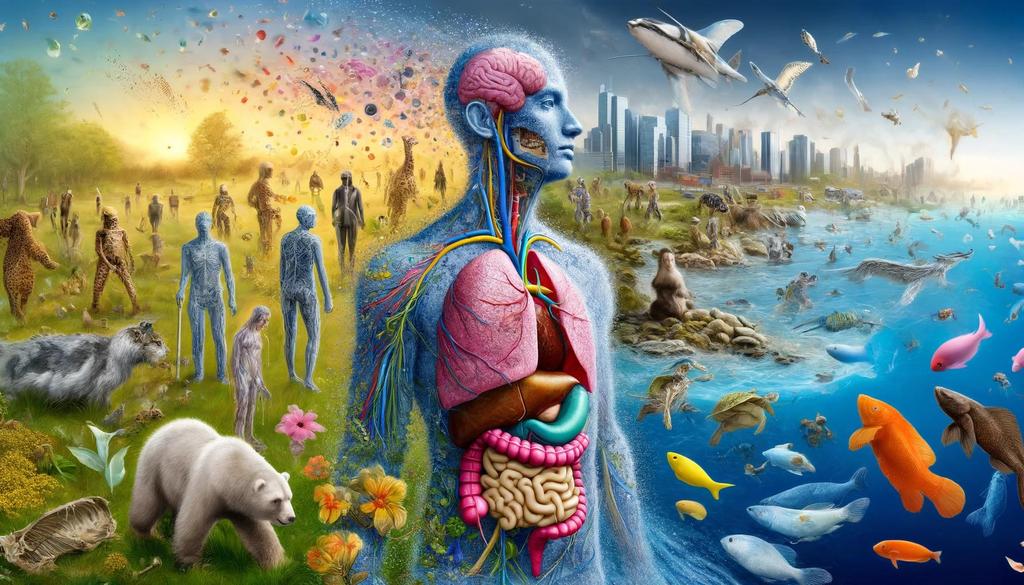
Microplastics in All Living Beings
The pervasive presence of microplastics in the environment and within the human body is not just an isolated issue but a broader environmental and public health crisis. These microscopic particles, resulting from the degradation of larger plastics through ultraviolet radiation and physical wear, are now ubiquitous in the air, water, and soil. The implications extend beyond the presence in testicular tissue to potential impacts on overall health, including hormonal disruptions, metabolic diseases, and reproductive disorders.
A study by the German Environment Ministry and the Robert Koch Institute found that 97% of children tested had high levels of toxic plastic byproducts in their bodies. These findings are particularly concerning as children’s bodies are more susceptible to hormonal dysfunctions, which can lead to obesity, developmental delays, behavioral issues, and cancers.
Invisible Web of Contamination
The pervasiveness of microplastics has created an invisible web of contamination intersecting every aspect of life. Everyday items such as packaging, clothing, and household goods contribute to this omnipresent problem. As these materials break down, they release microplastics that enter the food chain, infiltrate drinking water, and even become airborne, making them nearly impossible to avoid.
Alarmingly, research indicates that these particles can mimic hormones and disrupt the endocrine system, exacerbating conditions like infertility, diabetes, and thyroid disorders. Given the profound implications for human health and the environment, addressing microplastic pollution must become an urgent priority for both policymakers and the global community.

Potential Solutions and Future Directions
The unprecedented findings call for immediate action and future research directions. While the detection of microplastics in human testicles is a dire revelation, it also opens pathways for scientific innovation and robust policy measures.
- Enhanced Filtration Technologies: Innovations in water treatment facilities to filter microplastics before they enter broader water systems.
- Biodegradable Alternatives: Development and widespread adoption of biodegradable plastics to reduce future accumulation.
- Personal and Public Measures: Awareness campaigns to educate the public on reducing plastic use and avoiding exposure.
- Regulatory Frameworks: Stricter regulations and policies to limit plastic production and promote recycling.

A Glimpse into the Future
While the findings on microplastics are alarming, they also push us towards a critical juncture. Tackling plastic pollution requires a multifaceted approach involving technological innovations, regulatory measures, and public awareness. Researchers must continue exploring the exact pathways of microplastics into the human body to develop targeted solutions that minimize their health impacts.
Moving forward, a key question is how these technologies and strategies can synergize to form a comprehensive mitigation plan. It’s evident that avoiding plastics entirely is virtually impossible in the current age, but significant reductions and substitutions can pave the way toward a healthier ecosystem and population.
Call to Action: Addressing Invisible Microplastic Threat
The discovery of microplastics in human testicles underscores the severe and omnipresent threat of plastic pollution. As we delve deeper into understanding the ramifications, it becomes imperative to act decisively and innovate continuously. This newfound knowledge serves not as a cause for fear but as a catalyst for meaningful change and robust scientific exploration.
The health of future generations hinges on our ability to mitigate the spread of microplastics and prevent further environmental degradation. In essence, while these micro-intruders are invisible, their impact is monumental, demanding our utmost attention and intervention.


