
NASA just released new images focusing on air pollution in the northeastern United States along I-95 from Washington, D.C. to Boston. As you might expect the air quality has improved dramatically.
The images show average concentrations of atmospheric nitrogen dioxide (NO2), which primarily comes from human activities such as transportation and electricity generation. It’s safe to say that the majority of the improvements are from people staying at home.
NASA measures the data with the Ozone Monitoring Instrument (OMI) that is part of the NASA Aura satellite, which is then processed in Greenbelt, Maryland at the Goddard Space Flight Center.
The data compared images each year from March 2015 to March 2020, indicating a 30 percent drop in nitrogen dioxide levels this year due to the coronavirus lockdown. Further analysis shows that “March 2020 shows the lowest monthly atmospheric nitrogen dioxide levels of any March during the OMI data record, which spans 2005 to the present,” stated the NASA report.
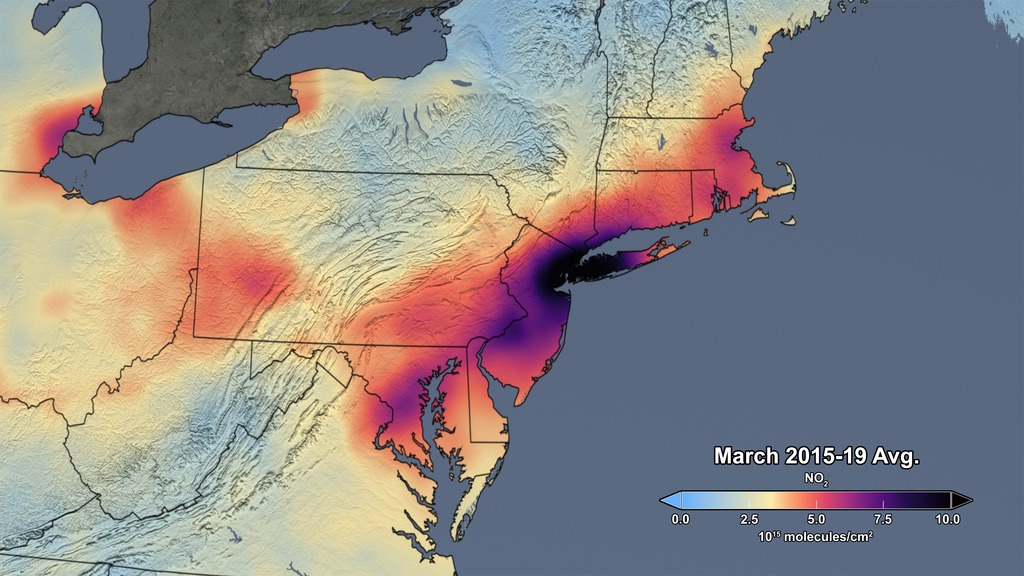
The NASA report explains how these images help scientists:
If processed and interpreted carefully, nitrogen dioxide levels observed from space serve as an effective proxy for nitrogen dioxide levels at Earth’s surface, though there will likely be differences in the measurements from space and those made at ground level. It is also important to note that satellites that measure nitrogen dioxide cannot see through clouds, so all data shown is for days with low cloudiness. Such nuances in the data make long-term records vital in understanding changes.
Nitrogen dioxide is one of a group of gases known as nitrogen oxides (NOx), and it poses the greatest risk to human health. According to the American Lung Association, nitrogen dioxide causes a wide range of harmful effects on our lungs including:
- Increased inflammation of our airways
- Reduced lung function
- Increased asthma attacks
- Worsened coughing and wheezing
Aside from causing lung deficiencies NO2 causes cardiovascular harm, lowers the birth weight in newborns and increases the risk of premature death.
NO2 has also been linked to increased psychotic experiences in adolescents.
I-95 is one of the most heavily traveled roads connecting major cities in the northeast, so this study certainly comes as no surprise. But, it brings to light just how many deadly emissions humans are producing every day without even thinking about it.
Statistically, cars, trucks, and buses are the largest sources of emissions followed by power plants, diesel-powered heavy construction equipment, and industrial boilers.
It’s pretty amazing after seeing these NASA images to think the Trump administration and the Environmental Protection Agency are releasing a new policy to allow for more vehicle emissions. The new policy will allow for hundreds of millions of tons more CO2 than policies in Europe and Asia.
There is still time for the people in charge to swallow whatever little pride they have left and do what is right for the citizens and the planet. Let’s see how much they actually care.


