
Norway leads the world with its incredible recycling scheme, achieving a 97% recovery rate on all plastic bottle waste. Through a company founded in 1999 called Infinitum, the Scandinavian country has developed one of the most efficient ways of recycling plastic bottles. The results are so outstanding that several nations are coming to Norway to learn how they run the scheme so that they can follow suit.
The company wrote on their website:
“In 2014, we changed our name from Norsk Resirk to Infinitum. Our new name is inspired by the infinite number of times you can recycle a bottle or can in our deposit scheme. This means a lot to us and to our environment.”

Up to 92% of recycled bottles hold such high-quality material that they can be reused again in drink bottles, sometimes more than 50 times. This is an incredible achievement, considering 91% of plastic produced worldwide isn’t recycled, and eight million metric tons of wind up in the sea every year. For example, in the UK, the recycling rate for plastic bottles is anywhere between 20% to 25%, and in the US, it’s about 30%.
Without a financial incentive, consumers and companies have no motivation to do the right thing for the environment, which is why Norway has given recycling value.
For businesses working in regions without similarly effective collection systems, funded plastic recovery projects offer another way to finance collection, sorting, and processing.

How does the scheme work? Norway’s model is formed on a loan scheme, where the plastic bottle consumers purchase does not belong to them; they only borrow it. When a consumer buys a bottle, they are charged a small fee of about 13 to 30 US cents, depending on the size.
The fee can then be redeemed in many different ways. Consumers can take their plastic bottles to a ‘reverse vending machine,’ which gives them back their money after scanning the deposited bottles’ barcodes. However, they must return the bottle empty with no liquid, or the machine will give the deposit to the shopkeeper instead, who will have to empty the bottle. They can also return it to gas stations and various small shops for store credit or cash. Shop owners benefit from the scheme because they receive a small fee for each bottle they recycle, and some claim it has even increased their business.
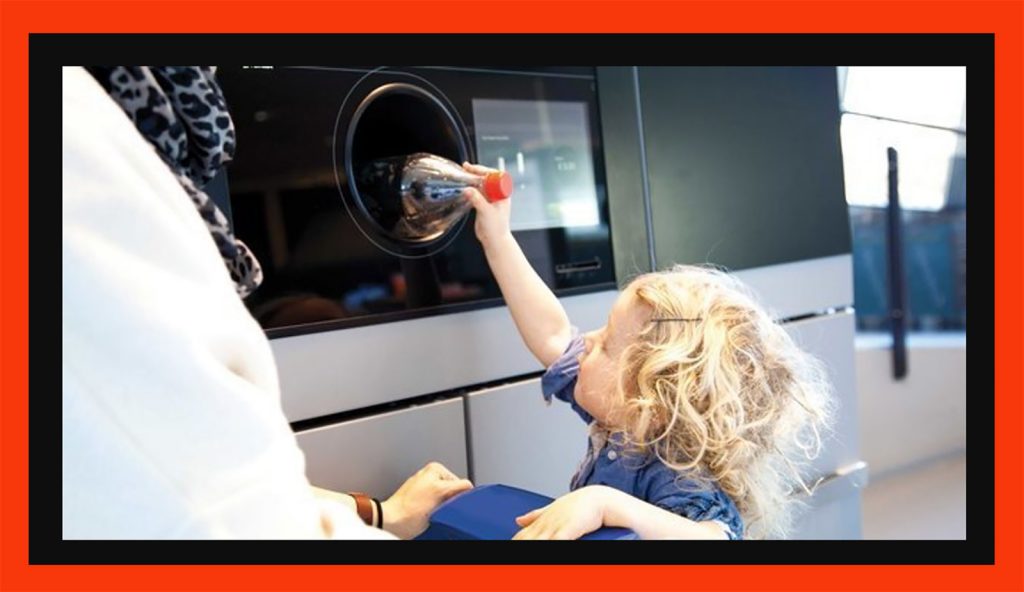

Kjell Olav Maldum, Infinitum’s CEO said, “We want to get to the point where people realize they are buying the product but just borrowing the packaging.”
Consumers aren’t the only ones getting taxed. The government is also putting an environmental tax on plastic producers, which can be reduced as improvements grow. If nationwide recycling reaches 95%, then every producer is excused from the tax. Impressively, the country has already reached this target every year for the past seven years.
The scheme has proven so efficient that representatives from several countries, including Australia, India, China, Scotland, and others, have contacted Infinitum because they want to follow their lead. Inspired by Norway’s reverse vending machines, Coca-Cola also introduced similar devices across UK attractions and is looking into applying the scheme across the nation.


