On October 25, Blue Origin, the spaceflight company founded by Jeff Bezos, and commercial space company Sierra Space unveiled plans for a space station called Orbital Reef. The commercially developed, owned, and operated open-system architecture space station would be built into low-Earth orbit between 2025 and 2030 before the International Space Station (ISS) retires.
The ISS will retire before 2030, and the latest findings of cracks in some of the oldest ISS modules indicate that this deadline is determined less by policy and more by the structure reaching the end of its life. With this in mind, engineers have accelerated moves to replace the ISS with a commercial equal. The latest of these proposals is the Orbital Reef, which Blue Origin and Sierra Space will build with space industry leaders and teammates, including Boeing, Redwire Space, Genesis Engineering Solutions, and Arizona State University.


The Orbital Reef’s specifications haven’t been disclosed, but here are some details of the program and how the companies and partners are contributing:
- Blue Origin will build the large-diameter core modules and the reusable heavy-lift New Glenn launch system to place them into orbit.
- Sierra Space will provide a Large Integrated Flexible Environment module, a node module, and a Dream Chaser spaceplane for ferrying the crew, supplies, and payloads to and from Earth.
- Boeing will develop the Science module and handle maintenance engineering and station operation, while its Starliner crew spacecraft will also visit the platform.
- Redwire Space will work on microgravity research, development, and manufacturing, as well as conducting payload operations and deployable structures.
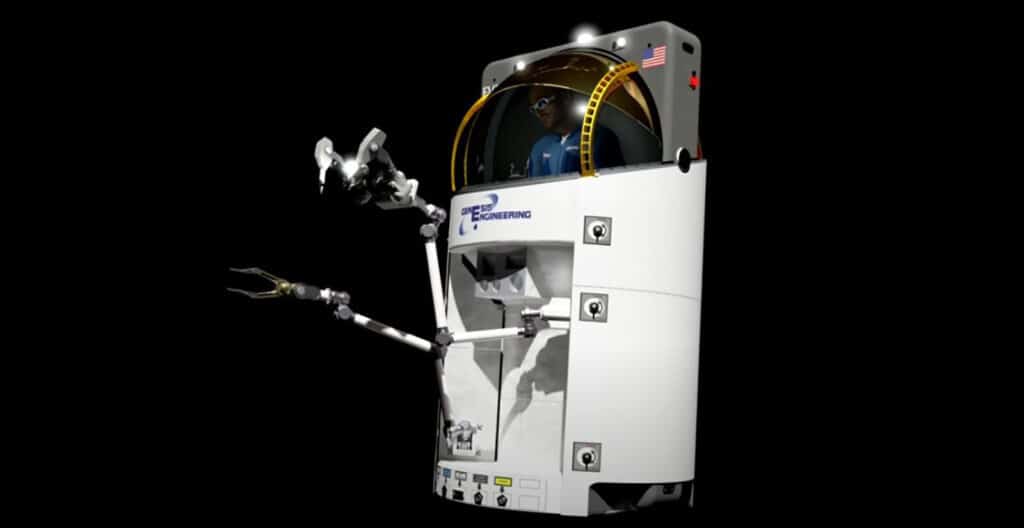
- Genesis Engineering Solutions is building the Single Person Spacecraft for outside work and tourist excursions without the need for a spacesuit.
- Arizona State University will lead a global consortium of universities for research advisory and public outreach.

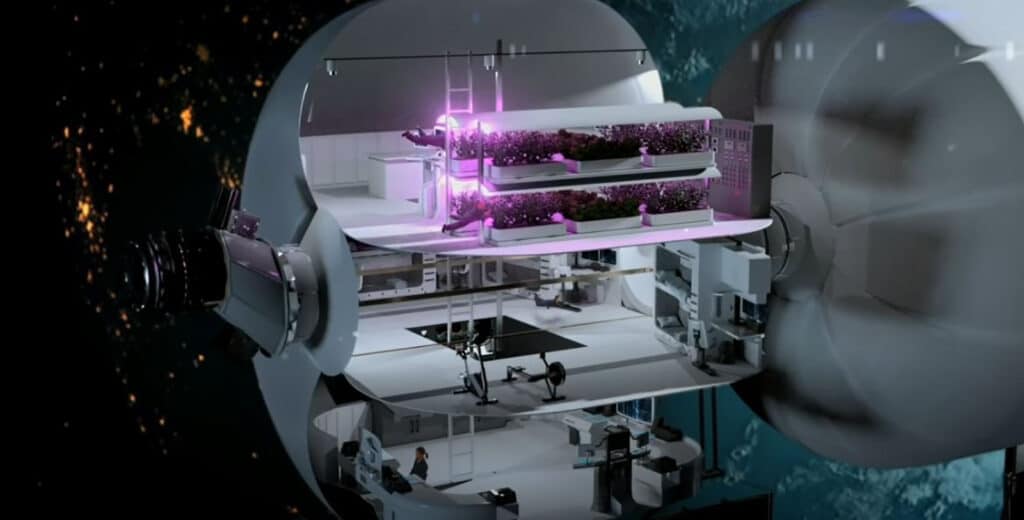
Blue Origin describes Orbital Reef as a “mixed-use business park in space” that will be open to a wide variety of international customers. Once operational, the station will be used for research, manufacturing, tourism, education, and other tasks. In addition, the partners will provide space transportation and logistics, equipment accommodation, space habitation, general operations based on advanced automation, and station crew.
Finally, the Orbital Reef’s open architecture enables it to include module berths, vehicle ports, utilities, and other items based on customer needs and market growth.

Brent Sherwood, SVP of Advanced Development Programs for Blue Origin, said:
For over sixty years, NASA and other space agencies have developed orbital space flight and space habitation, setting us up for commercial business to take off in this decade. We will expand access, lower the cost, and provide all the services and amenities needed to normalize space flight.
As a result, a vibrant business ecosystem will grow in low Earth orbit, generating new discoveries, new products, new entertainments, and global awareness.
Watch the Orbital Reef introduction video below for more information.