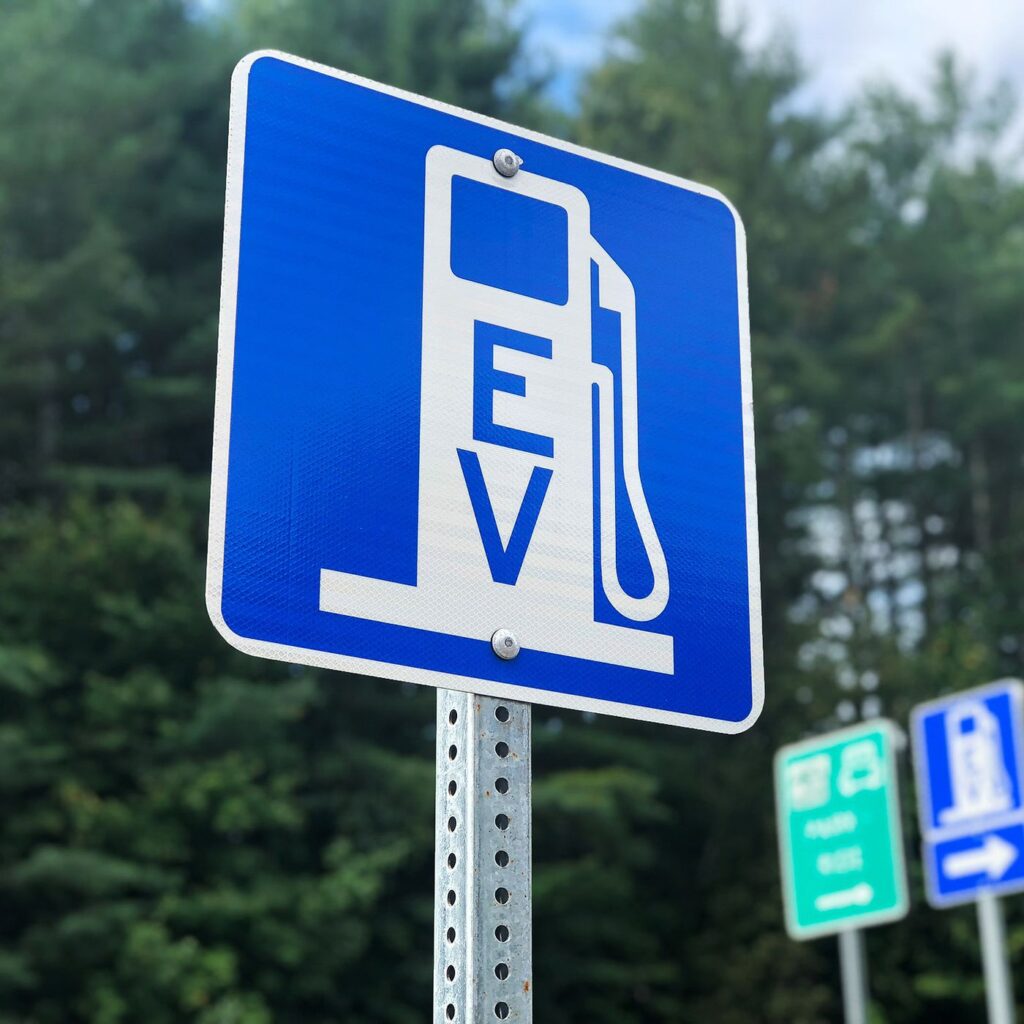
Germany has revealed excellent news to electric car owners. The country has announced that it will oblige all petrol stations to provide electric car charging to help alleviate refueling anxieties and boost consumer demand for electric vehicles. The initiative is part of a $146 billion (130 billion euro) economic recovery plan, of which 2.5 billion euros (around $2.8 billion) will be spent on charging infrastructure and battery cell production.
The move could potentially boost the broader stimulus plan, which contains taxes to penalize ownership of large polluting combustion-engine vehicles and a 6,000-euro subsidy towards the total of an e-vehicle. The country’s statement comes after the president of France announced a plan to increase electric vehicle (EV) sales.
The Mobility House and the Renault-Nissan-Mitsubishi alliance said:
It’s a very clear commitment to battery-powered vehicles and establishes electric mobility as a technology of the future. Internationally this puts Germany in the leading group of battery electric vehicle support.
However, concerns about the limited operating range of vehicles have constrained customer demand for electric cars. In Germany, diesel and petrol cars made up for 32% and 59.2% of new passenger car registration in 2019, with electric vehicles accounting for only 1.8%. German vehicle agency KBA, claims that out of the 168,148 new registrations in May 2020, only 5,578 were electric cars.
Diego Biasi, co-founder, and chairman of Quercus Real Assets explained:
We know that 97% of the reason why they’re not buying electric cars is range anxiety. The German move is a way to try and fix this range anxiety since it means you know a petrol station is always open.
According to BDEW, Germany’s association for energy and water industry, to achieve a mass market for electric cars, at least 7,000 fast-charging stations and 70,000 charging stations are required. Germany had 27,730 electric vehicle charging stations, as of March 2020.
In the past decade, improvements in battery pack design and cell chemistry have significantly improved electric vehicle performance by up to 40%. The fuel efficiency of gasoline-powered vehicles also saw similar improvements, which led to a reduction in the number of petrol stations. So much so that the number of petrol stations dropped from 40,640 in 1965 to 14,118 in 2020.