
George Bosnas, a Greek designer, created Biopack, a compostable and plantable container to package eggs. Eggs are one of the most consumed products in the world. Usually, eggs come in plastic packaging which negatively affects the environment.
 According to Bosnas, the inspiration behind biopack came from the conundrum that recycling creates. While it’s good that communities around the world are trying to recycle more, plastic recycling isn’t perfect. The process can be complicated, expensive and not as environmentally friendly as people may think. The materials that come from recycled plastic tend to be of lower and lower quality until they cannot be recycled anymore, then they end up in landfills.
 The most ecological form of manufacturing is to create something that not only can be recycled in a factory but something that is beneficial for the environment.
This is where the innovative Biopack comes in, a simple box that holds up to four eggs. It’s made out of cleared paper pulp, flour, starch, and seeds. The packaging is dense enough to protect the eggs inside, then after use, the whole container can be planted in soil.
 Bosnas was looking for a way to create a package that didn’t require large-scale manufacturing. The packaging production has no added chemical components and is entirely environmentally friendly.

With a little watering, the Biopack takes about 30 days to break down entirely and then will sprout into green plants. Bosnas chose legume seeds after discovering that cultivating them increases soil fertility due to its ability to fix atmospheric nitrogen through the roots.


The fact that it only needs water can encourage more people to grow plants. However, if you don’t want to go through the effort of planting and watering, the packaging is still fully compostable so can be left in your backyard. It’ll still biodegrade, and the legumes may still grow and make the soil more fertile for other plants to grow too.
Bosnas’ ingenious product won the Young Balkan Designer 2019 prize for Circular Design.
Production of the Biopack packaging is expected to begin by the end of 2019.
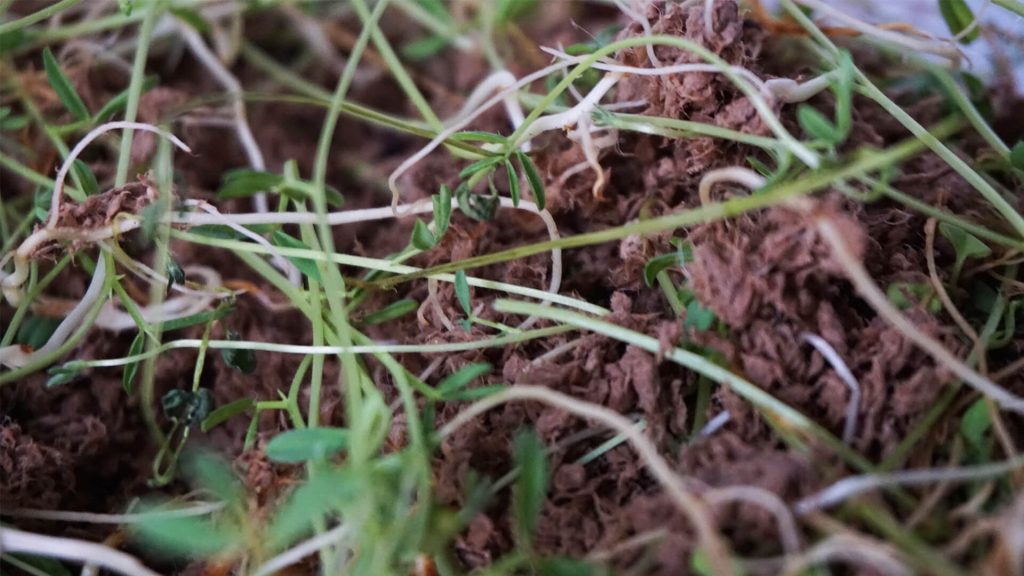 Image credits: George Bosnas

