
The advent of electric vehicles (EVs) marked a revolutionary shift in the automotive industry, offering an eco-friendly alternative to traditional gasoline-powered vehicles. However, recharging these vehicles, particularly when on the go, often emerges as a common concern. Fortunately, the expanding infrastructure of charging stations and various other innovative charging solutions are working together to dispel this worry.
First and foremost, the number of public charging stations has increased dramatically in recent years. Companies, including Tesla, ChargePoint, and Blink, have installed charging stations throughout highways, shopping malls, and public parking spaces, providing drivers with several possibilities to refuel their vehicles. These stations frequently provide Level 2 chargers (240 volts) that can recharge an EV in a few hours, as well as DC Fast Chargers that can recharge an EV in less than an hour; however, the actual time varies on the car model and battery capacity.
Another intriguing trend is the spread of charging networks. These are linked groupings of charging networks, frequently maintained by a single corporation, that provide users with the convenience of a uniform payment method as well as a smartphone app to locate the nearest charging point. Tesla’s Supercharger network, for example, is a unique service for Tesla owners that provides high-speed charging at various sites throughout the world.
While these choices are quite convenient, access to a public charging station may not always be possible. This is where mobile charging solutions come into play. These are portable chargers that may be inserted into any standard electrical socket. They may not be as fast as dedicated charging stations, but they can come in handy on long road trips or in locations with limited charging infrastructure.
Some creative ways for on-the-go charging have also emerged. SparkCharge, for example, has developed portable, rapid charging equipment that can be provided to an EV owner on demand, like a roadside help service. Meanwhile, some manufacturers are investigating the incorporation of solar panels inside their vehicles, which might allow automobiles to self-charge to some extent throughout the day.
While these developments are encouraging, there are still obstacles to face. For example, charging station distribution is uneven in underserved rural locations. Furthermore, the lack of standardized charging ports may cause compatibility concerns; however, universal charging standards and charging adapters are being created to solve this.
Government actions and incentives are critical in promoting the expansion of EV charging infrastructure. Governments around the world are offering subsidies and tax breaks to stimulate the installation of public and private charging stations. For example, the United States government offers a federal tax credit covering 30% of the cost of establishing an EV charging station in homes and businesses.
The automobile and energy industries are also working together to create on-the-go charging alternatives. The goal is not just to increase the number of charging stations but also to shorten charging times, making EV charging as quick and easy as filling up a petrol tank.
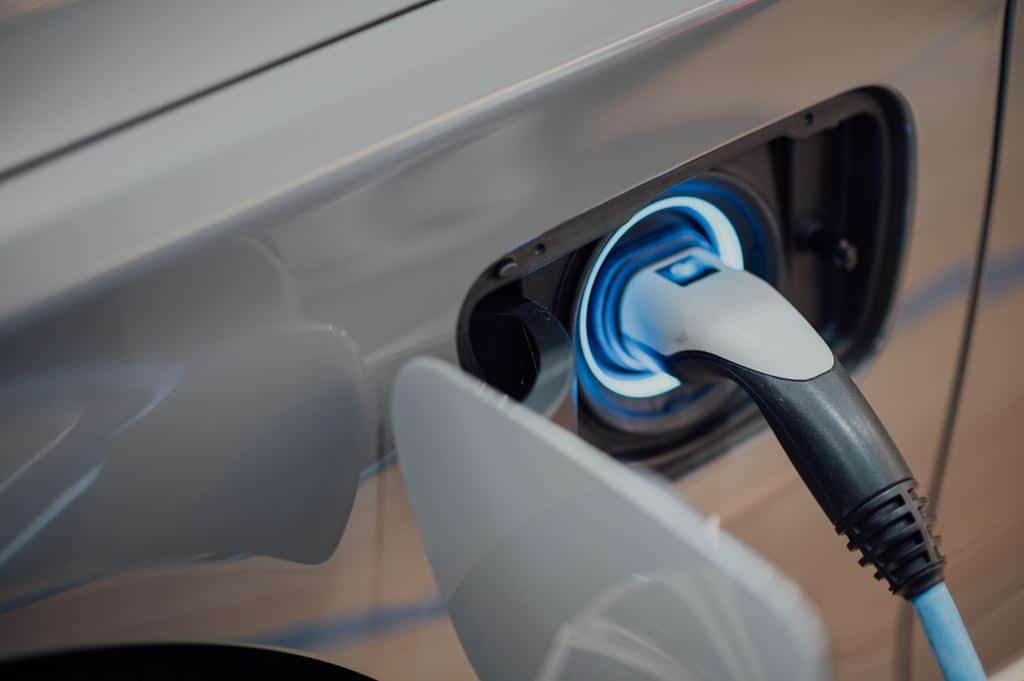
Finally, with the expansion of public charging stations, the establishment of charging networks, and the introduction of mobile and novel charging solutions, charging on the move is becoming more possible. As a result, we can look forward to a future where ‘range anxiety’ is a thing of the past and electric transportation is smoothly integrated into our daily lives as we continue to rev up and recharge our electric vehicles. After all, the road to sustainable mobility necessitates the collaboration of governments, automakers, energy providers, and, of course, drivers.
In addition to the options, battery swap technology is a new concept in on-the-go charging. Certain companies, most notably NIO in China, have established battery swap facilities where an EV’s drained battery may be quickly replaced with a fully charged one. This rapid approach is more enticing than waiting for a charge, especially for people in a rush. Although it faces hurdles like uniformity across different EV models and initial setup expenses, its potential should not be underestimated.
Another topic of investigation is wireless charging. Although still in its early stages for EVs, this technology uses electromagnetic fields to transfer energy between two objects: a charging pad on the ground and a receiver on the vehicle. The ease of merely parking your vehicle over a pad to charge it wirelessly is undeniably tempting. This technology’s efficiency and speed are improving, making it a possible game changer for on-the-go charging in the future.
To conclude, electric car on-the-go charging appears promising and diversified. Public charging stations, charging networks, mobile charging solutions, battery swapping, and wireless charging are making charging electric vehicles while traveling easier. These gains, plus battery technology advancements, may help reduce “range anxiety” and promote electric vehicle use. These charging options will help us fuel our trips in a more sustainable and environmentally beneficial way.


