
In healthcare, remarkable advancements are constantly being made to improve patient outcomes and enhance the quality of life. One such groundbreaking technology revolutionizing the field is 3D bioprinting in tissue engineering. Johanna Altman says this innovative technique holds the potential to reshape the landscape of healthcare by enabling the creation of functional human tissues and organs, paving the way for personalized medicine and organ transplantation like never before.
Understanding 3D Bioprinting
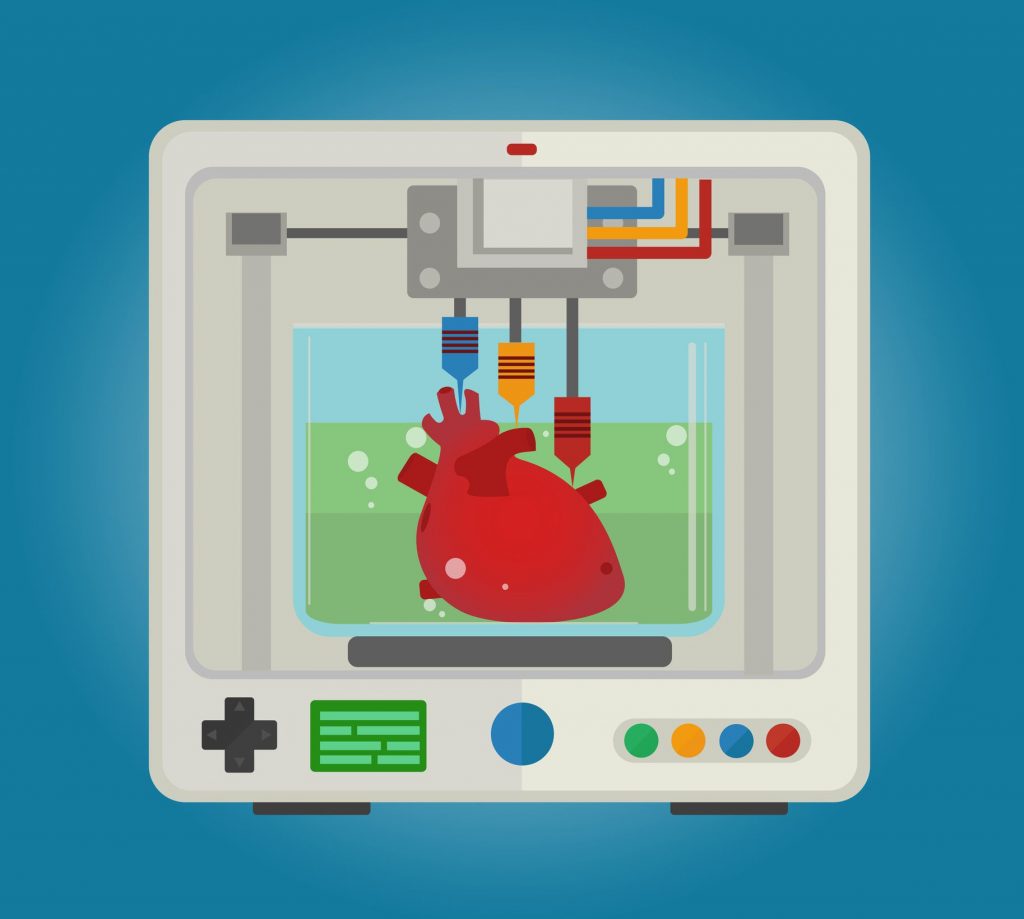
Simply put, 3D bioprinting is a cutting-edge manufacturing process where three-dimensional structures are created layer by layer. It uses bio-inks comprised of living cells, growth factors, and biomaterials. Like traditional 3D printing, this technique follows a digital blueprint to construct intricate biological structures with exceptional precision and accuracy.
The Promises of 3D Bioprinting in Tissue Engineering
Organ Transplantation Revolution
The shortage of organ donors has been a persistent challenge in healthcare. 3D bioprinting offers a promising solution by allowing scientists to fabricate patient-specific organs, reducing the risk of rejection and eliminating long waiting lists. This technology has the potential to save countless lives by providing readily available organs tailored to individual patient needs.
Drug Testing And Development
Traditional drug testing on animal models is often expensive, time-consuming, and may not accurately represent human responses. 3D bioprinted tissues mimic human organs, enabling more accurate drug testing and development. Pharmaceutical companies can assess drug efficacy and safety with greater precision, potentially reducing adverse reactions and expediting the drug discovery process.
Personalized Medicine
Every individual’s genetic makeup is unique, affecting their response to diseases and treatments. 3D bioprinting allows researchers to create personalized tissue models from a patient’s cells, helping doctors design treatment plans tailored to the individual’s specific needs. This approach can potentially enhance the effectiveness of treatments and minimize adverse effects.
Accelerated Wound Healing
Chronic wounds, such as diabetic ulcers, can be particularly challenging to treat. 3D bioprinting can produce skin grafts and other tissues that promote faster and more efficient wound healing. These customized tissues can be designed to release growth factors that stimulate tissue regeneration, offering hope to patients with difficult-to-heal wounds.
Advancing Research And Education
3D bioprinting provides a unique tool for researchers and educators to study human anatomy and physiology. Medical students can gain hands-on experience with lifelike models, enhancing their understanding of complex biological systems. Researchers can also use bioprinted tissues to study diseases, test hypotheses, and advance our understanding of various medical conditions.
Challenges And Future Directions
While the promises of 3D bioprinting are substantial, there are still challenges to overcome. Ensuring the long-term viability and functionality of bioprinted tissues remains a hurdle. The vascularization of these tissues to ensure proper blood supply and waste removal is also a critical aspect that researchers are actively addressing. Additionally, scaling up the production of complex organs and tissues for widespread clinical use presents logistical and regulatory challenges.
Looking ahead, the future of 3D bioprinting is promising. As research continues and technology evolves, we can anticipate improvements in printing speed, accuracy, and the range of biomaterials that can be used. Collaborations between scientists, engineers, and medical professionals will be crucial to unlocking the full potential of this transformative technology.

Conclusion
Johanna Altman believes the emergence of 3D bioprinting in tissue engineering represents a pivotal moment in healthcare history. With the ability to create functional human tissues and organs, this technology holds the potential to reshape medical practices, from personalized treatments to organ transplantation. While challenges remain, the relentless pursuit of innovation and collaboration will likely propel 3D bioprinting forward, bringing us closer to a future where healthcare is more efficient, effective, and tailored to individual needs. As technology advances, the promises of 3D bioprinting are poised to become a reality, offering a brighter and healthier future for us all.


