
A group of scientists from the Weizmann Institute of Science in Isreal, led by Ron Milo is working on a strand of bacteria that consumes carbon dioxide (CO2). Their research has been published recently in Cell and gives an explanation of a strain of Escherichia coli (E. coli) that the team created. This particular strain eats CO2 for energy rather than organic compounds such as fats and sugars.
As explained in an article in Discover magazine, living creatures are separated into two types of organisms. The first is autotrophs, such as plants, that create their food from inorganic materials like CO2 and light. The second group is called heterotrophs, these are organisms that cannot manufacture their food by carbon fixation. They get their nutrition by eating other life such as plant and animal matter. Autotrophs contribute many sources of fuel and food and make up the majority of life on Earth.
While the strain of E. coli that the scientists created can consume CO2, it releases more CO2 than it consumes. The first step has been successfully achieved, to create a bacteria that consumes CO2. Now, they will continue to work on finding a way to alter it to not release more than it consumes, and determine if it is possible to turn a heterotroph into an autotroph.
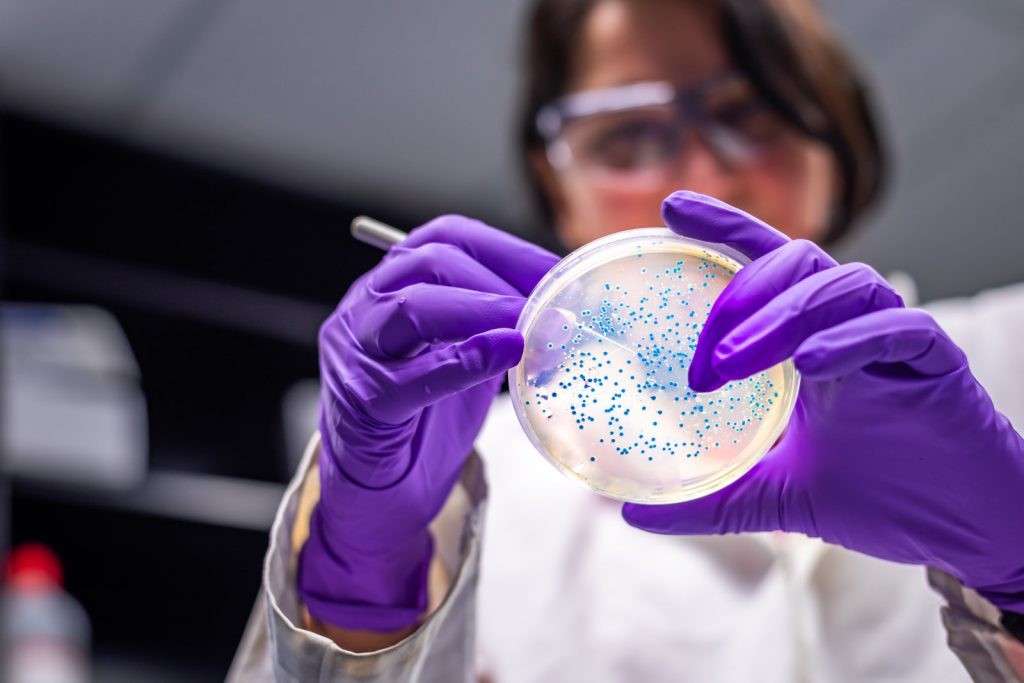
The scientists explained how, over several months, they were able to rewire the bacteria’s metabolic process to produce all of its mass from CO2. They made the bacteria more dependent on CO2 instead of relying on sugars for growth.
Shmuel Gleizer, a researcher at Weizmann Institute of Science and the study’s first author, commented:
Teaching a gut bacterium to do tricks that plants are renowned for was a long shot. In addition, seeing the relatively small number of genetic changes required to make this transition was surprising.
The team now has hopes that if it cannot be limited in how much CO2 is emitted from the bacteria, maybe even better if they can find a way to turn that into useful biofuels or other energy sources. They are calling this a “stepping stone” in sustainable research.
Note: This E. coli strain should not be confused with the one that causes sickness in humans. Most strains of E. coli are not harmful to humans, but helpful bacteria.


