
A team from the Department of Chemical Engineering at UCL and the School of Engineering at Newcastle University in the UK has developed an innovative solution to help curb global warming. The team produced a new kind of self-assembling silver membrane that works to capture carbon dioxide (CO2) emissions before they get the chance to spread into the atmosphere.
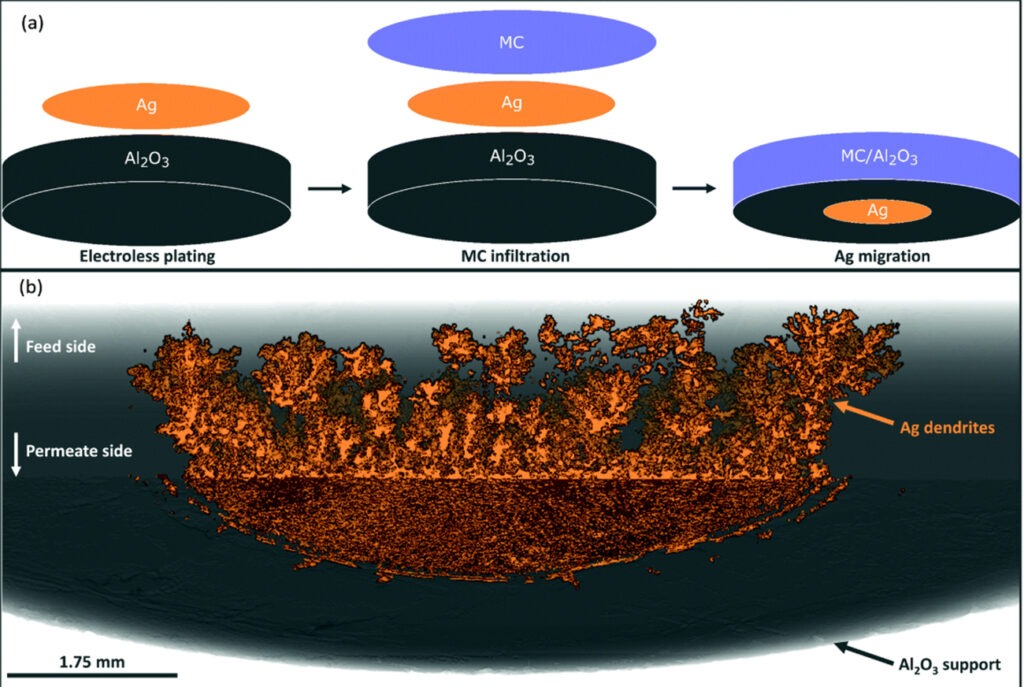
The team used an innovative technique, which they claim has never been attempted before, that involves seeding their gas separation membrane with only a minuscule deposit of the valuable metal. This allowed the flow of CO2 to grow tiny silver crystals, known as dendrites, on the membrane.
The efficiency of the structure is dramatically increased by the dendrites, allowing for significant amounts of oxygen and CO2 to flow through without having to use as much of the metal as in previous methods. “We didn’t build the entire membrane from silver. Instead, we added a small amount of silver and grew it within the membrane, adding the functionality we desired.” explained carbon capture engineer Greg Mutch, the study’s lead author.
This technique is an example of carbon capture and storage (CCS or carbon sequestration), a tactic for filtering CO2 emissions to prevent them from flowing into the atmosphere and contributing to global warming. A wide range of industrial CCS projects has been employed globally. Though, the field is still growing, with a constant flow of advancements in the science and economics of carbon capture always being made.
Silver is a highly effective material for use in specific CCS applications. Membranes in CCS act as a porous barrier to let some gases diffuse through while blocking others. The scientists claim that when silver is used in a class of membrane called ‘dual-phase, molten-carbonate membranes’, it offers some of the most robust efficiencies ever seen in CO2 separation. Of course, silver is not a cheap material. However, the team figured out how to extract the benefits of using silver in the CO2 separation process, while using only a tiny amount of the element itself.
In the laboratory, the scientists used aluminum oxide pellets and tubes to create the basis of their membrane, while only adding a small amount of silver to the mix. As the membrane functioned, a cluster of silver dendrites began to grow on the structure, stimulated by the permeation process. “Through permeation-driven non-equilibrium growth of Ag [silver] dendrites, from small quantities of added Ag, low-cost, low-flux membrane materials were transformed into low-cost, high-flux membranes,” the team said.
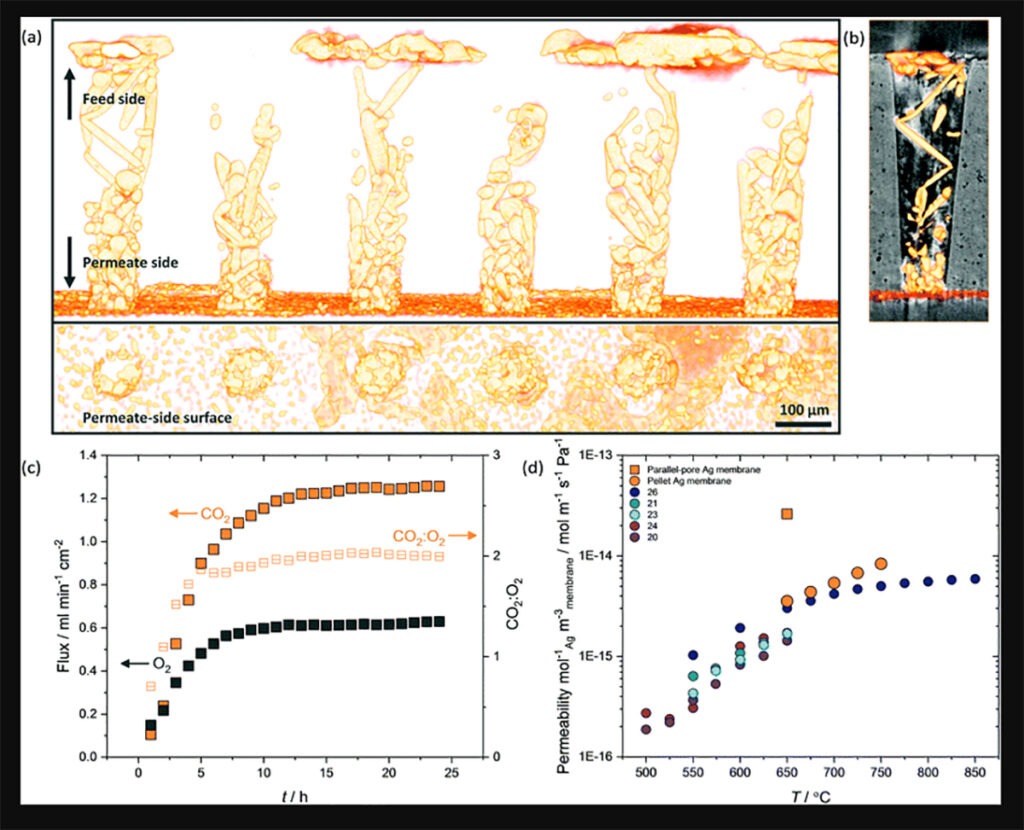
While minimizing the volume of silver required by order of magnitude, the team claim, their results saw the highest flux of silver-supported molten-salt membranes ever recorded. “Most importantly, the performance of the membrane is at the level required to be competitive with existing carbon capture processes. In fact, it would likely reduce the size of the equipment required significantly and potentially lower operating costs,” Mutch added.
The team suggests that if we want to use silver in CCS membranes, beyond the benefits of cost-effectiveness, we could be looking at new paths to manufacture membranes by leveraging permeation mechanisms that haven’t been fully explored, until now.
The scientists explained:
We propose that the non-equilibrium conditions of membrane permeation, routinely considered as deleterious for long-term stability, can instead be considered as favorable conditions to add advantageous functionality to membranes in situ.
The findings were published on April 29, 2020, in the journal Energy & Environmental Science.


