
Snow Lake Lithium’s CEO Philip Gross walks us through his company’s intentions to open an all-electric lithium mine in Canada (the world’s first) as the world races toward “the greatest disconnect between supply and demand in the history of commodities.”
Lithium mining is a critical component of the global transition to clean energy but comes with potential pitfalls. The world’s lithium reserves are theoretically sufficient to meet the expected rise in demand, but there’s a lack of companies that can produce high-quality, high-purity lithium chemical products. Many mining projects take an average of 16.5 years to develop, and over 80% of them are completed late. This means that there is a question mark over how rapidly their capacity can come online and whether all of the reserves can be brought into production.
Extracting lithium from these sources is also proving to be problematic due to its high water requirements. This is leading to issues around water stress in many regions, where there simply isn’t enough water available to meet their needs. This could potentially lead to further delays in getting lithium out into the market and into electric vehicles around the world.
These commercial production issues are precisely what Snow Lake Lithium can resolve through the development of the world’s first all-electric lithium mine, striving closer to reaching a sustainable lithium industry.
The Push Toward Net Zero Carbon Depends on Lithium
The world has finally concluded that we must decarbonize as soon as possible as climate change’s unpredictable and destructive early effects start to wreak havoc worldwide. That is excellent—better late than never. However, a significant portion of the drive toward net zero carbon by 2050 will rely on an electric battery market, and with this demand for lithium, the simple fact is that there will not be enough lithium to go around.
There is plenty in the ground, but more is needed coming out of it. For example, while everyone expects electric vehicles to continue dominating the auto market, the stats look bleak. So even if all currently operating mines continue to produce and all projects currently in development are completed by 2030, there will need to be more metal available to meet demand. This will be a massive lithium resource squeeze.

Gross said:
“Anyone who does not see this coming is putting their head in the sand. And it is not just top-down, governments pushing this on consumers. The consumer demand for EVs is already insane. Finally, we have a new generation who are finally conscious of these issues and want to do something about them.
These people are already putting their names on two-year waiting lists for electric cars; they are putting the payment down and waiting literally years for their cars. It is wild. And it is the tip of the iceberg because all the electric cars you are seeing now are high-end – US$50-60 grand cars minimum. We are going to get down to the US$30-grand car soon.”
He continued:
“The consumers are overwhelming the manufacturers. So, the manufacturers are pushing down on their battery guys. And the battery guys are saying, OK, we’ll build another factory for you. They are building 13 or 14 gigafactories now, just in North America. And there is no raw material to meet that. This is a massive, organic growth in demand that didn’t exist three to five years ago.
It is a monumental disconnect between supply and demand, and there is no way to fix it now other than going on your hands and knees to China. China has no interest in supplying you with lithium or batteries. Their end goal is to dominate the automobile industry.”
Chile has become a hub for lithium mining as demand for electric car batteries and other green technologies increases. This boom in lithium mining has had both positive and negative effects on the country. On the one hand, it has created jobs and economic opportunities for many Chileans. Yet on the other, it has caused significant environmental damage due to the extraction process.
Lithium Processing in China
The Chinese government had the insight to make significant decisions, spend extensively on electrification, and lock up the supply chain for cobalt, neodymium, lithium, and other essential metals after catching an early glimpse of the effects of severe urban pollution in 2010. It is becoming clear that this is a resource threat to national security for nations like the United States.
The global lithium supply is facing a number of strains, with the concentration of resources in a few places being one of the main obstacles. China has a large share of the entire supply chain for electric vehicles and lithium-ion batteries, with 60% of global lithium chemical production and 80% of lithium hydroxide output coming from the country. Australia had the highest production in 2021, but Chile has the world’s most significant reserves, forming part of the “Lithium Triangle” along with Argentina and Bolivia. These three countries contain just under 60% of Earth’s total lithium resources.
Unfortunately, there is no likelihood of the Western world catching up because lithium mines require at least ten years to start operating.
Gross explained:
“Nobody was interested in lithium for decades. People used it in ceramics and some pharmaceuticals, which was the entire market. Snow Lake’s lithium resource was found back in the 1930s, and it was a huge disappointment. They kept drilling, desperately hoping for gold. Nobody in the history of the world has ever bothered looking for lithium. No money was spent on it, and no money was spent on ecosystems. If you bring lithium out of the ground in North America, you can not do anything with it unless you send it to China.”
New North American Lithium Battery Supply Chain
To reduce North America’s reliance on imported lithium, Snow Lake Lithium is racing to construct the world’s first fully-electric lithium mine to get the metal out of the ground and turn it into 6% spodumene. In addition, it has signed a joint venture with MoU (Memorandum of Understanding), and Korean battery giant LG, which plans to build a lithium-hydroxide processing plant nearby that can turn that spodumene into battery-grade lithium ready for the gigafactories. Thus begins a fledgling lithium battery domestic supply chain in North America.
The 55,000-acre Snow Lake site is about 400 miles north of Winnipeg. The LG plant will be close by, making it easy to ship bulk products by rail to the center of the United States and out to every major manufacturing center. Gross says that even though only 1% of the property has been explored, the company expects to be able to supply about 160,000 tonnes of 6% spodumene per year starting in 2025 or 2026.
However, there is more to the operation at Snow Lake than meets the eye; its goal reaches beyond solving a supply chain issue or simply being a perfectly poised economic venture.

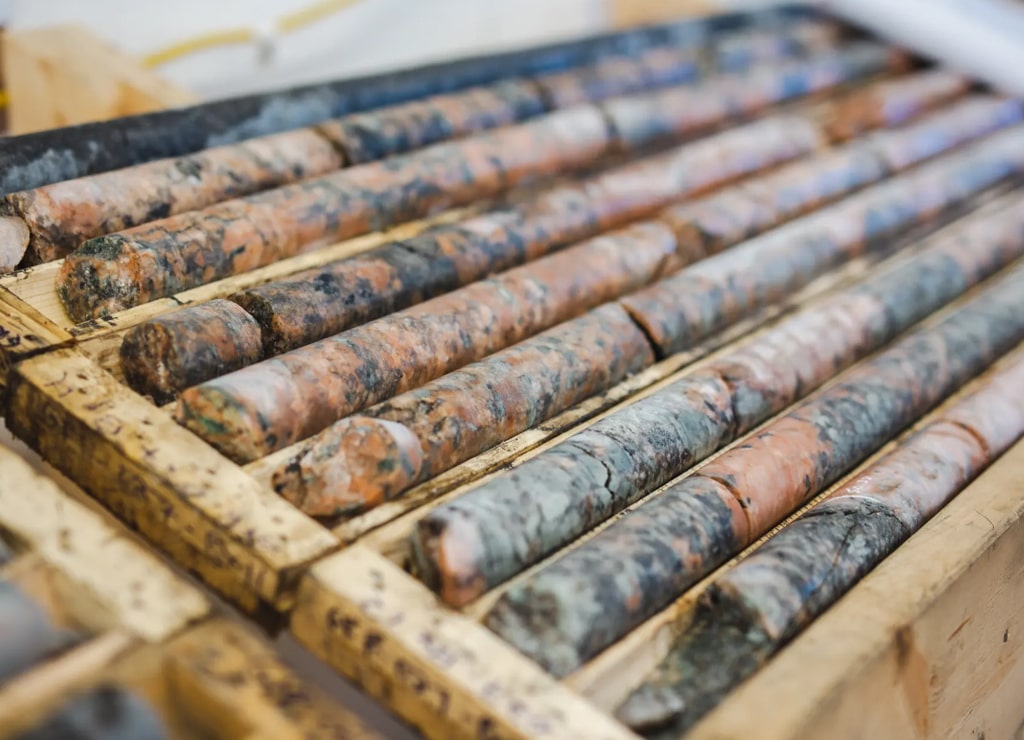
All-Electric Lithium Mining
The extraction of lithium from brine requires large amounts of water and energy, which can lead to water shortages in some areas. The myriad of chemicals used in the process can contaminate soil and groundwater with heavy metals like arsenic and cadmium. As demand for electric cars continues to grow, communities must grapple with these environmental costs while also reaping the benefits of increased economic activity from lithium mining.
This is where Snow Lake Lithium truly has the potential to influence the future of lithium mining.
The Snow Lake mine will be an ultra-clean operation; this is not a brine-based lithium extraction process that could contaminate groundwater and drinking water supplies.
He continued:
“We are very fortunate with our location, not just because this is a well-established mining area with a built-in workforce and a government that understands resources, but also because Manitoba is a 99% renewable energy area.
There is some criticism out there – totally misplaced and completely fallacious, in my view – that if you drive an EV, you’re somehow doing something worse for the climate than a gasoline car. You’re not; if you burn a gallon of fuel, it is gone. Almost all a battery’s components can be repurposed, rejuvenated, and recycled. And it is possible to do mining in a carbon-neutral, responsible and sustainable way. We will have to be responsible to our customers.
I think in the not-too-distant future, everything you buy will have a carbon impact number on it, like calories on a chocolate bar. So, we can’t compromise on environmental impact; that’s our responsibility.”
Snow Lake joins forces with the Swedish firm Epiroc, which will provide the site’s all-electric mining equipment.

Gross noted:
“If we were going into production today. Some of that equipment does not exist yet. They are working on it now. So we are fairly confident it will be available on schedule. But there is plenty of challenges ahead; nothing is straightforward. For example, in the winter, Canada gets to -35, -40. In special conditions, a lot of testing needs to be done to make sure the batteries operate optimally. But that is the challenge we have taken upon ourselves.”
If all goes according to plan, Snow Lake will provide enough lithium to North America to produce batteries for about 500,000 electric vehicles annually. Compared to the 17 million vehicles sold yearly before the pandemic, that is a mere drop in the ocean. However, there has been a dramatic shift in consumer demand toward electric cars, a trend projected to accelerate dramatically.

Gross said:
“The real insanity in the lithium market doesn’t hit until 2025, 26. Look at electric cars alone; in 2021, there were six and a half million electric cars sold globally, that’s double the previous year. Let’s say this year it is 10 million. It is not a lot of cars yet, but we are at the point where you see it doubling year on year.
A cascade unfolds from around 2025 when legislation starts kicking in, corporate fleets start electrifying, manufacturers will start rolling out new and more affordable product lines and the infrastructure will develop to support more widespread EV uptake. That is when it is going to get really crazy.”
If the North American car industry doesn’t have a domestic lithium supply chain, then automakers in the United States will have to compete with an influx of low-cost, high-quality Chinese imports. The region’s late entry into lithium production may be an existential threat to the automotive industry’s electric vehicle market. Yet, all is not lost.
Snow Lake did announce that it expects production levels high enough to power 500,000 EVs annually in the region over the next decade. This can be an exciting development for the automotive industry. It will help create a vertically integrated domestic supply chain and reduce reliance on foreign sources of lithium. The facility’s location is conveniently near North American manufacturers, making it an ideal partner for local EV automakers.


