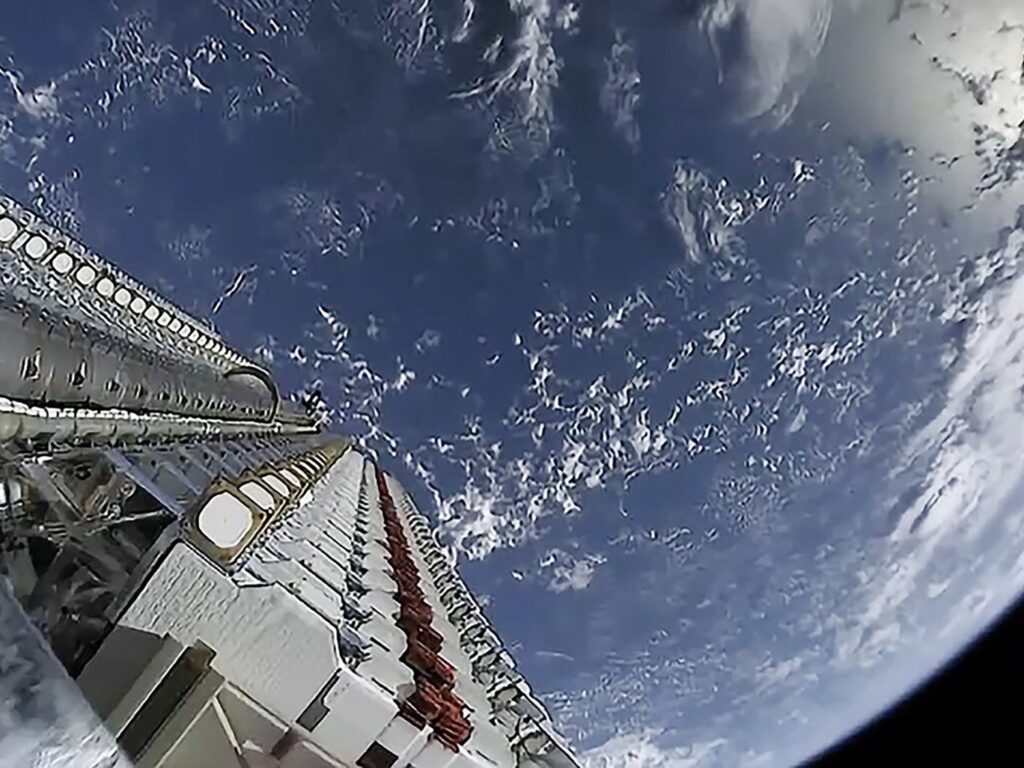
Elon Musk, the CEO of SpaceX, has announced that his space internet project is ready for public use. The statement comes after SpaceX launched 60 Starlink satellites into low-Earth orbit last week, bringing the total number to almost 800.
Eventually, SpaceX plans to launch tens of thousands of Starlink satellites to create a blanket around the Earth capable of beaming high-speed broadband internet to 99% of the inhabited world.
Musk tweeted:
Once these satellites reach their target position, we will be able to roll out a fairly wide public beta in the northern US and hopefully southern Canada, with other countries to follow as soon as we receive regulatory approval.


Following recent wildfires in the US, emergency responders have already started using the internet from the Starlink network. Last month, the Washington Emergency Management division installed a Starlink-powered WiFi hotspot for residents in Malden, after 80% of the town was devastated by fire. At the time, Musk stated that SpaceX was prioritizing emergency services and regions with no internet connectivity at all.
According to Musk, 800 satellites would be sufficient for considerable global coverage. However, speeds will not reach the 100 megabits per second speed as promised, until the network grows larger.

Starlink’s website explains:
With performance that far surpasses that of traditional satellite internet, and a global network unbounded by ground infrastructure limitations, Starlink will deliver high-speed broadband internet to locations where access has been unreliable, expensive, or completely unavailable.
Regions that fall within Starlink’s open beta test include Ann Arbor in Michigan and the Detroit metropolitan area. Users will get a signal for the network via a personal antenna device that will act as a WiFi hotspot.
Some astronomers criticize the network, claiming that the overwhelming amount of satellites disturb observations and could obstruct scientific progress.
While SpaceX has made some efforts to minimize the satellites’ impact, a recent report by the Satcon1 (Satellite Constellations 1) workshop warned that it wouldn’t be enough. It said that no kind of mitigations could altogether avoid satellites’ impact on the science programs of the future.