
Shanghai-based architect and architectural photographer Amey Kandalgaonkar’s exquisite renderings are the perfect examples of how fictional designs can be the most beautiful architectural structures. His surreal creations are deeply imaginative and impressive, and you’ll wish they were real. Each project is unique and different from the next, and they were all inspired by something he experienced or saw in real life, which makes them all the more interesting.


The ‘House Inside a Rock’ merges nature with architecture while creating a sharp contrast through textures—the rough natural stone and the smooth concrete and glass. Kandalgaonkar was inspired by the ancient rock-cut tomb of Madain Saleh in Saudi Arabia.
He said: “When I first saw the images of rock cut-tomb architecture, I knew I had to use it as an inspiration in an architectural project. There is a huge amount of architectural heritage laid out for us by past builders, and I believe they did a great job of integrating built environments in natural elements. That architectural lineage stretches back millennia” — earlier this year, archaeologists uncovered a 6,000-year-old stepped pyramid in Oman with direct links to ancient Mesopotamian ziggurats, reminding us just how deep the human impulse to build monumental structures runs.
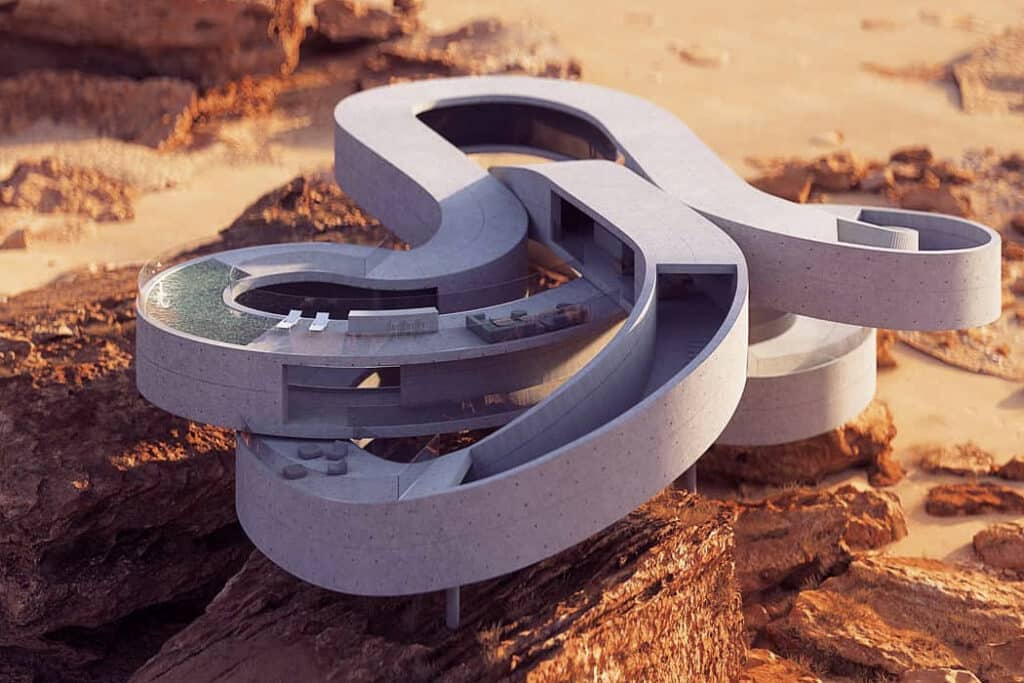

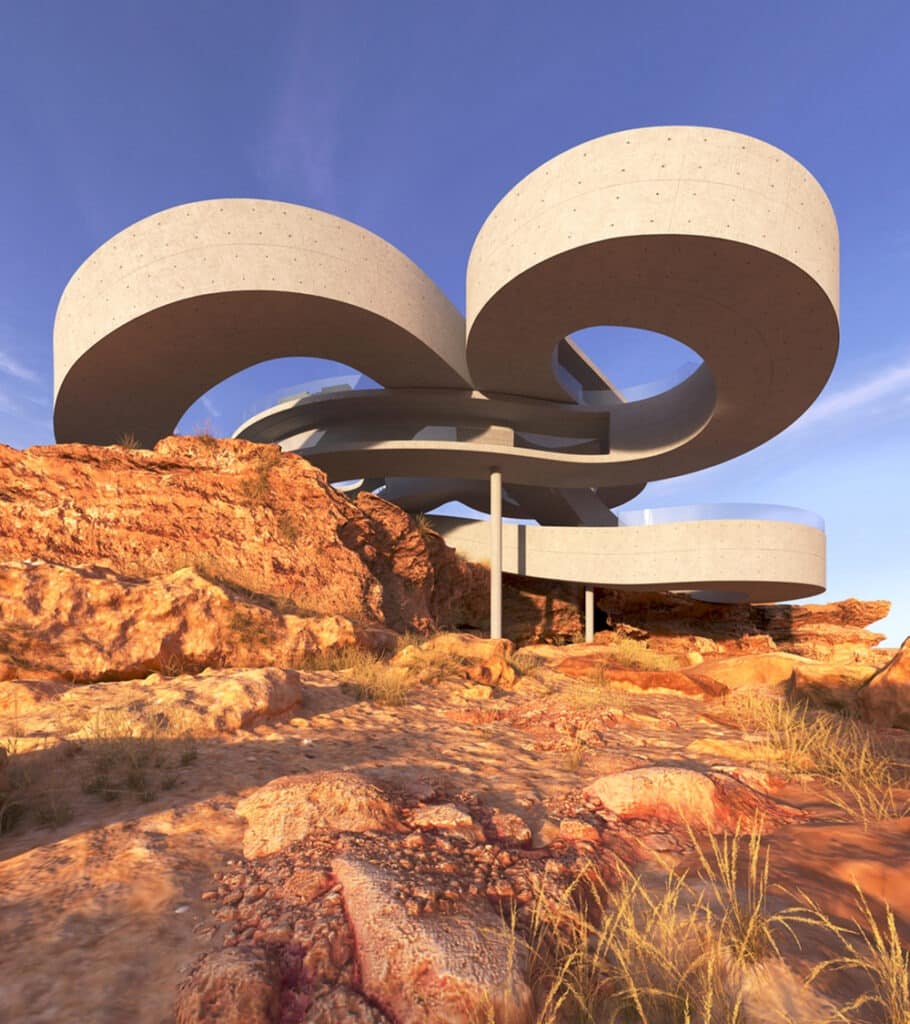
The ‘House Inside a Rock’ was one of two residential projects born from this precedent. The other was ‘The Rock House 3,’ an entangled concrete structure delicately placed upon desert rocks. With this design, he was equally influenced by the network of roadways in Shanghai. The house raised on columns rises subtly above the rocks to act as an extension of nature, but its twisted forms are reminiscent of floating road intersections.

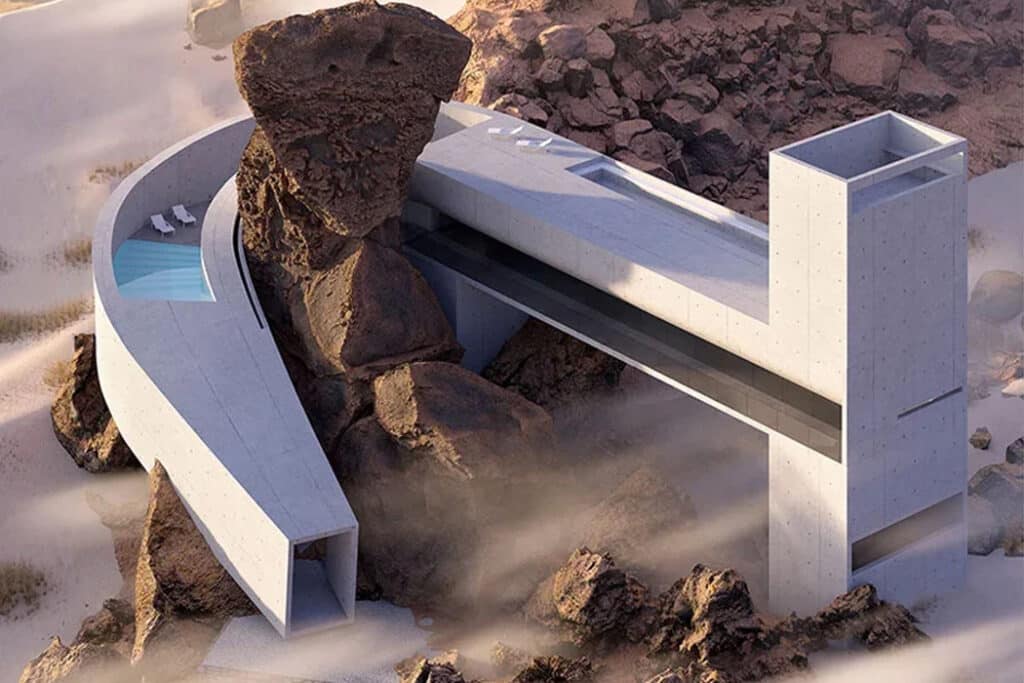
After those two projects, he continued to play with this juxtaposition of nature and architecture and drew up ‘House in the Desert.’ This time, he aimed to highlight the landscape’s duality by bringing a human-made structure in direct contrast with nature. The house wraps around a rock formation as if it’s embracing it. It presents a world where old and new can coexist in peace.
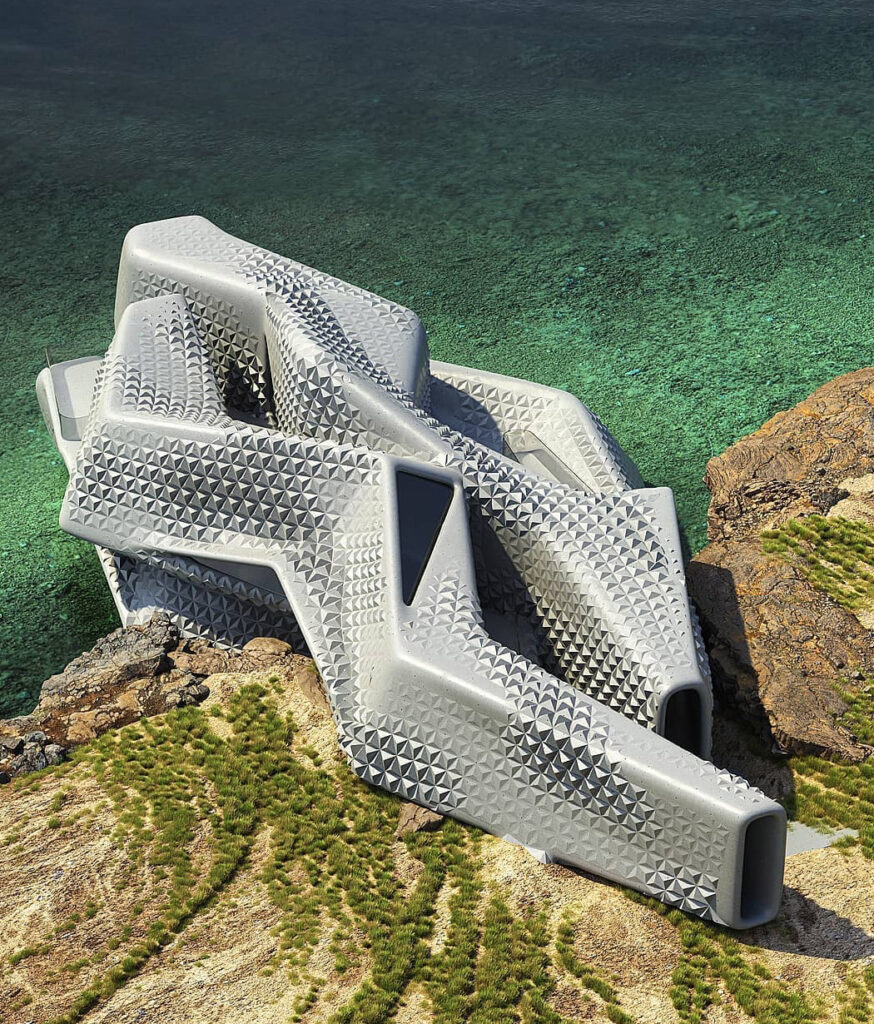
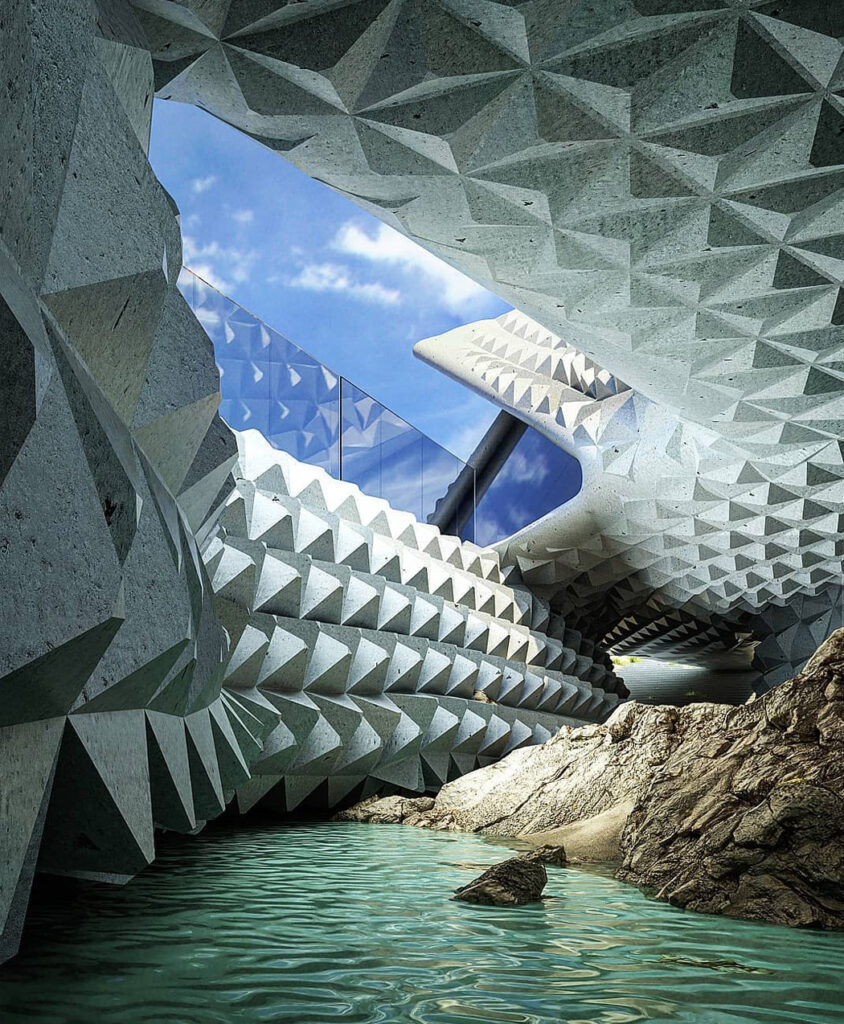
‘Dragon House’ branches off into another realm entirely. Here he imagined a residence located on the edge of a cliff with mesmerizingly turquoise water on the other side. The structure was made to appear like a scaly dragon basking in the sun by the ocean, planning its next hunt.
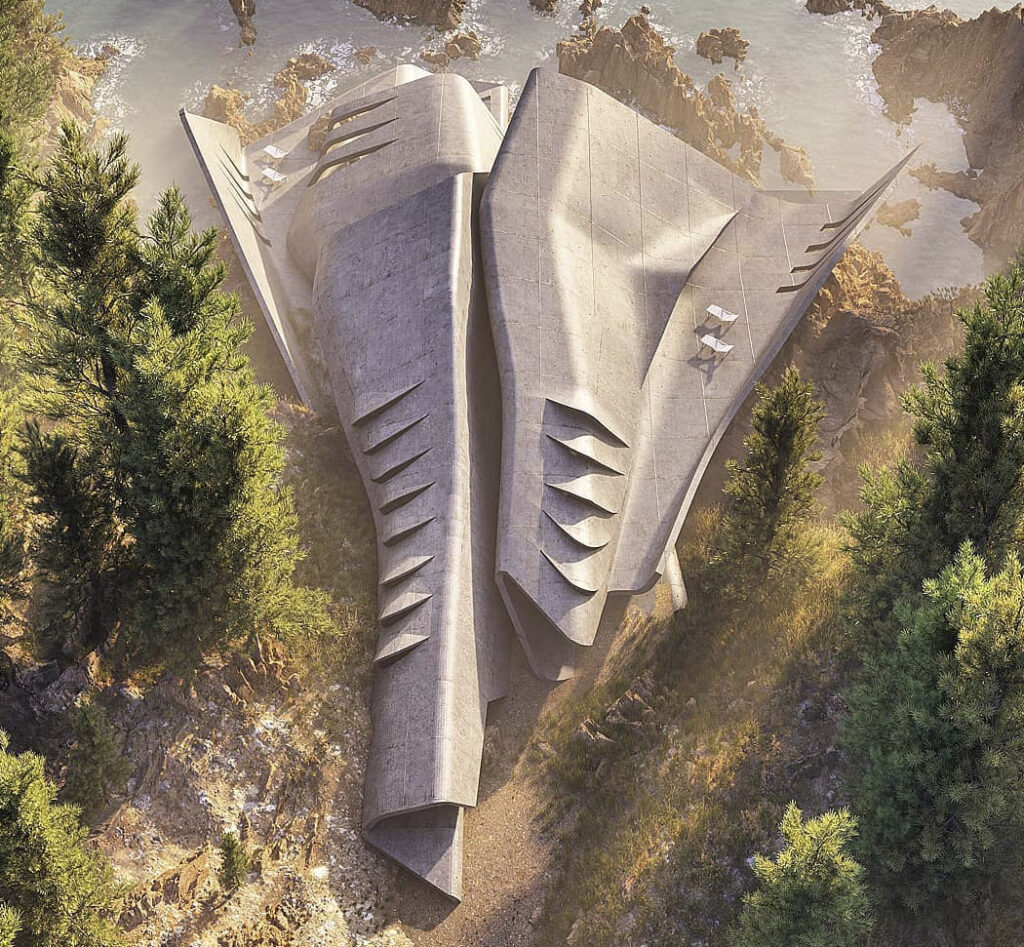
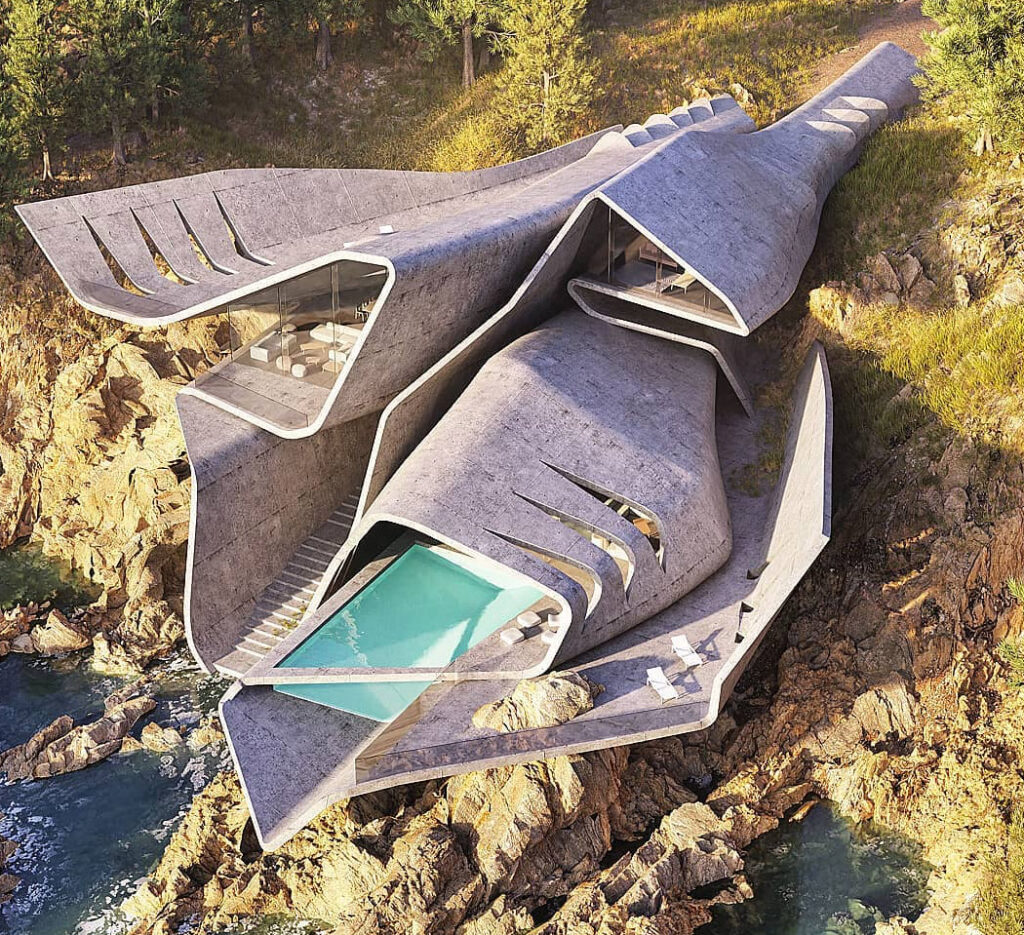
Kandalgaonkar designed another animal-esque building built on an imposing cliff. The brutalist house looks like a stingray. It’s got floor-to-ceiling glass windows and a fabulous infinity pool so the residents can enjoy the sea view from anywhere.


These unusual modernist pagodas were inspired by his travels through China. Traditional pagodas are typically built of stone, brick, or wood, and their ancient typology has remained mostly untouched by the evolving architectural styles and movements. So, Kandalgaonkar decided to present a reinterpretation of the stringent building style in concrete.
He said, “While the entire world was swept by the modernist movement, china was largely untouched by modernism. So, when I visited various ancient Chinese monuments, I couldn’t help wonder how a modernist mind would interpret traditional Chinese architecture.”


Kandalgaonkar read that Elon Musk was selling all his houses, so he designed ‘Crater Home’ in response. And what came to mind? Well, a meteor crater, a UFO, and a pool, of course.
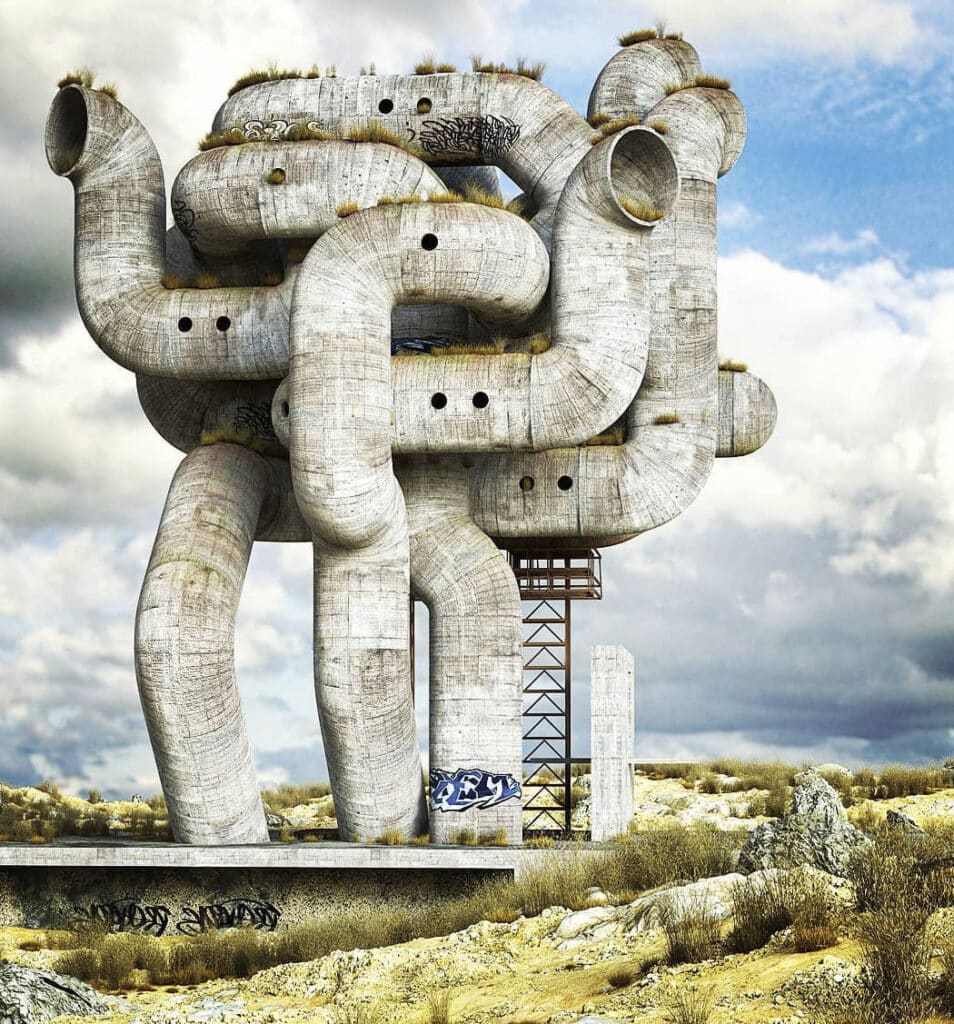
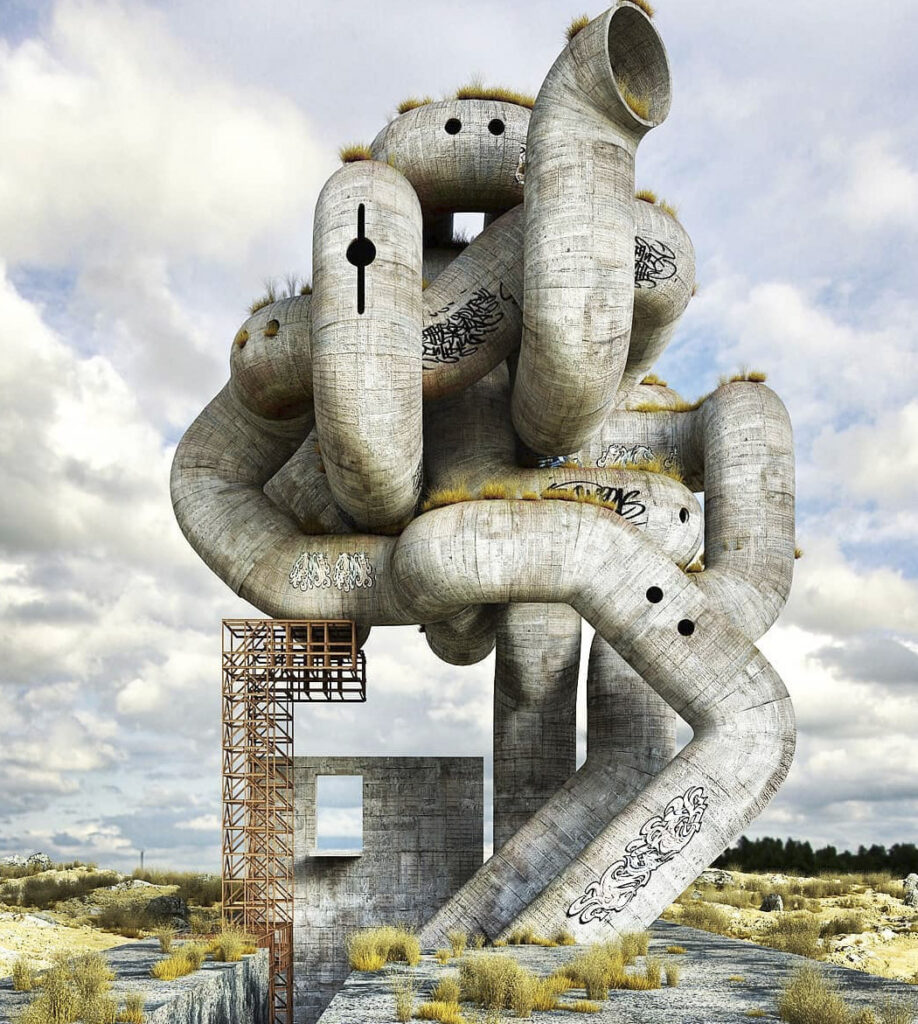
‘Tube House’ is an unusual entanglement of tubes wiggling their way through each other towards the sky. It could be an exciting hotel (or a freaky mansion) if the vertical segments are big enough in circumference to fit a spacious room, bathroom, elevator, and stairs (at least).
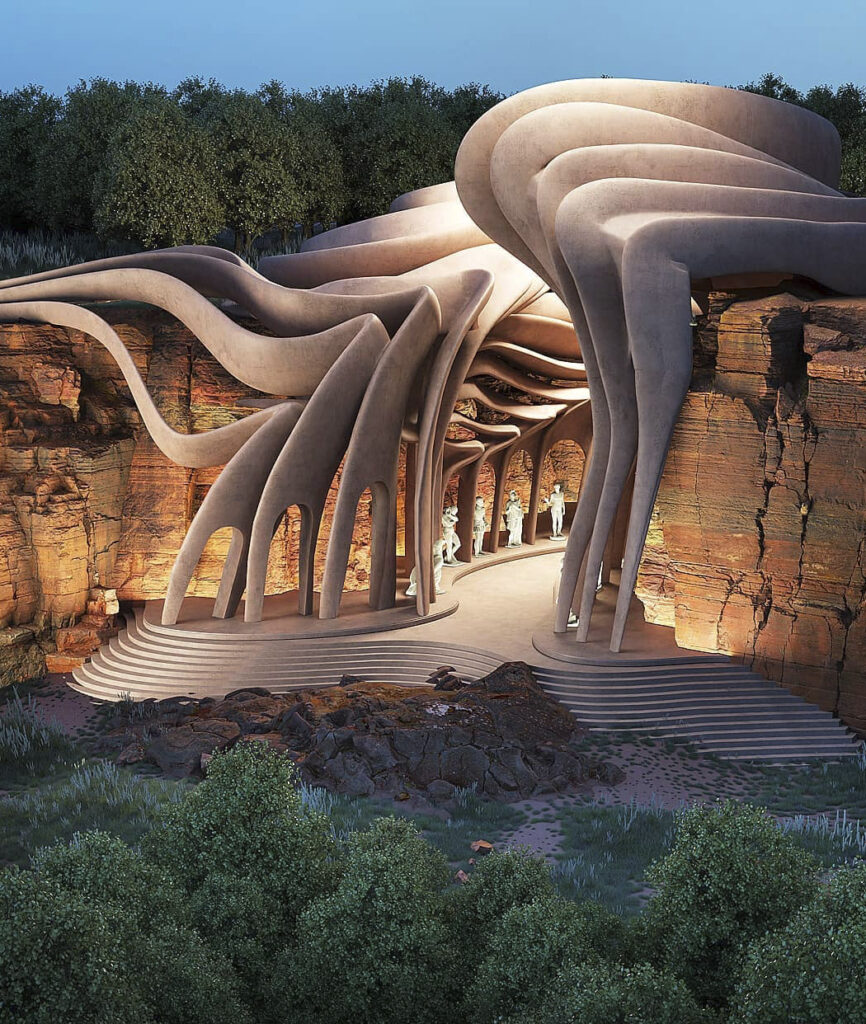
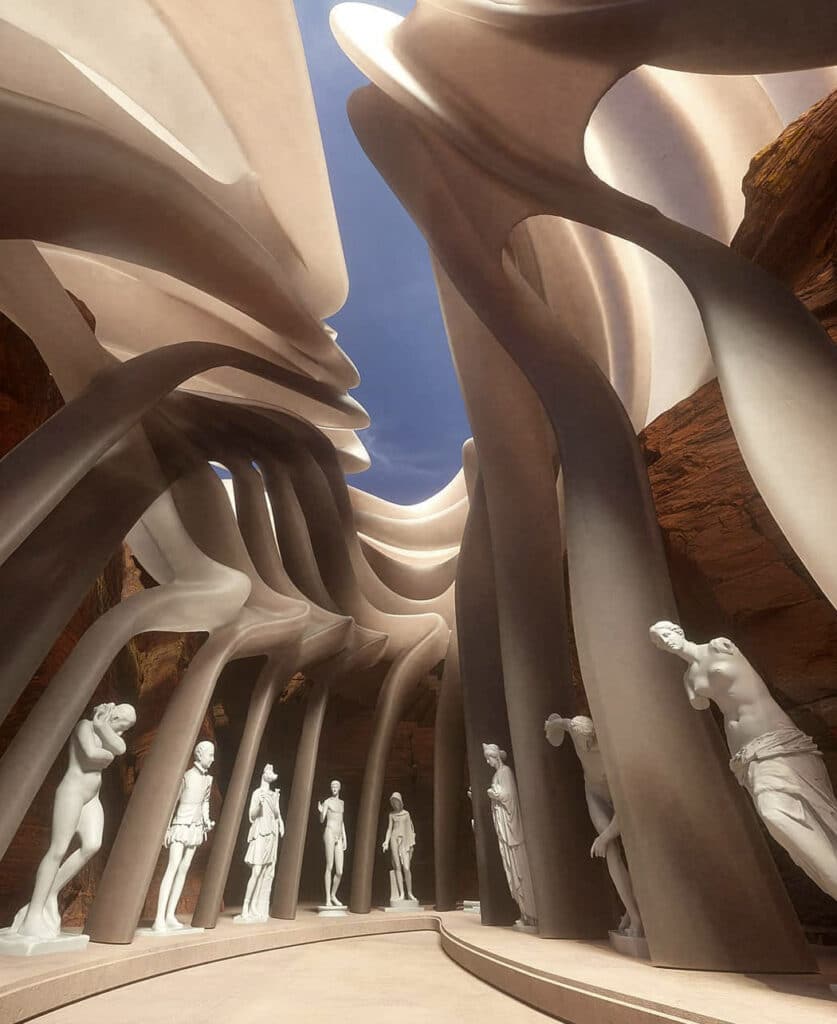
The work of legendary Gaudi inspired the project ‘Inner Sanctum.’
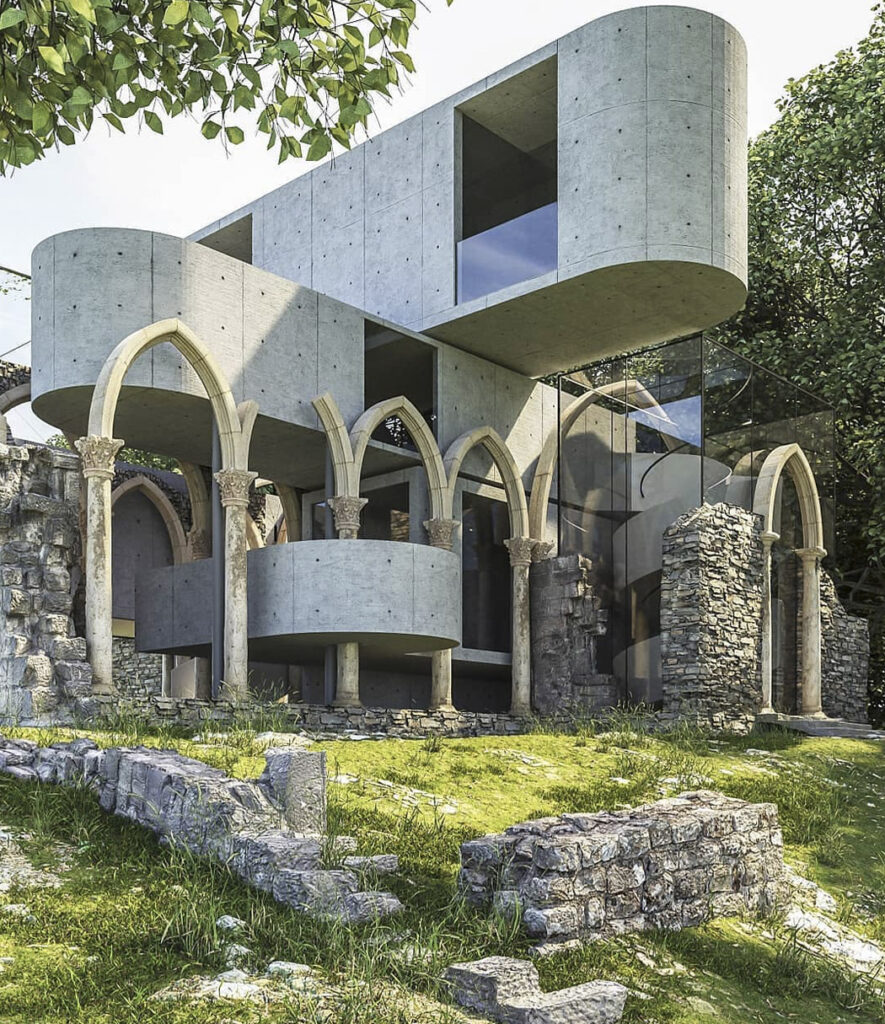
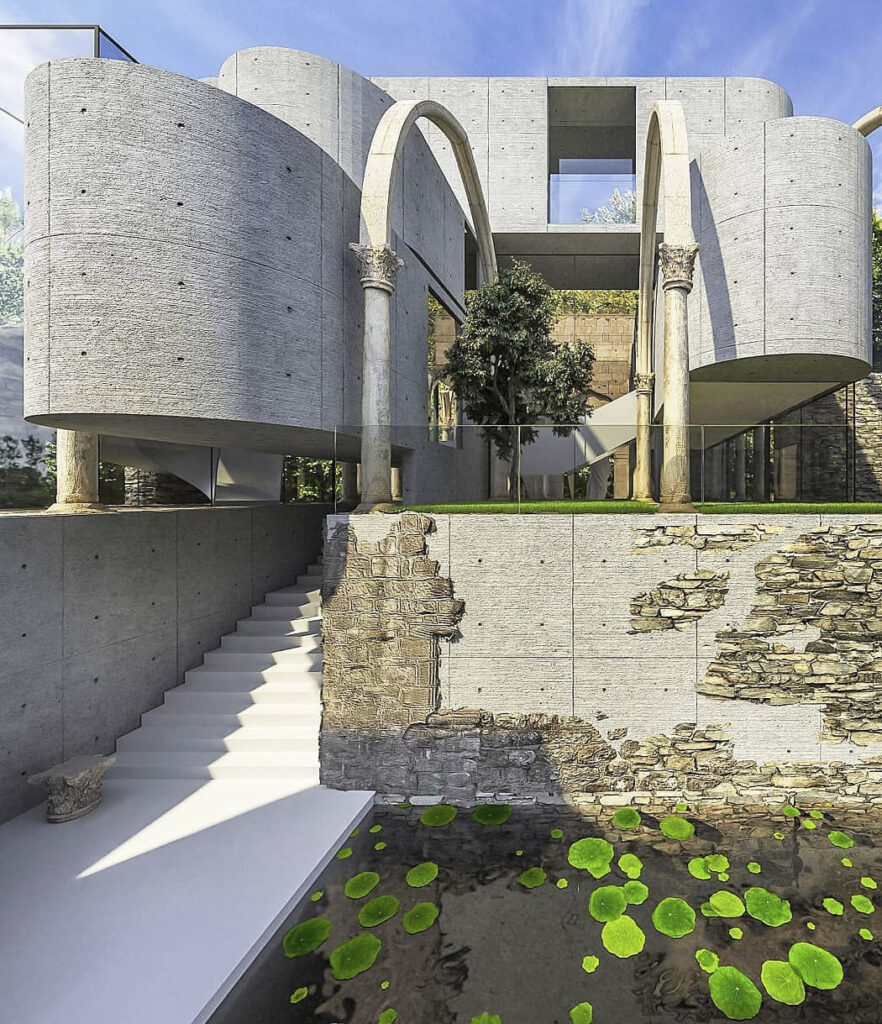
‘House Inside a Church’ is a residence built within the ruins of an ancient church. Kandalgaonkar was inspired by the ruins of St. Mary’s Abbey in York. The old arches become the base for the ground floor and upper floors. Their contrast with the new concrete slabs creates a Medieval meets modernism spectacle. It’s breathtaking.


