
Growing global awareness around environmental issues is driving increased demand for sustainability across various industries, including events. Historically, large-scale gatherings have generated significant waste and carried substantial carbon footprints, relying heavily on single-use materials and energy-intensive operations. A rapid shift is underway as the industry recognizes the need for greener practices.
Event planners and organizations are actively seeking ways to combine sustainability with the latest technological innovations to reduce their environmental impact. This integration of technology and eco-conscious design offers transformative potential, reshaping how events are produced, attended, and experienced, moving toward a model that values both impact and responsibility.

The Growing Importance of Sustainability in Events
Sustainability has evolved into a fundamental aspect of modern event planning. As consciousness regarding the environmental impact of large-scale gatherings increases, the demand for greener solutions has risen sharply. According to a report by the Event Industry Council, 85% of event professionals state sustainability is now a key consideration in their event planning process. This shift originates not only from environmental concern but also from the growing consumer demand for brands to align with eco-conscious values.
Events, by nature, tend to have a significant environmental footprint stemming from multiple sources:
- Construction of temporary stages and booths.
- Waste generated from food packaging.
- Single-use decorations and signage.
- Printed promotional materials.
Historically, the industry has relied heavily on nonrenewable resources for these elements. The shift to sustainable event planning is a response to these challenges, and technology plays a crucial role in making this transition possible.
Sustainable Materials in Event Design
Utilizing sustainable materials is one of the most straightforward ways to make events more eco-friendly. Technology has played a pivotal role in making these materials not only accessible but also cost-effective for event designers. For instance, modular and reusable structures are becoming more common for event booths and custom exhibition stands. These structures can be adapted for various events, reducing the need for single-use constructions that end up in landfills.
Another emerging trend is the use of biodegradable materials. Sustainable alternatives, like recycled plastics, bamboo, and upcycled wood, are becoming standard for creating signage, stage setups, and display stands. These materials effectively offer both sustainability and style, proving that eco-friendly design does not require compromising on aesthetics or functionality.
The use of these materials is also being driven by technological advancements. 3D printing, for example, enables the creation of customized structures with minimal waste. Designers can produce bespoke pieces without the need for mass production, ensuring that every item used has a purpose and can be reused or recycled.
How Cutting-Edge Technology Enhances Event Sustainability
Beyond materials, technology offers numerous possibilities for reducing an event’s environmental footprint.
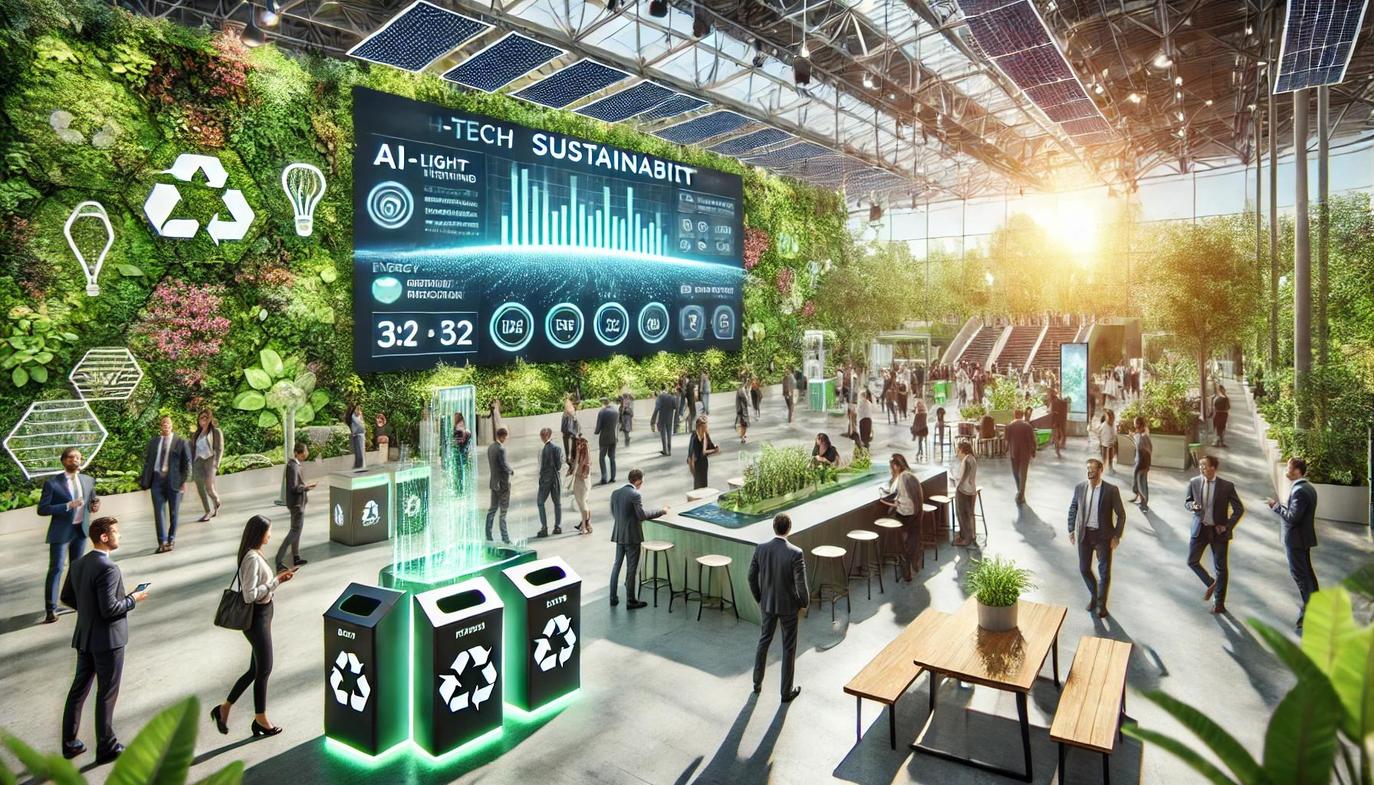
Smart technology offers powerful tools for reducing an event’s environmental footprint by helping to manage energy usage more efficiently, reduce overall waste generation, and optimize resource allocation in real-time, all contributing to a greener event.
One of the most impactful advancements is in lighting. Traditionally, events relied on heavy, energy-intensive lighting setups. Today, LED lighting has become the industry standard due to its energy efficiency and long lifespan. LED lights use far less electricity than traditional bulbs and produce much less heat, reducing the need for air conditioning in event spaces. Smart lighting systems, which adjust according to the time of day or the crowd density in a room, ensure that energy is only used when and where it’s needed.
Technology is also making a significant impact in the area of waste reduction. Smart waste management systems are helping event organizers track and optimize the disposal of waste. These systems use sensors and data analytics to monitor the volume and type of waste being produced, allowing for better sorting and recycling.
For example, at large events, waste is often segregated into compostable, recyclable, and non-recyclable categories. Advanced technology now allows for waste to be processed in a much more efficient manner, with real-time data helping to streamline this process.
One exciting innovation is the use of virtual and hybrid events, which have proven highly effective in reducing the carbon footprint of large gatherings. By leveraging live-streaming and virtual platforms, organizers can host events without the need for attendees to travel, significantly reducing travel-related emissions. This is especially important for global conferences and events where participants would otherwise need to fly long distances. Hybrid events, which combine in-person and virtual elements, provide flexibility and can accommodate a larger audience while reducing the overall environmental impact.
Using Data for Effective Sustainable Event Management
Data serves as a vital tool for making events more sustainable. With the help of digital tools, event planners can now monitor and optimize the sustainability of their events from the planning stage through to the final cleanup.
One of the most valuable aspects of data is its ability to track environmental performance. For example, data-driven platforms can provide detailed reports on energy consumption, water usage, and waste generation during an event. This enables organizers to see where improvements can be made and adjust their strategies accordingly. Measuring the environmental impact in real time provides crucial insights. Planners can then make informed decisions to reduce waste and energy consumption.
Another significant use of data is in attendee management. Technology now allows for a more efficient registration process, reducing the need for paper tickets and brochures. Digital badges and event apps are helping to eliminate the waste generated by traditional paper-based materials.
Furthermore, these apps can enhance the attendee experience by providing real-time information on event schedules, reducing the need for printed guides, and reducing waste.

Future Innovations at the Intersection of Tech and Sustainability
The potential at the intersection of technology and sustainability in event design remains largely untapped. As both technology and environmental awareness continue to evolve, so too will the possibilities for more sustainable events.
For instance, the rise of blockchain technology offers exciting prospects for creating transparent, accountable, and eco-friendly events. Blockchain can be used to track the sustainability efforts of vendors and suppliers, providing attendees with detailed information on how their participation contributes to reducing the event’s carbon footprint.
This transparency can also help build trust with consumers, who are increasingly looking for ethical and sustainable brands.
Moreover, augmented reality (AR) and virtual reality (VR) are poised to play a more significant role in reducing the environmental impact of events. These technologies enable attendees to interact with content and experiences without the need for physical products. Industries like trade shows traditionally rely on displaying numerous physical product samples. AR and VR offer a sustainable alternative by allowing participants to visualize and interact with these products digitally.
The next step in the evolution of sustainable event planning will likely involve integrating more AI-driven solutions. Artificial intelligence can analyze vast amounts of data to predict resource consumption patterns and optimize event processes. For example, AI could help event planners anticipate crowd flow, ensuring the efficient distribution of key resources, including:
- Seating arrangements.
- Food and beverage services.
- Energy consumption for lighting and climate control.

Integrating Technology for a Sustainable Future
The future of event design lies in the harmonious integration of cutting-edge event technology and robust sustainable practices. An increasing emphasis on environmental responsibility is pushing innovation, from the adoption of sustainable materials in event design to smart technologies that optimize energy use, minimize waste, and enhance attendee engagement. These tools make eco-friendly events not only more efficient but also demonstrably greener.
New advancements offer powerful methods for achieving sustainability goals. The potential for creating fully sustainable, zero-waste events becomes increasingly attainable as innovations emerge. The event industry’s embrace of these changes enables a contribution to a more sustainable future while continuing to provide unforgettable experiences. Technology and sustainability function as complementary forces, creating impactful and environmentally responsible event experiences powered by both innovation and eco-conscious values.
Forward-thinking event professionals recognize this integration not merely as an option but as a strategic necessity. Demonstrating measurable environmental responsibility through smart technology and sustainable practices enhances brand reputation, meets growing attendee expectations, and ultimately contributes to the long-term viability of the events industry itself. The shift toward tech-driven, eco-friendly events signals a maturing industry prepared to set new standards for environmental responsibility.
Frequently Asked Questions About Sustainable Event Tech
What are the most impactful technologies for reducing an event’s carbon footprint?
Virtual and hybrid event platforms significantly reduce travel-related emissions. On-site, LED lighting offers major energy savings compared to traditional lighting. Smart waste management systems utilizing sensors and data analytics improve recycling rates and reduce landfill contributions.
How can data help make event planning more sustainable?
Digital tools allow event planners to track key environmental metrics like energy consumption, water usage, and waste generation in real time. This data enables organizers to identify areas for improvement, make informed decisions during the event, and measure the overall success of their sustainability initiatives.
Are sustainable materials significantly more expensive for event design?
While some innovative sustainable materials might have a higher upfront cost, many options like modular exhibition stands, recycled plastics, and bamboo are becoming increasingly cost-competitive. Furthermore, the reusability of modular structures offers long-term savings compared to single-use constructions.
How might technologies like Blockchain and AI shape future eco-friendly events?
Blockchain can provide unprecedented transparency in supply chains, allowing verification of vendors’ sustainability claims. AI can analyze vast datasets to optimize resource allocation, predict attendee flow to manage energy use efficiently, and automate processes like waste sorting, further minimizing the environmental impact of large-scale events.


