
In a world where being green is no longer optional, advertising has to evolve. Today’s eco-conscious consumers want more than just flashy slogans—they want brands that walk the talk. And that includes how, where, and why you advertise. If your brand is serious about sustainability, your outdoor advertising strategy needs to reflect that.
Let’s explore the top outdoor advertising channels that are not just effective but also aligned with environmental values. It’s not just about ditching paper and going digital.
Why Outdoor Advertising Still Matters
Despite the digital boom, outdoor advertising (OOH) remains a powerhouse. Studies show that OOH delivers a 4x higher online activation rate per dollar spent than TV, radio, or print. It’s public, it’s bold, and it works.
The real challenge is finding the sweet spot between impact and eco-responsibility. While outdoor advertising continues to deliver strong visibility, many brands are also turning to ad networks for advertisers to expand their reach across digital channels with greater targeting and measurement capabilities. Understanding how different advertising formats compare in terms of effectiveness and sustainability can help marketers build more balanced and responsible campaigns.
1. Billboards (Digital + Solar-Powered)
Billboards have come a long way from their energy-guzzling, vinyl-wrapped ancestors. Today, solar-powered digital billboards are gaining momentum. These allow real-time updates, reduce printing waste, and, in some cases, feed surplus energy back to the grid.
Bonus: Billboards rank highest in visibility—nearly 71% of drivers recall seeing a billboard in the last week.
2. Transit Advertising (Trams, Buses, Trains)
Eco-conscious cities are upgrading public transport fleets to electric and hybrid systems. That’s good news for advertisers. When you place ads on zero-emission buses or trains, you’re tapping into an audience of millions without contributing to pollution.
In cities like Amsterdam or Oslo, where public transport is nearly 100% electric, transit advertising becomes an ideal low-emission channel.
3. Street Furniture (Bus Shelters, Benches, Kiosks)
Street furniture advertising has two major advantages:
- It’s typically community-integrated, not intrusive.
- Many providers now use recyclable materials and solar lighting.
For example, JCDecaux introduced bus shelters powered entirely by solar energy in over 30 global cities. Combined with recycled poster frames, this makes for a solid green choice.
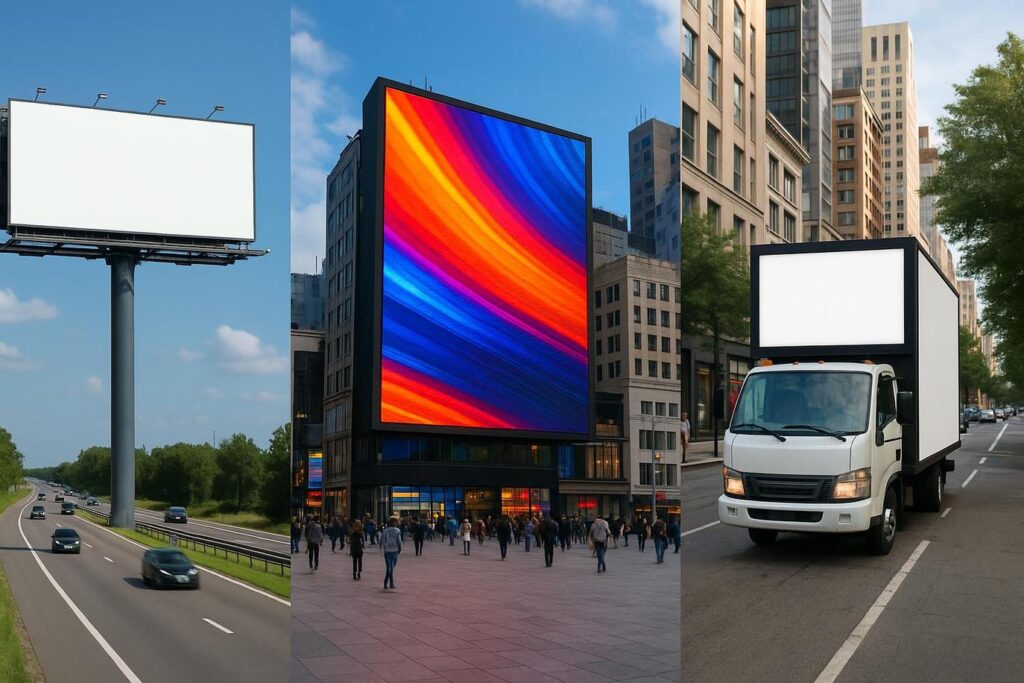
4. Mobile Billboards on Electric Vehicles
Got a message to move? Mobile billboards on electric vans or cargo bikes offer both reach and sustainability. Companies like Movia Media offset emissions from their mobile ads by planting 100 trees per 4-week campaign.
With more cities restricting diesel and gas vehicles, electric mobile ads are set to grow.
5. Eco Murals & Painted Walls
Murals aren’t just for hip neighborhoods anymore—they’re powerful advertising tools with zero electricity consumption. And now, they’re going green.
Using photocatalytic paints (like those made by Airlite), murals can actually purify the air. One mural can offset the emissions of dozens of cars daily. Talk about art that breathes.
Honorable Mentions: Less Common But Mighty
Guerrilla Green Installations
Think moss graffiti, seed bombs with brand messages, or upcycled art pop-ups. These create buzz and leave no trace.
Living Walls
Install a vertical garden on a building facade with your brand name sculpted in. It’s bold, clean, and very Instagrammable.
Measurement Without the Waste
Eco-conscious brands understand that sustainability doesn’t end when the billboard goes up or the poster gets printed. The real impact lies in what happens next—and in how that impact is measured. Traditional advertising methods often rely on printed brochures, tear-off flyers, or disposable coupons, all of which generate waste and require manual tracking. Today, there’s a smarter and cleaner way to do it.
Digital-first measurement tools are not only paper-free but also offer real-time performance insights, helping brands stay both environmentally responsible and data-driven. Here are a few sustainable alternatives to traditional print-based tracking methods:
Bit.ly – Smart Link Tracking
Use Bit.ly to shorten long URLs into clean, branded links that are easy to scan, remember, and share. But the real power lies in its detailed analytics—track where your clicks are coming from, what device they used, and when they interacted. No physical handouts, no guessing, no waste.
Tapkit – NFC Campaigns With a Touch
Tapkit transforms everyday physical spaces into digital gateways using NFC-enabled chips embedded in posters, packaging, or signage. With just a smartphone tap, users are directed to your digital content, offer, or landing page. It’s fully paperless, reusable, and integrates seamlessly with your campaign analytics.
Google Data Studio – Low-Energy, High-Impact Reporting
Collecting data is only part of the process—interpreting it matters just as much. Google Data Studio provides a visually engaging dashboard that connects directly to your digital campaign tools (like Bit.ly, Google Ads, or social platforms). It’s hosted in Google’s energy-efficient cloud infrastructure and allows you to build custom, automated, and shareable reports without printing a single page.
The Real Green Advantage
Sustainability is no longer a niche concern—it’s a core expectation. Modern consumers are not just passive buyers; they’re active participants in shaping the world they want to live in. And that includes holding brands accountable for the environmental footprint of their products and their marketing practices.
A 2022 global study by IBM and the National Retail Federation revealed that 62% of consumers are willing to change their purchasing habits to help reduce negative environmental impact. That figure rises dramatically to 77% among millennials, a demographic that holds increasing influence over global spending trends. These aren’t just feel-good statistics—they’re a clear signal that aligning your brand with environmental values is a competitive advantage.
In this context, sustainable advertising becomes a trust-builder. When your advertising methods reflect the same eco-values your products claim to support, it reinforces credibility and deepens customer loyalty. Instead of loud, flashy taglines that might come off as hollow, your actions do the talking—through ethical media choices, waste-free formats, and measurable impact.
Consumers today want to see more than a logo—they want to see leadership. And sustainable outdoor advertising is one of the clearest ways to show it.
Final Word: Do Less Harm, Do More Good
Eco-friendly outdoor advertising is more than a checkbox—it’s a reflection of your brand’s role in the world. The most innovative brands are choosing not just visibility but responsibility. And consumers are responding.
So go ahead—light up the skyline, roll through the city, or paint the town green. Just make sure you do it sustainably. For brands that want a deeper understanding of what is greenwashing and the common pitfalls to avoid, the full breakdown is worth a read.

