
Have you ever noticed how underwater photos are always a gray-blue and lacking color? That is because water interferes with the light shining in from the surface, distorting the colors of everything. Isn’t it a pity that the majority of our planet is a beautiful underwater world, but we can’t see it properly?
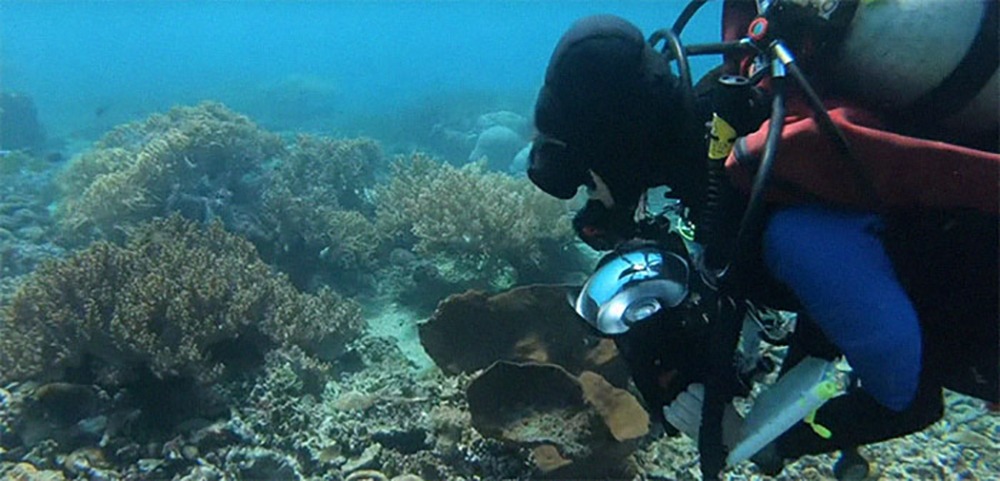

That’s precisely what oceanographer Derya Akkaynak and engineer Tali Treibitz thought, which is why they created an algorithm called ‘Sea-thru’ that “removes the water” from the photograph! The process is detailed in a paper presented in June at the IEEE Conference on Computer Vision and Pattern Recognition.
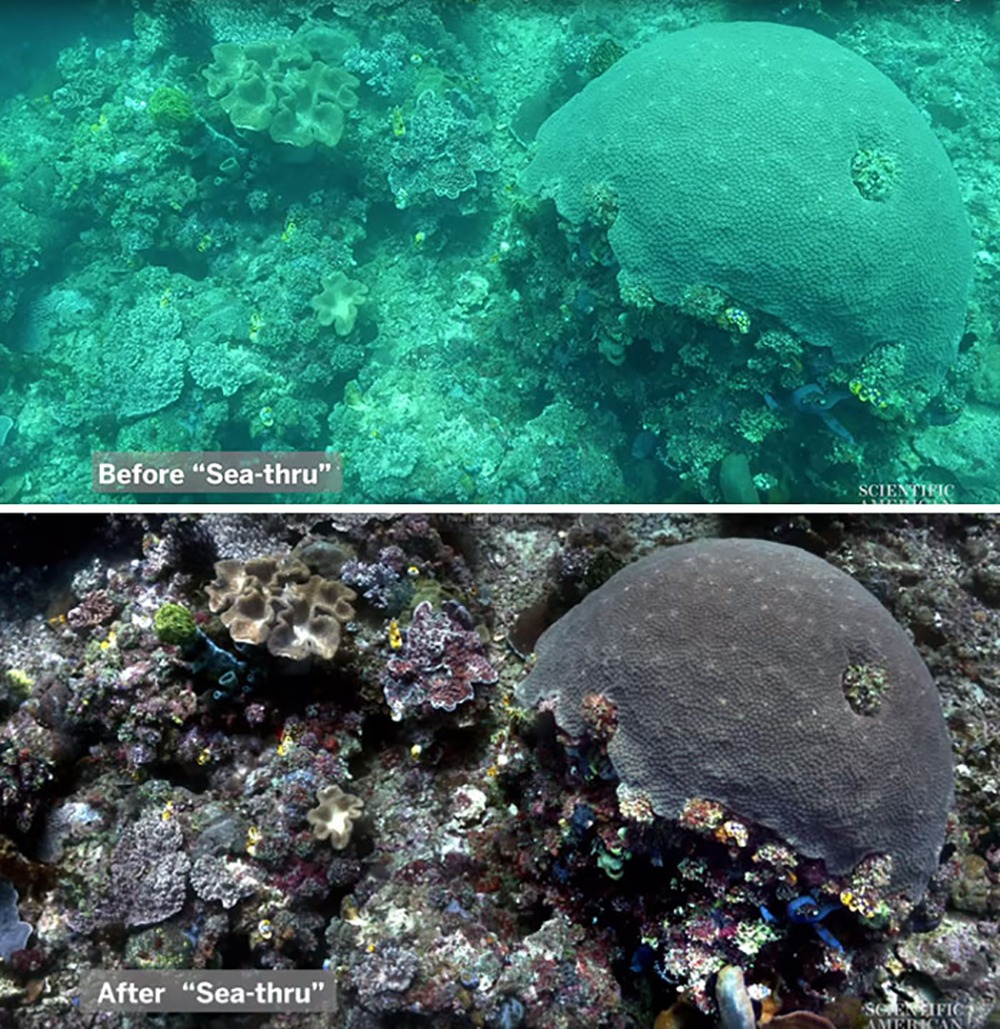
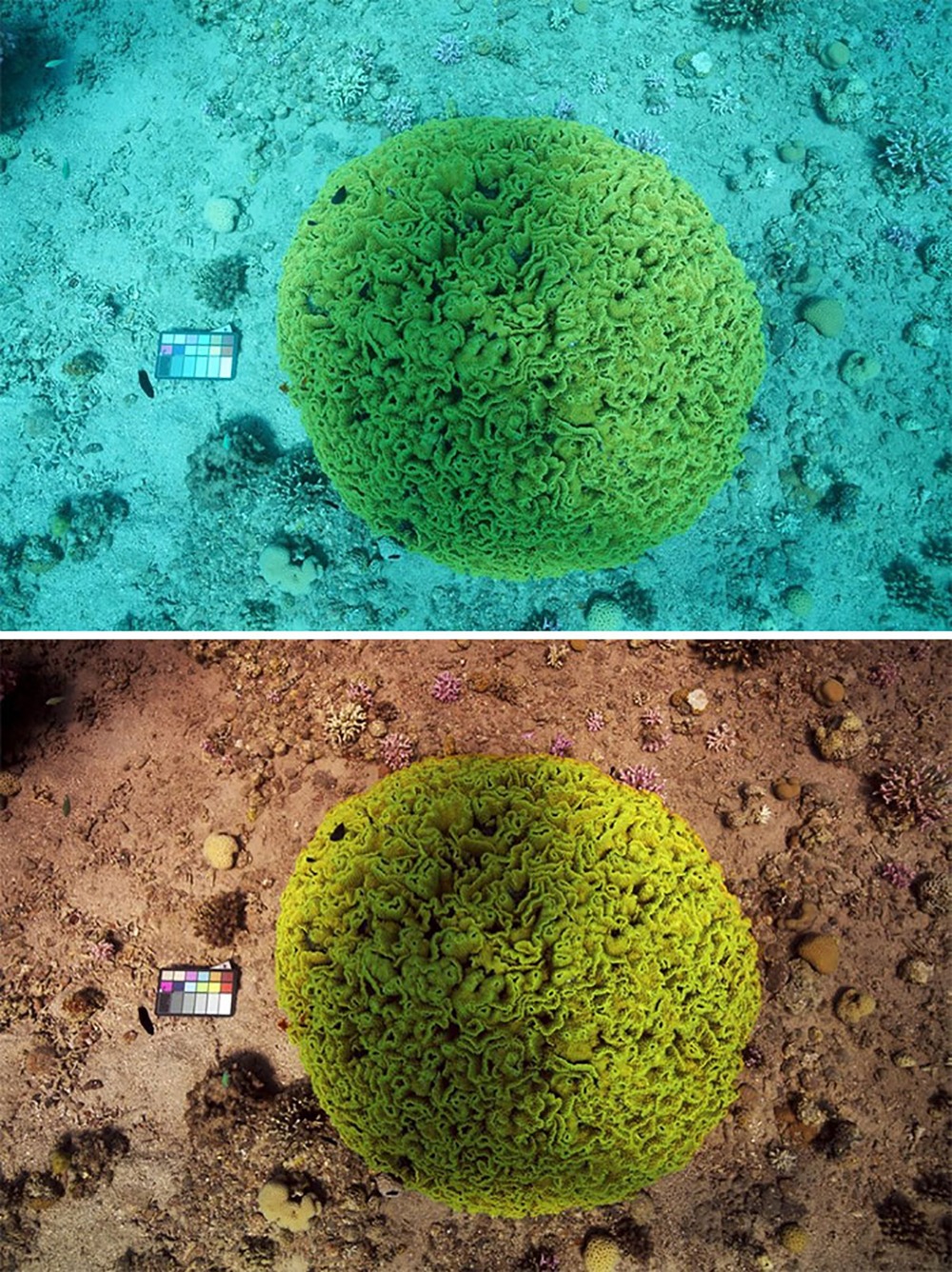
The algorithm makes it possible to see all the wonders of the seven seas. All the hues and saturation are as vibrant as if the sunlight was shining directly on that glorious oceanic landscape. The photograph turns out the same as a professional landscape picture.
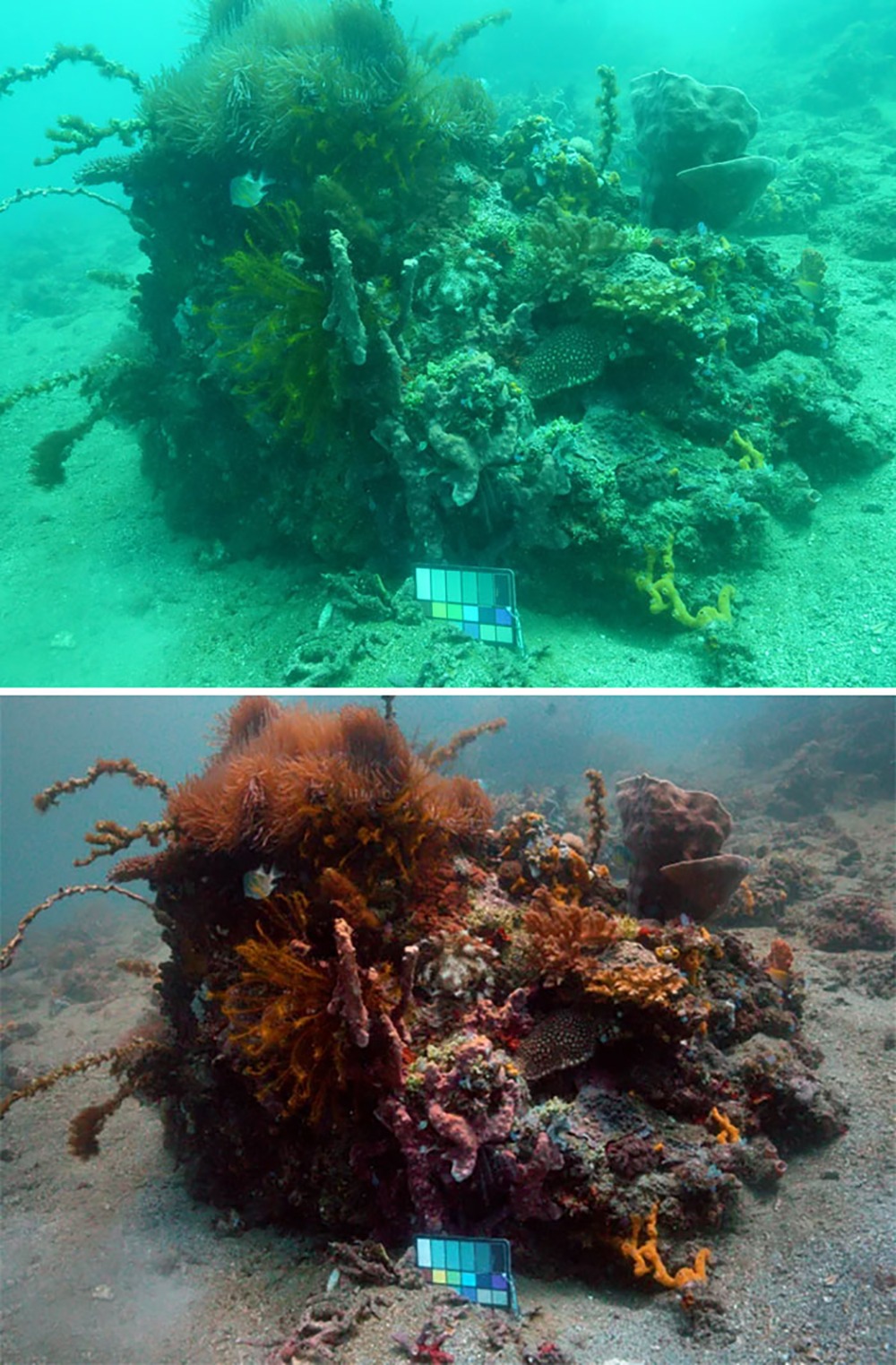
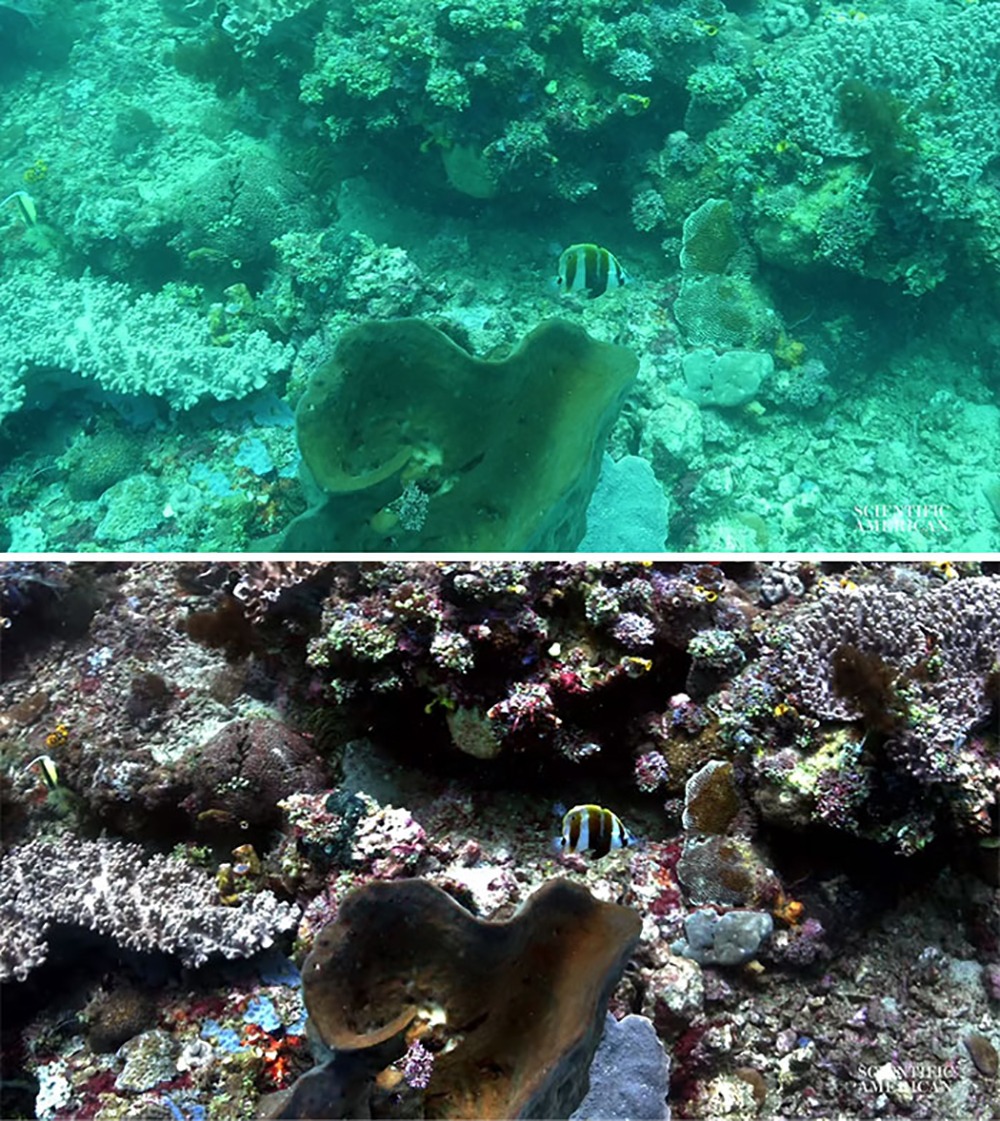
The reason why underwater coral photographers end up capturing washed-out images that lack vibrant yellows and reds is that water scatters light at different wavelengths. Another strange thing that happens is something underwater photographers call “light refraction,” which makes objects appear larger and closer than they are. The algorithm corrects all of this and reveals what the marine life looks like without all the distortions.


The program reverses image distortion pixel by pixel. It factors in the physics of light absorption and scattering in the atmosphere compared to in the sea where the particles that light interacts with are much bigger.

See-thru is not like Photoshopping the photo. With Photoshop, a photograph is artificially modified to enhance the colors absorbed by the water. The Sea-Thru algorithm, on the other hand, creates a “physically accurate correction.” Meaning, what you see is what it is – it’s not just a visually pleasing image.

Coral biologist Pim Bongaerts of the California Academy of Sciences said:
What I like about this approach is that it’s really about obtaining true colors. Getting true color could really help us get a lot more worth out of our current data sets.
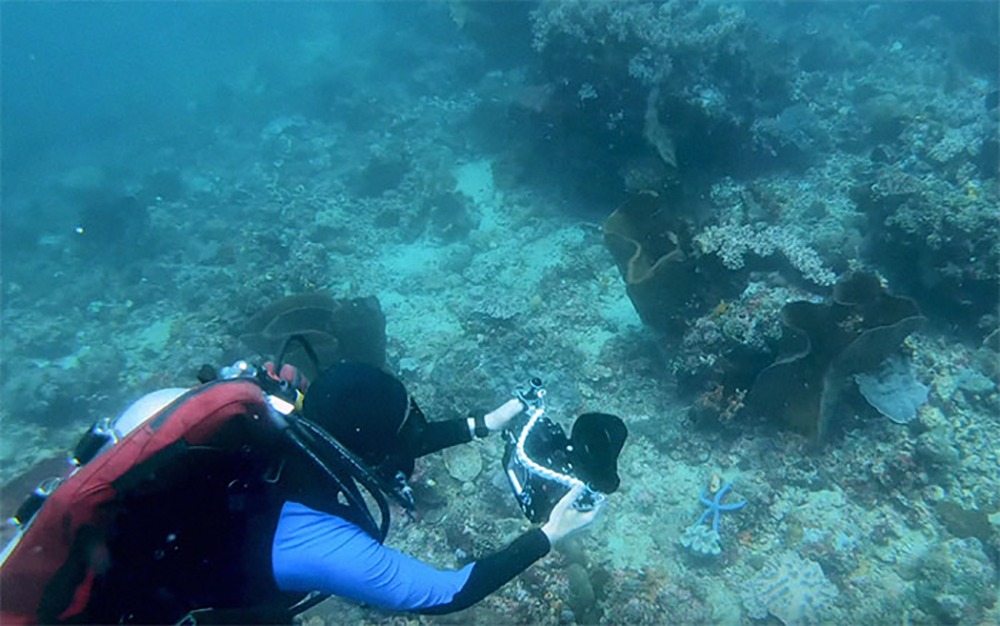
The effects are a helping hand for biologists who currently rely on time-consuming human evaluation to identify, classify, and count species in underwater photographs. For scientists, being able to see exact colors underneath the surface is like giving someone with poor vision glasses – it’s a relief!
The video below explains the process of taking photographs with Sea-thru.


