
Prevention of Alzheimer’s disease may soon be possible. The degenerative neurological disease is the most common form of dementia, of which there currently is no cure. Researchers are still just investigating the exact causes of Alzheimer’s disease. Nevertheless, scientists have been busy working on a vaccine for decades with what knowledge they already have… and now they’re closer than ever before to the answer.
Alzheimer’s Disease is one of the top causes of death for people aged 65 and above, according to the Centers for Disease Control and Prevention (CDC). James Pickett, head of research at the Alzheimer’s Society, said:
We’ve known about Alzheimer’s for over 100 years. Forty years ago every form of cancer was incurable – now people are surviving. HIV was almost unknown until 1981, and now it looks like it can be cured. In all that time, we’ve found nothing for Alzheimer’s. It’s a difficult disease, and we’re not even sure if we fully understand its mechanism. What we do know is that it’s a killer and we have no cure.
What scientists have found so far is that the disease seems to involve a buildup of specific proteins in the brain called beta-amyloid and tau. These buildups (abnormal congregations) are typically referred to as plaques or neurofibrillary tangles. Some researchers hope that targeting amyloid buildup might make it possible to stop Alzheimer’s from progressing.
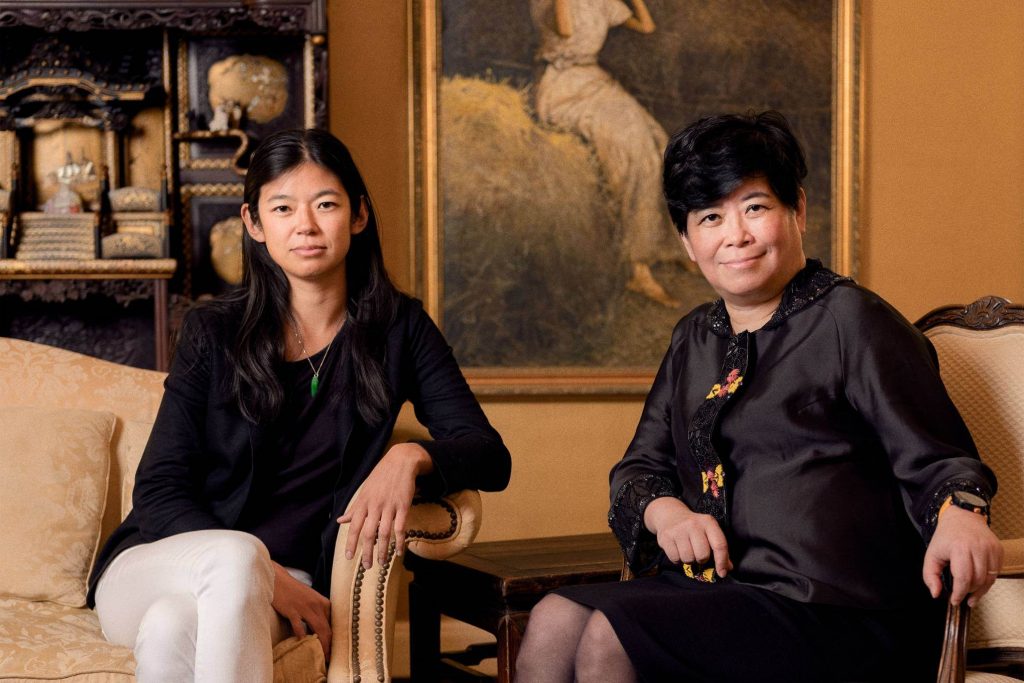
Chang Yi, a top scientist in the immunology and biochemistry field with two PhDs, is one of them. Her work has led her to develop a vaccine for Alzheimer’s. She is the co-founder of United Biomedical, a sprawling drug development company and has developed tests for HIV and Hepatitis C, and conducted pioneering research into an HIV vaccine. In recent years, she has focused all her efforts on an Alzheimer’s vaccine she calls UB-311 through the spinoff company United Neuroscience.
Her research for UB-311 involved a new field in immunology called endobody vaccines. While most vaccines prepare our body’s immune system to fight off so-called exogenous disease, such as measles or flu, caused by bacteria or viruses entering our blood, endobody vaccines help the body’s immune system deal with malfunctioning internal parts of the body that it otherwise ignores. Endobody vaccines are very rare. So far, only four have been approved for the market, two for cancer, and two for animal healthcare – one of which was developed by Chang Yi in 2003.
Her research focuses on the role of epitopes – fragments of proteins, five to six amino acids long, that play a critical role in the body’s defense against external diseases. The human immune system relies on a team of cells and proteins that identify, neutralize, and destroy invaders. As explained by WIRED:
The body’s first two lines of defense are inflammation and the so-called neutrophil cells. Inflammation is caused by damaged cells releasing chemicals that cause blood vessels in the area to leak, swelling the tissue with fluid and isolating the foreign substance. Neutrophils are white blood cells that then ingest invaders and break down their protein chains. The next wave of defense – white cells called microphages – “eat” the neutrophils, extracting fractions of the invading proteins and attaching them to the surface of their cell wall. These fractions are the so-called epitopes.
The presence of foreign epitopes on microphage cell walls indirectly triggers a type of white cell called a B cell. These are produced in the bone marrow and, when triggered, start producing antibodies that clump the invaders together, making them easy targets for T cells, another type of white cell.
After the body has defeated the invasion, it stores a blueprint of the successful B cells and T cells. This makes it much faster at fighting another bout of the same disease, swamping the threat before it has time to spread. Most immunization against disease involves mimicking an infection by injecting an inactivated or attenuated form of the invader to trigger the immune system – should an infection occur, the immune system will then respond before the person becomes ill.
Through her work with epitopes, Chang Yi began developing endovaccines by creating synthetic versions of the tiny chains of amino acids that trigger the production of antibodies. In the case of her Alzheimer’s vaccine, this allowed her to develop a mechanism that triggers antibodies to Alzheimer’s protein in the blood. These then attract T cells that attack any protein with an antibody attached. In other words, Chang Yi’s UB-311 vaccine provokes an antibody response, clearing the tangled proteins away without causing potentially damaging inflammation.
Chang Yi’s new endobody vaccines could overcome the problem of inflammation because, as Mei Mei explains, “Your body has two tools to deal with infection – inflammation to trap the invader, and cells that attack and destroy them. The Elan vaccine triggered both those responses. Chang Yi’s vaccines use molecules that are so small that they don’t trigger inflammation.”
 In January 2019, United Neuroscience announced the first results from a phase IIa clinical trial in 42 human patients: The trial went so well that 96% of the patients responded positively having no serious side-effects to the vaccine, UB-311. The patients even showed improved brain function and a reduction in the protein plaque gumming up their neurons.
Chang Yi said:
We were able to generate some antibodies in all patients, which is unusual for vaccines. We’re talking about almost a 100 per cent response rate. So far, we have seen an improvement in three out of three measurements of cognitive performance for patients with mild Alzheimer’s disease. We can’t make any claims yet, but we’re pointing in all the right directions.
The company is in the process of conducting phase III trials for its Alzheimer’s vaccine; meanwhile, it has adapted the synthetic peptide technology to create vaccines for the hallmark protein in Parkinson’s disease. The Parkinson’s vaccine – known as UB-312 – is just about to enter phase I testing. There’s also a third vaccine, targeting Tau (a protein found in soldiers and athletes who face repeated or significant head injuries) now in the pre-clinical phase.
Lou Reese, Chang Yi’s husband and co-founder of United Neuroscience, told WIRED:
We have one vaccine for Alzheimer’s, another for Parkinson’s, another for migraine coming out of the pipeline based on Chang Yi’s building blocks. We have a 50-year vision – to immuno-sculpt people against chronic illness and chronic aging with vaccines as prolific as vaccines for infectious diseases.
Mei Mei envisions the future as such:
What if you went to the doctor and they took a measurement that could record protein levels in your brain? If it’s too high, we give you a vaccine and keep toxic proteins at bay. You could do it in a kiosk in a mall or with an iPad at home, if this could be monitored through affordable blood tests or retinal scans. We’re starting work on an anti-migraine vaccine at the end of this year and the technology can be applied to anything.
For Chang Yi, the goal is to take what she’s learned with Alzheimer’s and use it to treat everything from cancer to HIV. She said:
If we can do that, I would feel my life’s purpose has been satisfied. My parents gave me the name Chang Yi which, in English, means Always Happy. If we cured Alzheimer’s I would be very happy.


