
Why 2050 Is A Bad Net-Zero Climate Goal
Most countries have adopted a net-zero by mid-century climate goal. Unfortunately, a 2050 goal covers politicians, big oil, and other polluting mega-companies to preserve the status quo. The far-off target facilitates inaction and consequently catastrophically high levels of irreversible climate breakdown. A deadline three decades away only encourages further climate procrastination. Furthermore, most of the currently elected leaders setting it will conveniently be out of office long before.
Perhaps those in charge are betting that someone will invent a miracle-working carbon-sucking technology to clean up our mess – simply, like a vacuum cleaner for a house. But, unfortunately, even the largest direct air capture facility in the world might only capture one ten-millionth of global emissions if it works as well as it’s supposed to. The facility is new, just recently opening in Iceland, so it’s too soon to say. Furthermore, the technology is still so expensive that it can’t be deployed worldwide.

Reforestation and conservation agriculture are more affordable and effective negative-emissions strategies but their carbon capture potential pails compared to the cumulative fossil fuel carbon emissions. Furthermore, their effects might not be permanent. Regardless, deforestation continues to rise, counteracting all the tree-planting efforts. The world’s meat-eating addiction has the beef industry destroying rainforests faster than ever before to make space for grazing cattle.
Why don’t people realize that even the current 1.1°C of global heating is not a “safe” level? What will it take for everyone to open their eyes if today’s weather catastrophes aren’t phasing them? Heatwaves are becoming so severe that wildfires and floods are raging with unprecedented intensity. Imagine future leaders’ position in 10–20 years, trying to reach net-zero amid fiercer storms, floods, and fires that pummel infrastructure, insurance, financial, and political systems, jeopardizing every citizen’s food, water, and health security!

Fossil-fuel and meat industry executives don’t care, blinded by all the money they’re making. But what about everyone else? How much do you care? Ask yourself, are you supporting these criminals by buying their products? If you can avoid it, are you? The responsibility ultimately lies in each one of us. Although, the problem needs to be addressed at the root, with governments enforcing the transition away from destructive commodities and towards sustainable ones. They need to stop subsidizing the unsustainable planet-destroying businesses, and banks shouldn’t be allowed to fund them either.

Every society worldwide has to shift into emergency mode simultaneously to lower the odds of civilization collapse. It’s not enough for a handful of countries to place a moratorium on new oil and gas infrastructure while the rest of the world carries on business as usual. Furthermore, higher-emitting, wealthier nations have a moral obligation to provide transitional assistance to lower-emitting developing countries. Climate breakdown has only barely begun, and it’s already catastrophic. And the damage is irreversible.
The most significant contributors are the meat and oil industries. So, let’s dive into the details of those sectors a little more.
Emissions From 20 Livestock Firms Surpass Those Of Whole Countries

Twenty meat and dairy firms emit more greenhouse gases than Britain, France, or Germany but receive billions of dollars in funding. Global livestock companies received over US$478 billion in financial backing between 2015 and 2020. The money comes from 2,500 investment firms, pension funds, and banks, mainly in Europe and North America. According to a report called Meat Atlas by the European political foundation, Heinrich Böll Stiftung, and Friends of the Earth, meat production could increase 40 million tons by 2029 with that level of financial support, hitting 366 million tons of meat annually.
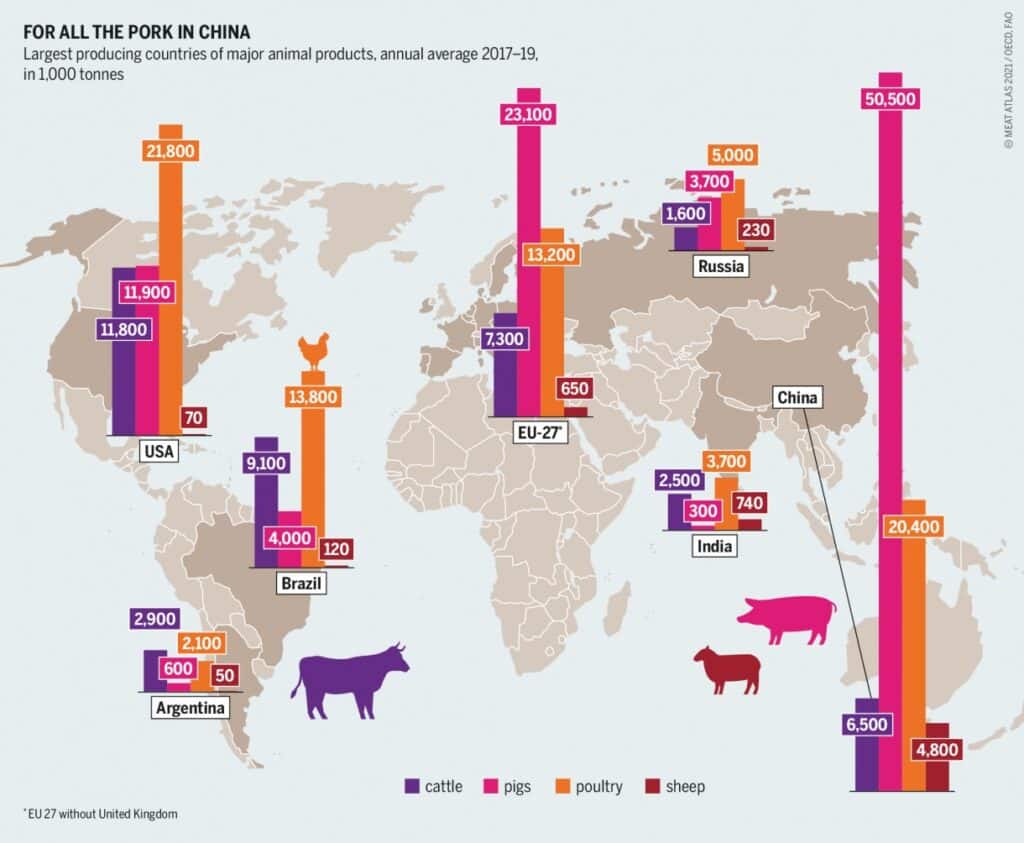
By 2029, the most prominent producers – Brazil, China, the United States, and the European Union– could still produce 60% of worldwide meat output. Worldwide, 75% of agricultural land is dedicated to raising animals and the crops to feed them. This is one of the core driving forces of deforestation, especially in the Amazon rainforest.
Food and agriculture campaigner Stanka Becheva, who is working with Friends of the Earth, said:
This is all for-profit and is not really addressing the fundamental issues we see in the current animal protein-centered food system that is having a devastating impact on climate, biodiversity and is actually harming people around the globe. The bottom line is that we need to begin reducing the number of food animals on the planet and incentivize different consumption models. More meat industry regulation is needed too to make sure companies are paying for the harms they have created throughout the supply chain and to minimize further damage.
Wealthy countries need to reduce their consumption of animal products drastically to tackle the climate crisis. Animal agriculture accounts for 14.5% of global greenhouse gas emissions. Furthermore, investors, private banks, and development banks must stop funding large-scale animal production projects just as much as fossil fuel projects. Recent heatwaves across America are a perfect example of why.
Heatwaves of Destruction and Death

Human-induced global heating caused California to experience its hottest summer on record this year. The state and others across the American west – including Idaho, Oregon, Nevada, and Utah – faced historic heatwaves this year, resulting in intense wildfires, property destruction, and health issues ending in hundreds of deaths. It’s all part of the climate crisis!
The National Oceanic and Atmospheric Administration reported that 16 other states also endured scorching hot summers, making it on their list of top-five warmest summers ever recorded. In addition, the National Weather Service has recently issued excessive heat warnings across the southwest, with Arizona and Colorado facing record daily highs.
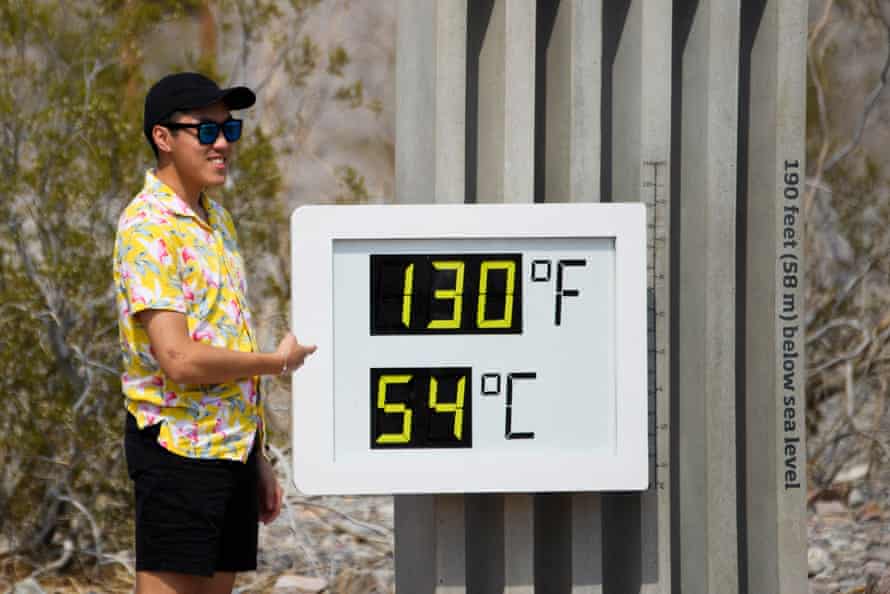
The June heatwave that extended from California through Canada, across typically cool Pacific north-west cities, killed hundreds of people in Oregon and Washington and almost 500 people in Canada’s westernmost province. In addition, the heat may have also killed over a billion marine animals along Canada’s Pacific coast.
The extreme heat even affected infrastructure in the United States, straining the power grid and forcing businesses, schools, outdoor pools, mobile vaccination units, and COVID-19 testing sites to close. Furthermore, it has accelerated and intensified the region’s drought conditions. The rising temperatures have dried up California’s already dry landscape, increasing the risks of more wildfires.
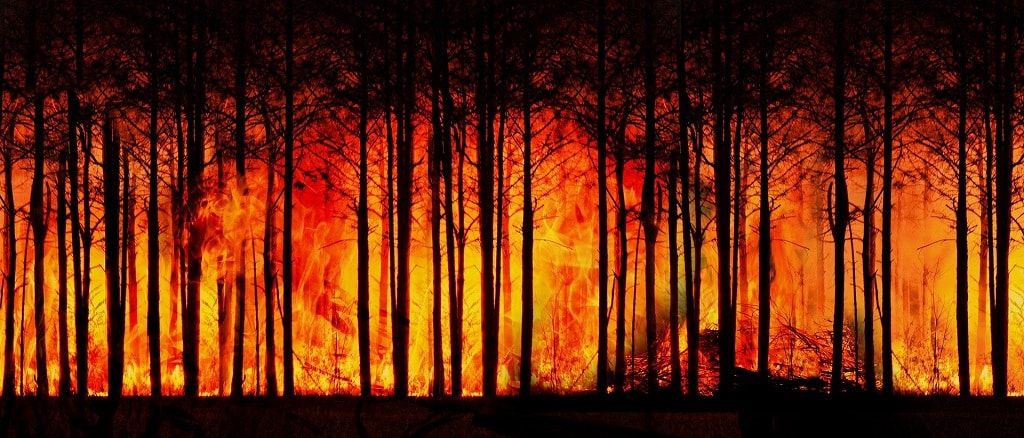
The state suffered its worst fire season last year, and this year may surpass it with massive blazes burning already. Over 3,000 structures have been destroyed, two million acres burned, and one fatality, with months still left in the season.
Thom Porter, the Cal Fire chief, said last month:
There is fire activity happening in California that we have never seen before. The critical thing for the public to know is to evacuate early. Every acre can and will burn someday in this state.

To make matters worse, the state had to shut down a hydropower plant at Lake Oroville due to drought bringing water levels too low for the facility to operate. Unfortunately, as the state is obliged to rely more on gas-fired plants, the heat also forces a greater demand on the power grid. Thus, the situation is interfering with the transition to a carbon-free economy.
No Easy Way Out
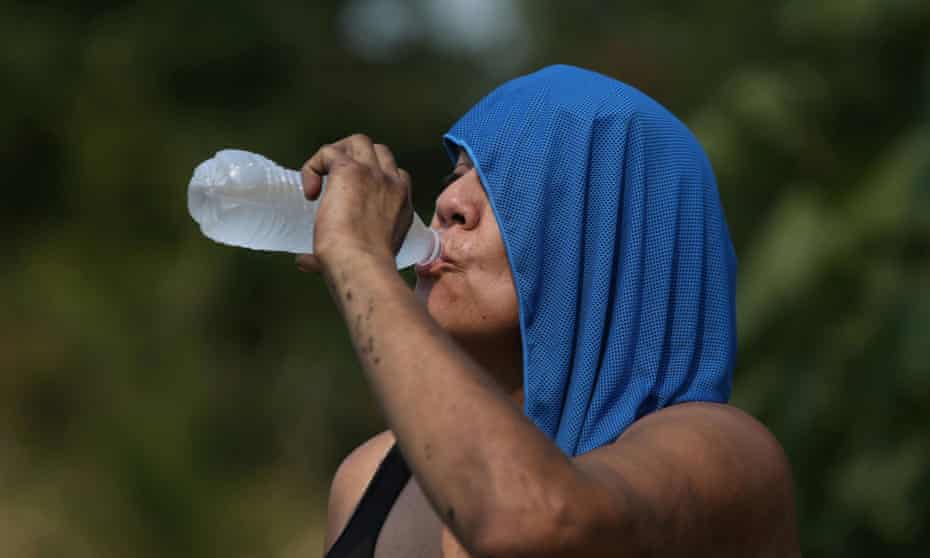
There is no easy way out. Policymakers need to step up for all our sake and make the hard choices. The people profiting from the causes of the climate crisis need to stop being greedy or be stopped by force. And each of us needs to do everything in our power not to support the things responsible for this mess. If the world doesn’t start treating the climate emergency with the urgency it deserves, the unfathomable consequences will be everyone’s biggest regret. So, prepare for climate change.


