
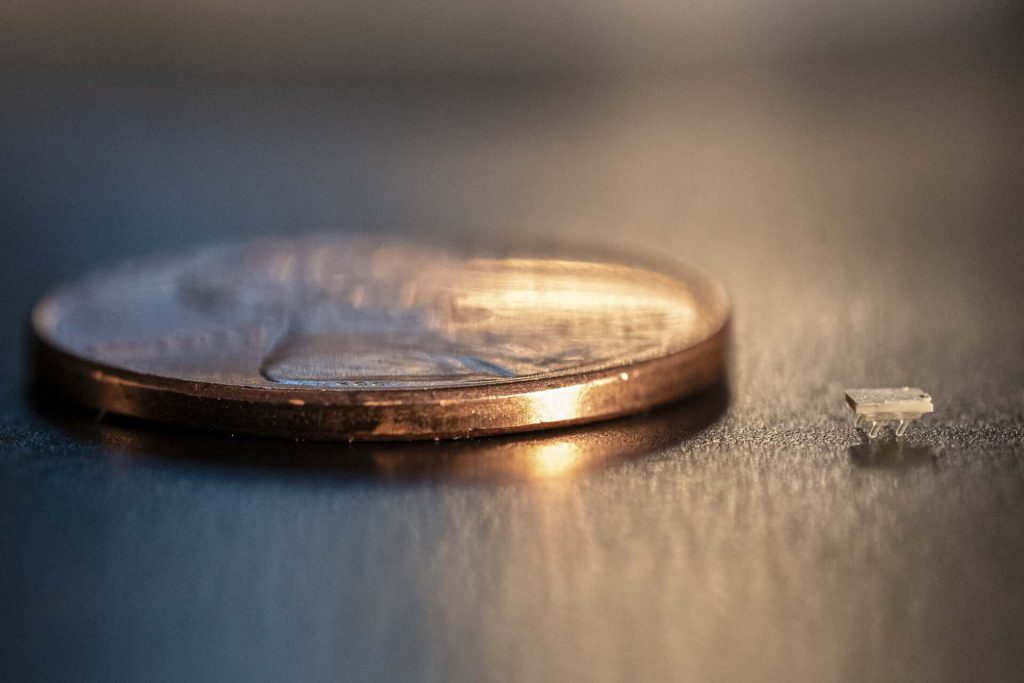
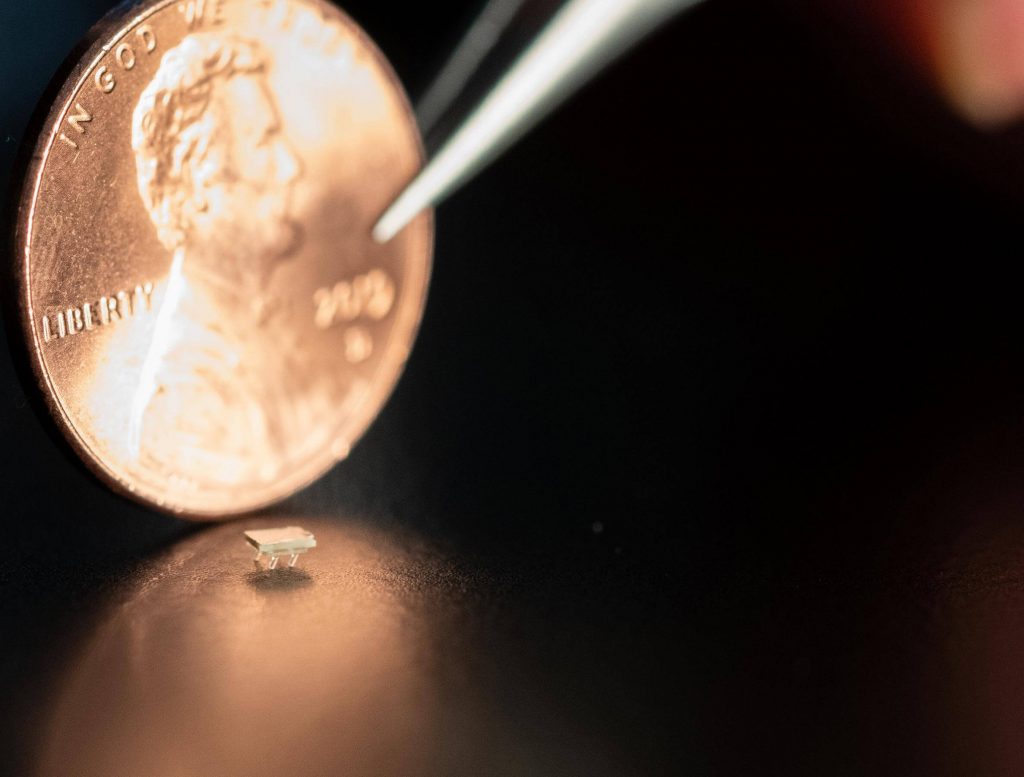
There is a new robot that is not just the cutest thing you have ever seen but also could possibly save your life one day! It is only two millimeters long (the size of the world’s smallest ant) and weighs less than a teaspoon of salt.
The robot has been named “micro-bristle-bot” and was built at the Georgia Institute of Technology. Once you learn how it works and what it could do, you will really be impressed.
How Does This Robot Function?
Most robots run on electricity, but this little bot is powered by vibrations. It’s 3D-printed with a super tiny actuator, in a four- or six-legged configuration. To power the actuator certain frequencies are blasted out of a vibrating table called a piezoelectric shaker, however, an ordinary speaker can power it the same way.
Only when the frequency is perfectly in tune with the robots onboard components, will the device come to life, as it’s external vibrations reverberate inside the robot in order to move it’s legs up and down. This robot is loyal to his frequency, it will not move to any other random sounds in the environment – it only responds to a single perfect pitch. The robots can move up to four times their body length every second!
Robot Teamwork
Georgia Tech assistant professor Azadeh Ansari believes by pairing together several robots that respond to varying frequencies, the robots could be coordinated to move together like a swarm of ants.
Like an orchestra conductor, software could be used to make the right sounds at the right moments, to control one robot like the trumpet section, one on the bass and another like the violin.
The Future Benefits Of The Micro-Bristle-Bot
The research team thinks they could work as environmental sensors, or even make their way into the human body to repair tissues in the future. This is easy to believe since they are so tiny, fast, require no battery or other electricity and they are well-suited for extreme environments like the human body. So, it’s a pretty safe guess.
For now, the team is improving the robots steering capabilities. Next, they plan to figure out how to miniaturize the bots to a microscopic scale so they can live under our skin.


