
UK startup, Arrival, is on a mission to create sustainable urban environments with its vehicles, products, devices, and services – all of which are also designed to provide exceptional, intelligent experiences at every touchpoint. Its latest item to debut is a zero-emissions public transit bus. The company wants to make public transport appealing while achieving carbon neutrality, so it expanded its portfolio to include more than just electric delivery vans and taxis.

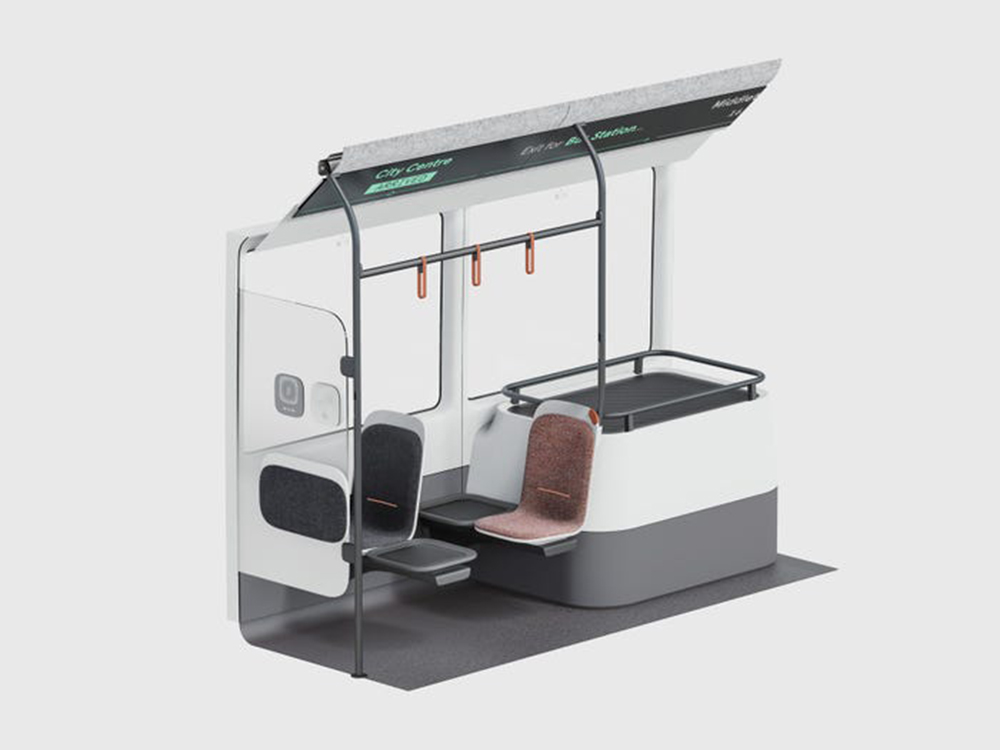
The bus promotes a positive perception of public transportation because the inside is spacious with modular seats that can be removed for personal space and a rooftop skylight that spans the entire length of the vehicle.
Kwame Nyanning, Chief of Experience at Arrival, said:
Arrival’s core focus is to make your every-day experience radically better, whether that is your daily journey on an Arrival Bus, or through your work as a driver delivering parcels from an Arrival Van. We are working with cities to make every touchpoint within the urban transportation ecosystem not only better but also more equitable and sustainable. Recent events have made it clear the world needs to take action now in order to improve lives and effect real change.
The interior and the bus’s exterior is rigged with lots of displays to make information sharing clear and straightforward. Furthermore, all the technology is part of a system that can connect all buses so that passengers can get real-time information about times, and operators can manage their fleets.


Nyanning said in an interview with The Verge:
This bus is an excellent bus. It’s you know, it’s the best bus anybody’s probably ever ridden on. But the much sort of broader intention is to improve the quality of life for people, and to improve the ability of city managers and municipalities to provide better services for the folks who work for them and for the folks who live in those places.
I think a lot of other bus manufacturers are just making buses. They’re not making systems. And that’s, I think, the thing that distinguishes us. Every single touchpoint with these vehicles is an opportunity to improve someone’s moment.
Our buses are built for the moment right now, which means that they are connected in ways that your typical bus is not connected. So, from a fleet management standpoint, you’re able to deploy your inventory of buses in a much more intelligent way to forecast and meet and track demand based on data that we’re able to pull from the buses.
The more robust and expansive our ecosystem grows, the more relevant it becomes. We introduce a van, we introduce the bus, we introduce taxis, we introduce other sorts of shared mobility solutions or mobility as a service solutions, and all of a sudden, the cumulative value of all these systems and platforms working together to form a single solution becomes quite compelling.

To make the bus appealing to purchasers as well, the price tag is comparable to that of a traditional fuel-burning coach. Therefore, whoever buys one will save even more money in the long term.
Maybe the most exciting aspect of Arrival is its methodology to manufacture its products. It plans to lay out a network of “micro-factories” around the world – 1,000 by 2026. The micro-factories will be located wherever demand is highest, and they’ll boost the local economy and support retention of local talent for locations that are purchasing their zero-emission vehicles and more.

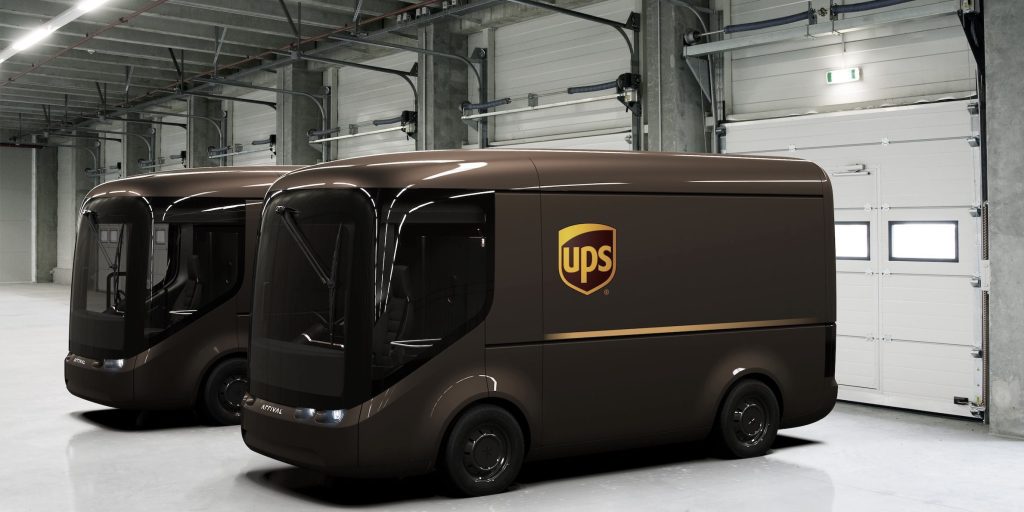
Arrival’s all-electric delivery vans earned it generous funding from mega-companies like UPS, Hyundai, and Kia. UPS pre-ordered 10,000 zero-emissions electric delivery vans in a move to lower its carbon footprint and reduce overall emissions. Around the same time, Hyundai and KIA invested $110 million in the company for a new line of electric vehicles dedicated to commercial customers.
Another company that recently launched a new type of electric vehicle is Volta Trucks. Volta Zero is an electric truck designed to reduce the environmental impact of freight deliveries in city centers. The Volta Zero is also the world’s first road vehicle to make exterior body panels using sustainably sourced carbon-neutral Flax and biodegradable resin composite. The unique feature means the truck has a reduced carbon footprint from tailpipe emissions as well as the material of which it’s made.


