
1,500 Miles
Step aside lithium-ion; there’s a new battery in town! Invented by an engineer and former British Royal Navy officer Trevor Jackson, this battery packs more punch per pound than its competitor. That’s not all! It can be used to power buses, huge lorries, and propeller aircraft since its light and small. It’s cheap and easy to make. And it can easily be recycled.
As Business Times reported:
Accredited tests have shown Jackson’s fuel cell produces nine times as much energy as the lithium-ion weight for weight.
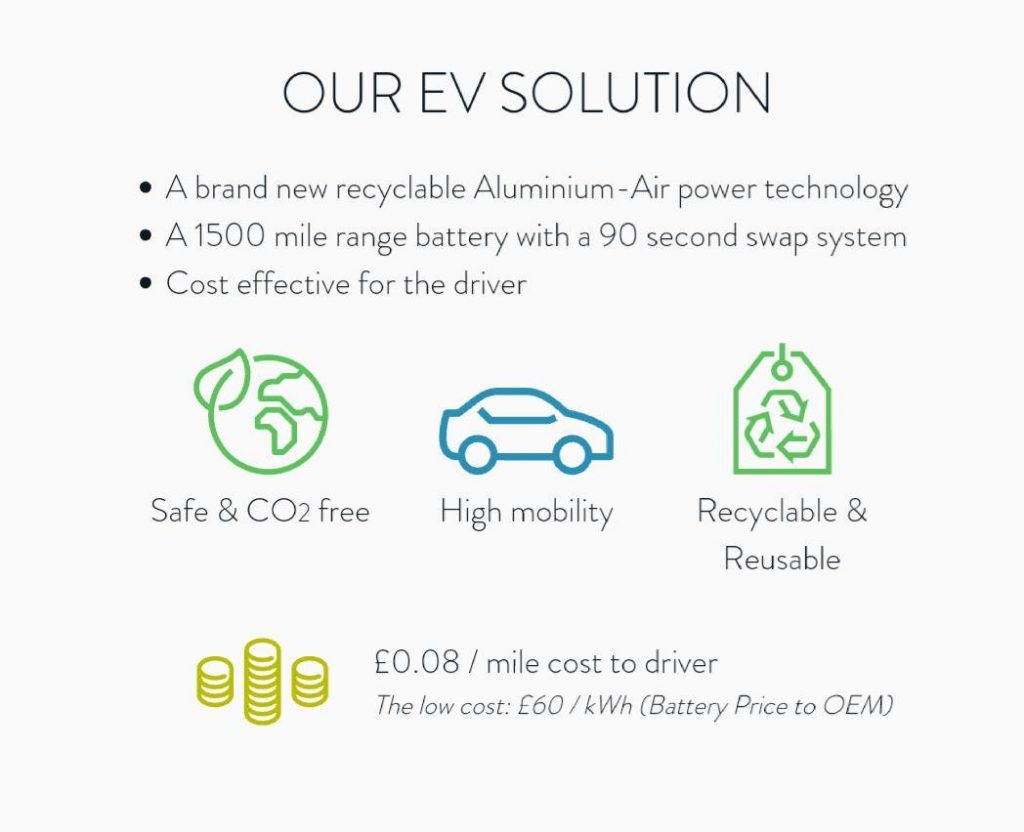
With this battery under the hood of your car, you can drive for 1,500 miles without the need to stop and recharge the battery! Jackson just signed a multi-million-pound deal to begin manufacturing the revolutionary item on a large scale in the UK with Austin Electric. The engineering firm based in Essex will start putting it into their electric vehicles next year.
Been Around
However, the invention is not new. A decade ago, he produced the initial prototype working under his company Metalectrique Ltd. But it hasn’t been until recently that he’s getting recognition. For example, a deal with a big company; grants from the Advanced Propulsion Centre worth £108,000 to carry on his research; and validation by two French universities.
He is beyond enthusiastic about what this battery could do for the future of our planet. He believes it has the power to help push the environmentally-friendly electric car movement further and faster in the direction it needs to go. ‘It can help trigger the next industrial revolution, he said. “The advantages over traditional electric vehicle batteries are enormous.”
Jackson’s Story
Jackson started his life with a distinguished engineering career working for Rolls-Royce in Derby and helping design nuclear reactors. Then, he went on to serve as a lieutenant for the Royal Navy onboard nuclear submarines, where he managed and maintained their reactors.
After this, he began working for BAE Systems, which was when he became interested in finding alternative, sustainable ways of powering vehicles. In 1999 he founded his company, Metalectrique Ltd.
Two years later, he started experimenting with an old technology from the 1960s, which scientists abandoned because they couldn’t get it to work. It involved dipping aluminum into a chemical solution (electrolyte) to trigger a reaction between the metal and air, producing electricity. It worked, but the electrolyte they were using was extremely toxic and caustic. It also required the use of pure aluminum, which is very expensive.
Jackson saw great potential in it and made it his mission to figure out a non-toxic way to get it to work that didn’t require pure aluminum. Several years later, he finally developed the formula for a non-toxic and non-caustic electrolyte. He even admits to drinking it during presentations to investors, just to show how harmless it is! His electrolyte even works with low-purity metal, such as recycled drinks cans. Problem solved!
The Cycle
The battery is technically an ‘aluminum-air fuel cell.’ When the cell becomes exhausted, it is swapped out for a new one – a process that takes under 2 minutes, pretty much the same amount of time it takes to fill up a tank. The spent fuel cell is then sent to be recycled and turned back into a new fuel cell. The cycle is a perfect circle: from factory – to shop – to car – to shop – to the factory.


