
A leaf is a marvelous machine that magically converts sunlight and carbon dioxide into energy for a plant. Naturally, with modern technological advances, scientists have been mimicking its process with artificial versions. The objective is to make a leaf-like device that can convert sunlight and carbon dioxide into energy for us.
Syngas Leaf
A team of researchers from the University of Cambridge took on this challenge. They developed an artificial leaf that can produce liquid energy – a synthetic gas, also known as syngas. The research has been published in the journal Nature Materials.
Currently, syngas is made from hydrogen and carbon monoxide, with a bit of carbon dioxide too sometimes. Companies use it as an intermediate step in manufacturing products, such as plastics, fertilizers, and fuels like diesel.
The process of making it releases carbon dioxide into the atmosphere, meaning it’s not sustainable. The Cambridge team’s leaf, on the other hand, doesn’t release carbon dioxide in the process. Therefore, it could be a clean substitute for the unsustainable syngas produced today.
Erwin Reisner, the senior author of the study, said:
You may not have heard of syngas itself, but every day, you consume products that were created using it. Being able to produce it sustainably would be a critical step in closing the global carbon cycle and establishing a sustainable chemical and fuel industry.
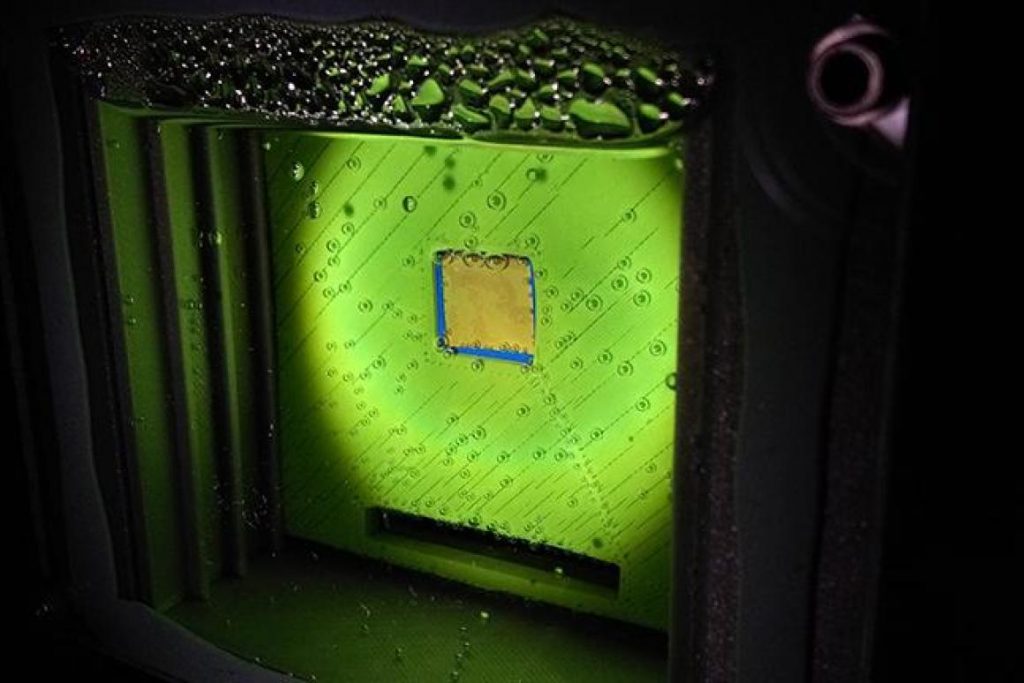
How It Works
- The artificial leaf prototype can produce syngas through photosynthesis.
- It consists of two light absorbers made of perovskite and a cobalt catalyst.
- The leaf submerged in water activates the absorbers: one makes oxygen while the other breaks down carbon dioxide and water into the gases carbon monoxide, and hydrogen.
- Then, the carbon monoxide and hydrogen combine, resulting in syngas.
Rain Or Shine
Even in the relatively low light of a cloudy or rainy day, the technology still works. Perovskite is highly efficient at absorbing light to create a voltage. Although the conversion efficiency itself is still low, they are in the process of improving that now.
They are also working out how to get the leaf to produce liquid fuel directly – rather than the gas that they have to then convert into liquid. “What we’d like to do next, instead of first making syngas and then converting it into liquid fuel, is to make the liquid fuel in one step from carbon dioxide and water,” says Reisner. “There is a major demand for liquid fuels to power heavy transport, shipping, and aviation sustainably.”
Sustainable syngas production could contribute to closing the global carbon cycle. An invention like this could launch the establishment of a sustainable chemical and fuel industry.
Among other artificial leaf ideas, is one designed by researchers from the University of Illinois created specifically to absorb CO2 from the air. It can absorb ten times more CO2 from the air than a real leaf. Combine these leaves, and we’ve got a whole lot of green in the future!


