
The COVID-19 pandemic has caused people to become increasingly germ conscious, and many businesses are finding ways to adapt, including having customers and staff operate on a no-touch basis. Before COVID-19, people shared touch-screens and keypads without worrying, but today people are reluctant to touch things other people have already touched for fear of spreading or catching the virus.
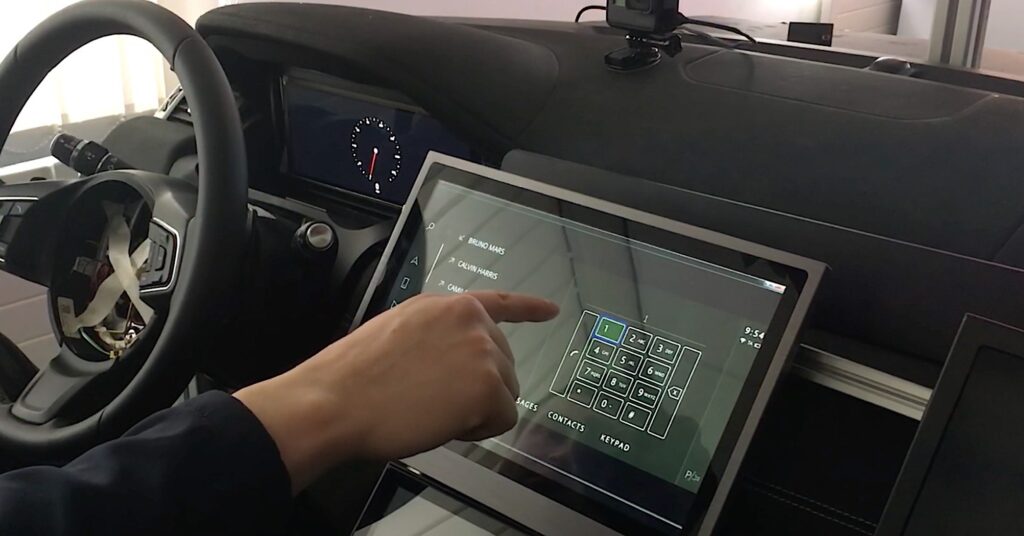
Jaguar Land Rover and engineers from the University of Cambridge have recently developed a contactless touch-screen technology for car infotainment systems to help prevent the spread of germs. The “predictive touch” system uses artificial intelligence (AI) and advanced sensors that predict a user’s intended target on the touch-screen, allowing them to make selections without physically touching the screen.
The predictive touch system uses radiofrequency sensors, eye tracking, and cameras to provide data to an AI system, which is combined with environmental conditions and user profiles to make the prediction before their finger touches the screen. This technology could also have broader applications outside of vehicles, including ATMs, to reduce the spread of viruses.
Lee Skrypchuk, Jaguar Land Rover’s Human Machine Interface Specialist, said:
As countries around the world exit lockdown, we notice how many everyday consumer transactions are conducted using touch-screens: railway or cinema tickets, ATMs, airport check-ins and supermarket self-service checkouts, as well as many industrial and manufacturing applications. Predictive touch technology eliminates the need to touch an interactive display and could, therefore, reduce the risk of spreading bacteria or viruses on surfaces.
Jaguar Land Rover claims that in addition to reducing the spread of diseases, this technology will also make driving safer by reducing distraction and increasing the driver’s focus on the road. Laboratory and road tests showed the predictive touch-screen could cut interaction times by 50%.
This innovative system is part of Jaguar Land Rover’s Destination Zero vision, which is to make its vehicles safer and the environment cleaner.


