
Deep decluttering is a significant undertaking, creating a psychological barrier that extends beyond the physical effort. We face a central dilemma: the desire for an organised space clashes with growing anxiety over contributing to environmental waste. That challenge is magnified by the sheer volume of unwanted items, from old furniture and unused electronics to accumulated clothing, which demand a solution that is both highly efficient and ethically sound.
Tackling this problem requires a thoughtful, multi-faceted strategy focused on resource conservation, moving beyond the simple act of throwing things away. Sustainable home organisation requires a firm “waste-not” mindset, demanding every effort to give items a second life through donation, upcycling, or targeted recycling. Such an approach not only provides the immediate benefit of a clear space but also actively supports the circular economy by dramatically reducing the stream of materials sent to landfill.
Crucially, even after exhausting all options for reuse and recycling, the remaining waste must be handled by reliable services. Utilising responsible collection services ensures that all final materials are processed with the smallest possible environmental footprint, delivering peace of mind alongside a pristine, clutter-free home.

Sustainable Room-By-Room Decluttering Strategy
High motivation relies on a clear strategy that produces visible, rapid progress. A crucial step involves focusing on a simple “micro-mission” for each room and completing it fully. Once finished, the decluttering process can confidently move to the next area.
- Kitchen First for Quick Motivation Wins: Focus first on tackling expired food, mismatched containers, and any rarely used gadgets. Emptying these cupboards instantly frees workspace and offers a crucial early victory in sustainable home organisation.
- Living Room to Create a Calm Hub: Clearing all surfaces, untangling the cords, and curating the décor are the initial actions required. Establishing a serene lounge resets the household energy and promotes an atmosphere of calm.
- Bedrooms Protect Sleep Quality: The 12-month rule should be applied to wardrobes, and any nightstand clutter must be immediately cleared. Waking up in a tidy sanctuary supports healthy routines. Effective decluttering dramatically lowers morning decision fatigue.
- Bathrooms & Laundry for Hygiene Check-Up: Expired products, broken tools, and crusty cleaners must be disposed of immediately. Sanitised shelves stop bacteria from multiplying while simultaneously freeing up storage for the essentials required.
- Printable Checklist Link: For those seeking help to stay on track, a structured approach ensures maximum efficiency and momentum is maintained.
- Download a free, step-by-step checklist.
- Track your progress visually as you go.
- Tick off your victories as you clear each area of your home.
This simple tool enables the measurement of progress and the maintenance of the newly organised space.
Setting Measurable Goals for Responsible Waste Management
When a decluttering project lacks a clear target, it often feels endless. Establishing specific, measurable goals accelerates your decisions and ensures sustained motivation.
- Future Space: Picture open floors and clear counters before you start.
- Set a Deadline: Schedule the work around a recycling pickup, move-out date, or social event.
- Establish Categories: Decide what counts as keep, donate, sell, recycle, or toss.
- Volume Targets: Aim to cut belongings by a concrete percentage or box count.
- Visual Progress: Mark bags removed on a whiteboard or app.
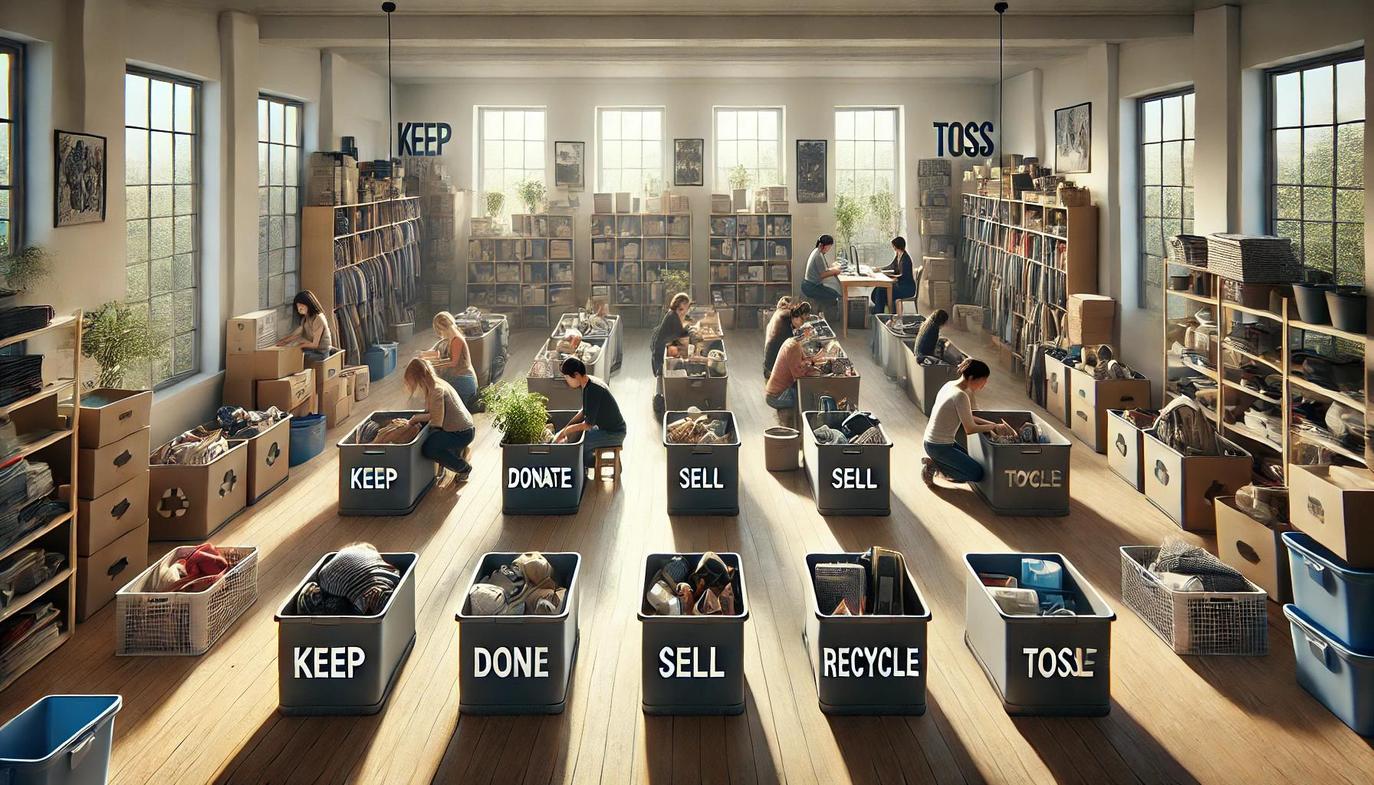
Categorising Items for Responsible Disposal and Reuse
To be efficient, handle every item only once, placing it immediately into a clear pile, and strictly avoid the “maybe” box.
The One-Touch Sorting Rule
- For Daily Use: Retain objects actively used or loved.
- Making an Impact: Quality items you outgrew can empower local charities or mutual-aid groups.
- For Financial Savings: Neighbourhood apps convert clutter into cash that can offset future eco-friendly purchases.
- Responsible Recycling: Glass, metals, electronics, and cardboard regain value when directed to proper facilities.
- Dispose of the Unsafe: Broken plastics, mouldy fabrics, or expired consumables jeopardise health and belong in the trash.
Securing Affordable and Efficient Rubbish Removal Services
Hiring professionals is possible without emptying the wallet; just a little preparation helps cut both carbon output and the final invoice totals.
Compare Inclusive Pricing
Always enquire about the breakdown of the quote to ensure you receive the most competitive and transparent pricing. Be sure to ask providers whether the following specific costs are included:
- Labour and crew charges
- Tipping fees and disposal costs
- Recycling charges for sorting materials
Confirming these inclusions prevents unexpected charges on the final invoice.
Schedule Off-Peak Pickups
To achieve low-cost rubbish removal, focus on strategic scheduling and load consolidation. These two simple changes can significantly reduce the overall fee:
- Schedule Off-Peak: Opt for weekday or seasonal slots, as these are typically cheaper than weekend bookings.
- Group Neighbours’ Loads: Grouping loads with neighbours helps firms cut fuel use and often results in a bulk-discount rate.
- Consolidate a Full Load: It’s wise to pre-stage junk near the kerb, flatten all boxes, and dismantle furniture so crews can use the truck space efficiently.
Implementing these scheduling and sharing tips guarantees the best value for the service.

Giving Items a Second Life: Repair, Reuse, and Upcycle
Instead of waving goodbye to possessions, take a moment to imagine their second life. This simple act preserves vital resources through repairing or upcycling, and it can often save you money.
- Fix Before You Pitch: Minor sewing, glueing, or tightening tasks frequently restore items faster than shopping for new ones.
- Join Upcycling Communities: Makerspaces and social-media groups share tools, swap supplies, and celebrate creative transformations, making them a great resource.
- Host a DIY Furniture Day: The opportunity exists to invite friends, share paint cans, and turn tired dressers into beautiful, upcycled statement pieces by hosting a DIY furniture day.
Handling Hazardous Materials and E-Waste Safely
Paints, batteries, chemicals, and e-waste require special handling for environmental and personal safety, necessitating checking local council guidelines and using authorised programmes.
Practical Checklist for Chemical and E-Waste
- Hazard Identification: Check for hidden hazards in sheds, garages, and drawers.
- Programme Utilisation: Use municipal collection days or licensed drop-off depots.
- Container Security: Seal and label containers so nothing leaks during transport.
- E-Recycling: Recycle electronics with certified e-recyclers who wipe data and reclaim metals.
- Safe Storage: Store items safely until pickup, away from children and pets.
Composting: Turning Organic Waste into Garden Nutrients
All food scraps and yard trimmings transform into nutrient-rich compost. This process effectively reduces landfill methane while simultaneously nourishing your gardens.
- Choose the Right System: Different composting methods, such as countertop worm bins, outdoor tumblers, or simple piles, each suit specific households and climates.
- Master the Green-Brown Balance: Nitrogen-rich greens and carbon-heavy browns must be alternated to achieve odour-free, speedy decomposition.
- Know What Stays Out: Meat, dairy, and diseased plants must always be avoided, as these attract pests or spread pathogens.
- Use Finished Gold: To ensure your plants thrive, spread the dark, crumbly compost around houseplants or veggie beds and encourage vigourous new growth.
Organising Swap Events to Minimise Household Waste
Often, swapping unwanted items is a better choice than shopping. These local exchanges allow neighbours to trade goods and shrink rubbish piles. They actively foster valuable friendships.
- Plan the Logistics Early: You should book an accessible venue, recruit volunteers, and set clear rules on item conditions early in the planning process.
- Promote for Maximum Impact: For maximum impact, use neighbourhood apps, libraries, and schools to effectively spread the word.
- Curate Swap Zones: Segment specific areas for clothing, books, toys, and tools so visitors can browse efficiently.
- Handle Residual Items Responsibly: Finally, arrange charity pickups or recycler partnerships for all leftovers so nothing sneaks back into attendees’ homes.

Mastering Eco-Friendly Decluttering for Sustainable Living
Through repairing, donating, composting, and recycling, you have drastically reduced the amount of material destined for landfill. For the final pile, Sydney services such as DC Rubbish Removal can manage, sort, and recycle the remaining waste responsibly. Enjoying the breathable space and maintaining these new eco-friendly habits throughout the year is the final goal.
Integrating a methodical, eco-conscious approach into your decluttering strategy yields far greater rewards than just a tidy house. This is a framework for sustainable living, transforming the overwhelming task of waste removal into a systematic process of resource management.
Final Steps: Transitioning to a Permanent, Clutter-Free Home
By prioritising the reuse, repair, and mindful disposal of household items, you actively participate in reducing landfill dependence and supporting community initiatives. The peace of mind that comes from knowing you’ve made responsible choices for your home and the planet is the ultimate reward, creating an atmosphere of calm that enhances daily routines and decision-making.
Securing affordable rubbish removal for residual items not repurposed or recycled locally is the final step in this transformation. By choosing providers who focus on low-cost, environmentally conscious methods, you ensure the full circular process is completed with maximum efficiency and minimal financial strain. Keep this system in place year-round, making conscious disposal a habit rather than a one-off project. This continuous commitment to responsible decluttering ensures your home remains a sanctuary of order and sustainability for the long term.

Quick Answers: Essential FAQs on Green Home Waste and Rubbish Removal
How Do I Find Affordable Rubbish Removal?
Obtain quotes that explicitly include labour and tipping fees, and look for off-peak scheduling options or services that allow you to group loads with neighbours for reduced costs.
What Items Should I Never Put in Compost?
Avoid adding any meat, dairy products, grease, oils, or diseased plants to your compost, as these materials can attract pests and spread harmful pathogens.
What Is the Best Way to Get Rid of Old Electronics (E-Waste)?
You should use certified e-recyclers who guarantee secure data wiping and material reclamation, or look for municipal e-waste collection days in your local area.
How Can I Maximise the Use of Donation Centres?
Ensure items are clean, functional, and in good condition, and call ahead to confirm the charity accepts the specific type of goods you are planning to donate.
Is it Cheaper to DIY or Hire Professional Junk Removal?
While DIY may save slightly on labour, professionals often handle sorting, heavy lifting, and disposal fees more efficiently, offering a time-saving and often safer overall solution.

