
The choice between E5 and E10 petrol at UK pumps is a common point of confusion for many drivers. The primary difference lies in the ethanol content: E5 contains up to 5% renewable ethanol, while E10 contains up to 10%. Although E10 is now the standard grade across the UK, promoted to help reduce carbon emissions, E5 petrol retains a loyal user base for several critical reasons.
E5 has become the preferred choice for drivers who prioritise performance, reliability, and engine longevity. For owners of classic cars, motorcycles, or any vehicle manufactured before 2011, E5 is often essential. These older fuel systems were not designed to cope with higher ethanol blends, which can lead to the corrosion of seals, gaskets, and other components over time.
This guide provides a clear comparison of E5 vs E10 petrol. We will explore the specific advantages of using E5, its impact on fuel efficiency, and why it remains the necessary option for specific engines. Understanding this distinction is key to preserving your vehicle’s health and performance.

What is E5 Petrol?
E5 petrol contains up to five per cent renewable ethanol, a biofuel derived from plants including sugarcane and corn. Up until the arrival of E10 in 2021, E5 had been the standard grade of petrol available in the UK.
You will now usually find it only under “super unleaded” branding; it costs slightly more per litre than E10, but many drivers find the advantages justify the extra cost. This branding is because E5 is now almost exclusively a high-octane fuel, typically 97 to 99 RON (Research Octane Number). This higher octane rating provides better resistance to engine knock (pre-ignition), which is crucial for high-performance engines. While all cars can run on higher-octane fuel, this premium blend is the primary way to access the lower ethanol content.
Why Drivers Still Choose E5 Petrol
What specific advantages does E5 offer that make it worth considering? First and foremost, the lower ethanol content makes it friendlier to older engines. Most vehicles manufactured before 2011 were not typically designed to cope with E10’s higher ethanol content, which may eventually corrode fuel systems and rubber seals.
E5 is the preferred fuel for owners of classic cars, motorcycles, and performance vehicles. It provides smoother running and better fuel stability and is less likely to cause degradation after a long period of inactivity. The higher ethanol content in E10 is ‘hygroscopic’, meaning it absorbs and holds water from the atmosphere. This moisture can lead to phase separation in the fuel tank, where water and ethanol sink to the bottom, promoting rust in metal tanks and fuel lines. E5’s lower ethanol volume significantly reduces this risk, making it the superior choice for vehicles that are stored for the winter or not driven daily.
E5 Petrol and Fuel Efficiency
Most motorists also claim E5 provides marginally better mileage, offering more distance per litre. While the difference may seem small, the cumulative savings could offset the slightly higher price over time. Engine performance may also be enhanced, especially in cars designed to run on high-octane fuel.
A quick method exists to check if you are unsure whether a vehicle uses petrol or diesel. Run a number plate check by entering the registration. The service will return the vehicle details for free. These checks provide extensive information about the car’s specifications.

The Purpose of Ethanol in UK Petrol
The government’s move toward ethanol-blended fuel was not an arbitrary decision. Ethanol burns cleaner than pure petrol, helps cut carbon emissions, and reduces the UK’s reliance on imported oil. Moving toward greener fuels like E10 supports the UK in its environmental goals.
This new rule does not benefit all car makes equally, which is why E5 remains an important alternative for specific vehicles. The core issue stems from material compatibility. Ethanol is a solvent that can degrade older rubber seals, gaskets, plastics, and even some metal alloys used in fuel systems built before 2011. This leads to fuel leaks, blockages, and potential engine damage. E5, with its minimal ethanol content, poses no such threat to these legacy materials.
Mixing E5 and E10 Fuel
Accidentally mixing E5 and E10 is not a critical error, as both fuels will safely mix in your tank. However, if your car is incompatible with E10, you should fill up with E5 as soon as possible to dilute the mixture. A single, partial tank of E10 in an older car will be sufficiently diluted and is highly unlikely to cause any immediate damage. The primary danger from E10 is not acute failure but rather the cumulative, long-term corrosive effect. Filling with E5 at the next opportunity is simply a best practice to minimise the overall ethanol percentage in the system.
E5 and E10 Compatibility Guide
- Pre-2011 car: You should stick to E5 unless you are sure your car can use E10.
- Performance or classic car: E5 is almost always the safer bet.
- Newer vehicle: E10 is generally compatible, but it is always wise to double-check your owner’s manual.
All new cars sold in the UK since 2011 are required by law to be E10 compatible. Manufacturers updated their fuel system components with ethanol-resistant materials long before the mandate. The government’s online vehicle checker can also be used to confirm compatibility for any car, but the owner’s manual remains the definitive source.
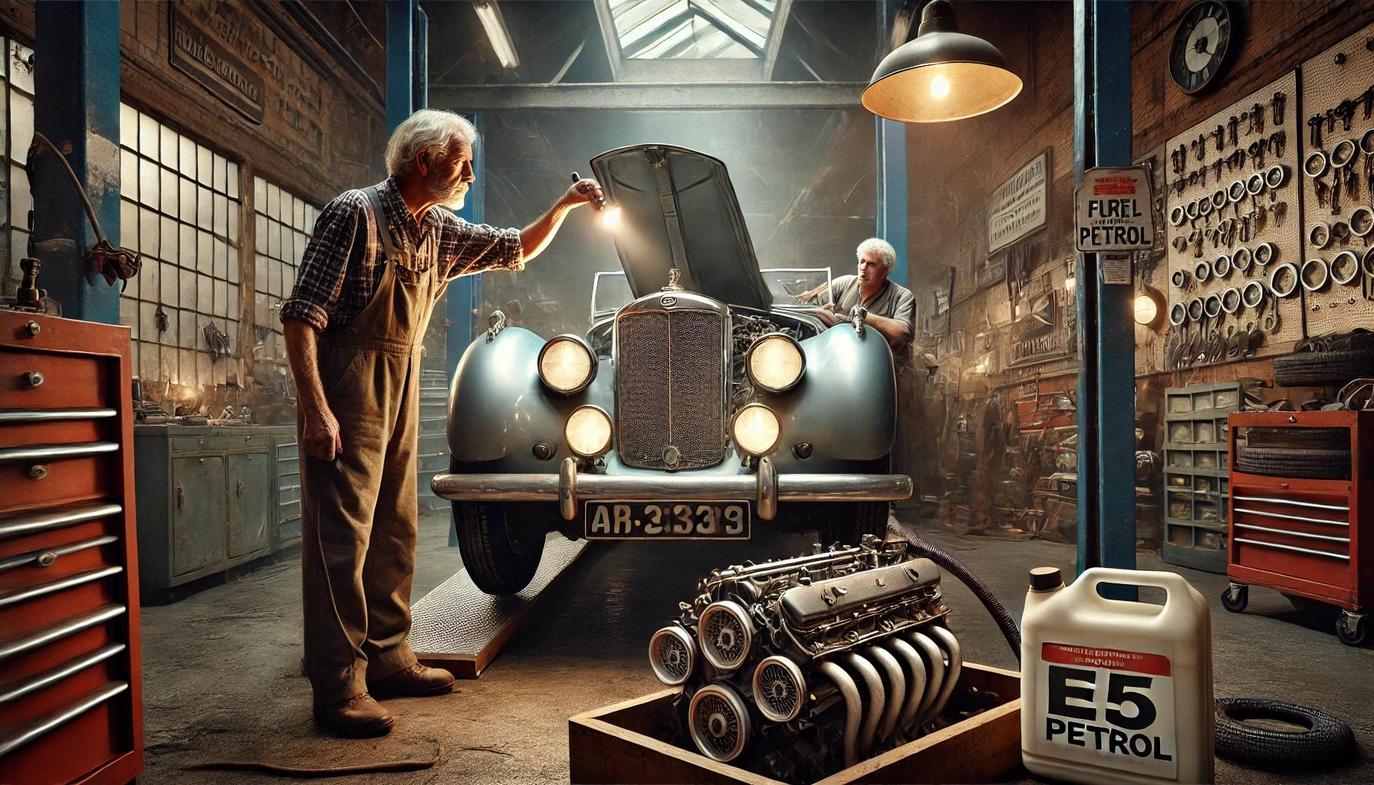
Making the Right Choice: E5 vs E10 Petrol
For many UK drivers, the choice between E5 and E10 petrol balances price against long-term vehicle health. E5 petrol, typically found as “super unleaded”, remains the essential choice for classic cars and most vehicles manufactured before 2011. Its lower ethanol content provides critical protection against corrosion in older fuel systems, ensuring better fuel stability and engine reliability. While E10 supports broader environmental goals for fuel, E5 is essential for preserving performance and engine longevity in specific vehicles.
Prioritising your vehicle’s specific needs is the most important factor. Using E5 fuel for a compatible older or high-performance car is a direct investment in its operational health, potentially offering marginally better mileage that can offset the higher cost over time. Always check your manufacturer’s guidance, but for owners of classic, performance, or pre-2011 vehicles, sticking with E5 petrol is the recommended strategy for dependable performance.
Your E5 and E10 Questions Answered
What Happens if I Put E10 in a Car That Needs E5?
A single accidental fill-up will not cause immediate, severe damage. However, you should fill the tank with E5 petrol as soon as possible to dilute the ethanol concentration. Continuous use of E10 in an incompatible (typically pre-2011) car can lead to corrosion of rubber seals, gaskets, and metal components in the fuel system over time.
Is E5 Petrol More Fuel Efficient than E10?
Yes, E5 petrol is marginally more fuel-efficient. Ethanol contains less energy than petrol, so the higher 10% ethanol content in E10 slightly reduces fuel economy (mileage). The difference is often small, but many drivers report getting more miles per litre when using E5.
Why is E5 Petrol More Expensive?
E5 petrol is typically sold as “super unleaded”, which has a higher octane rating (e.g., 97-99 RON) compared to standard E10 (95 RON). This higher-octane blend is more expensive to produce. You are paying for both the higher-performance fuel and the lower ethanol content.


