
If you have ever watched a viral clip of someone turning old packaging into liquid fuel with a microwave-style rig, you already know the hook. That do-it-yourself energy moment is real enough to spark curiosity. The bigger story, though, lives in commercial plants, refinery-ready feedstocks, and airline and shipping buyers that are already purchasing fuels made from waste carbon.
The result is a practical pathway from post-consumer plastics and even captured CO₂ to usable fuels and petrochemical feedstocks that meet industry specifications. The science behind sunlight-driven microwave-assisted pyrolysis is well documented, and it provides a friendly on-ramp to explain the mature routes the industry is scaling today.
Before we dive into the four routes that already work, you will see two patterns. First, large buyers care about specifications and reliability. Second, policy definitions decide who can claim recycling content and who earns fuel credits. Together, those two forces explain why some projects scale quickly while others stay in the lab.

Seven Fast Facts Proving Plastic-to-Fuel is Already Real
- Hydrothermal plants are scaling now: Mura Technology announced a 50,000-ton-per-year Hydro-PRT® facility on Jurong Island, Singapore, positioned to process more than 60,000 tonnes of plastic waste annually as it expands.
- Electrified cracking just hit a milestone: Coolbrook cracked 100 percent plastic-waste pyrolysis oil directly to ethylene and propylene at a pilot scale, while maintaining stable operation.
- Conditioning trains make waste oils “cracker-ready”: Technip Energies commercialized Pure.rOil purification to remove contaminants and align boiling ranges for steam crackers.
- CO₂-to-fuel is already commercial: The Kassø e-methanol plant in Denmark was inaugurated May 13, 2025, at 42,000 tonnes per year, with offtake tied to deep-sea shipping.
- Aviation buyers are investing: United Airlines invested in Twelve, which produces power-to-liquid E-Jet fuel from CO₂ and water using renewable electricity.
- CO₂-to-methanol deployments span multiple sites: Carbon Recycling International lists commercial and licensed projects that convert CO₂ into methanol at an industrial scale.
- Frontier research is moving quickly: Recent reviews outline microwave-assisted pyrolysis fundamentals and photoreforming routes that turn plastics into hydrogen and valuable chemicals using sunlight.
Fast-conversion case studies show plastic waste turned into jet fuel in under an hour, scalable routes for plastic waste turned into hydrogen, and a bench-scale plastic waste fuel reactor that liquefies mixed streams into usable fractions.

Four Real Pathways that Already Work
Hydrothermal Conversion to Drop-In Hydrocarbons
How it Works
Hydrothermal processes expose plastics to high-temperature, high-pressure water. The supercritical water breaks long polymer chains into shorter hydrocarbons that can be refined into petrochemical feedstocks or fuel cuts. This approach tolerates mixed streams better than many catalytic routes and produces liquids that integrate into existing infrastructure.
Where it is Scaling
Mura’s Hydro-PRT plants showcase the model: site near industrial hubs, convert hard-to-recycle streams, and output stabilized liquids for downstream units. The Jurong Island project in Singapore is the latest expansion, sized at 50,000 tonnes per year with growth plans beyond 60,000 tonnes.
What Buyers Want
Refiners and petrochemical players want stable composition, tight impurity control, and predictable boiling ranges. Hydrothermal liquids can be conditioned to meet those needs, which is why you see projects co-located with crackers and refineries. For background on policy definitions that affect marketing claims, see our explainer on mass-balance rules in the European Union and the evolving U.S. regulatory posture on waste units.
Systems thinking spans industrial capacity and cleanup, from the UK’s biggest recycling plant processing hard-to-sort feedstocks to the Manta Ocean-Cleaning Yacht generating onboard energy from recovered debris.
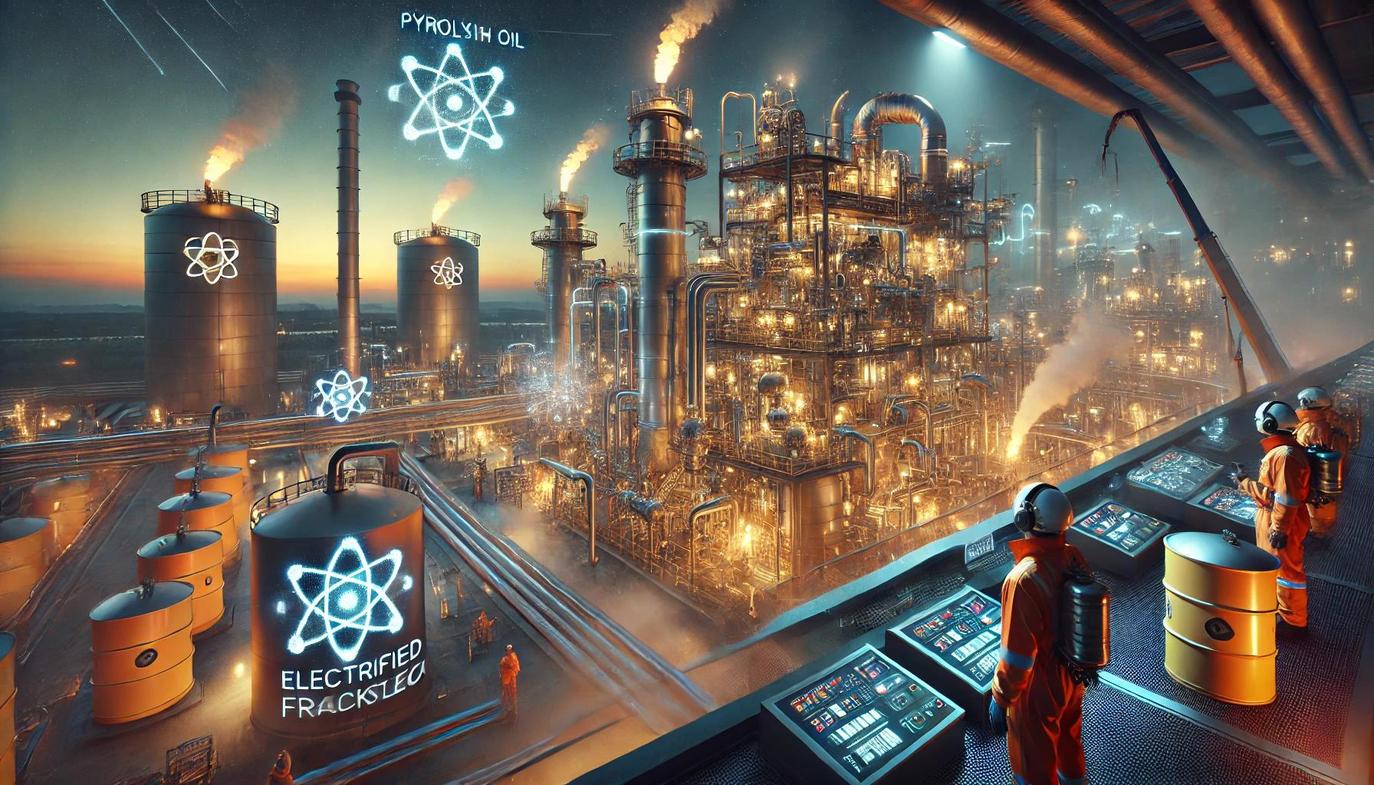
Pyrolysis Oil to Steam Crackers with Electrified Cracking
How it Works
Thermal pyrolysis converts mixed plastics into a liquid commonly called pyrolysis oil. To feed that oil to a steam cracker that makes ethylene and propylene, operators must remove chlorine, oxygenates, metals, and fine solids, and in some cases trim the boiling range. Commercial purification trains now exist to perform that conditioning step.
Industrial Proof
- Conditioning Is Productized: Technip Energies markets Pure.rOil, a purification platform that treats a wide range of pyrolysis oils so they can run in liquid-feed steam crackers.
- Electrified Cracking Removes the Dilution Crutch: Coolbrook demonstrated cracking 100 percent plastic-waste pyrolysis oil in its RotoDynamic Reactor, delivering ethylene and propylene with stable coking behavior. That simplifies traceability and makes circular content easier to track.
Why it Matters
When cracker-grade specifications are met, pyrolysis oil can become a circular feedstock for new plastics, not just a combustion fuel. Small-scale energy use is already practical, with melting plastic waste into fuel to heat homes complementing a modular plastic waste fuel reactor that upgrades packaging into liquid fuel cuts.
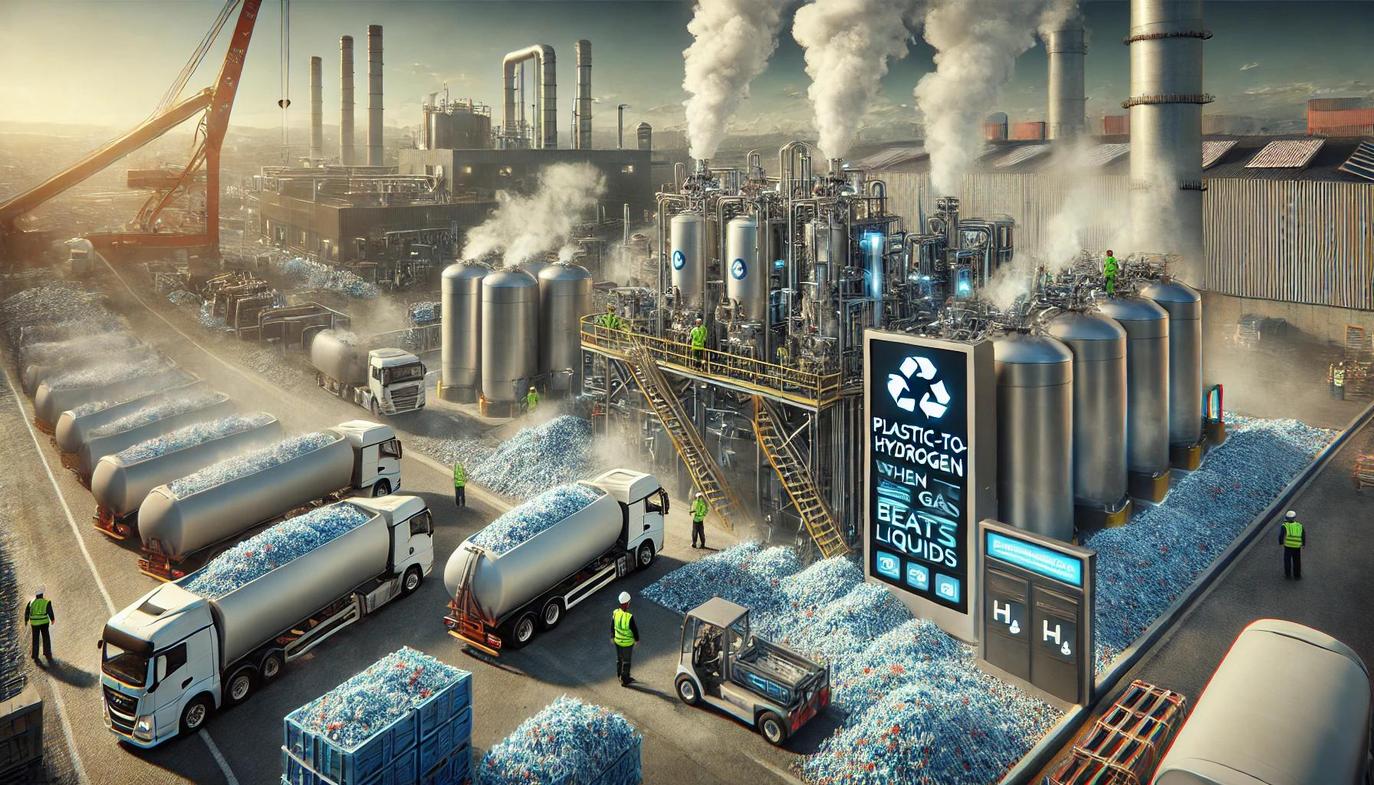
Plastic-to-Hydrogen when Gas Beats Liquids
How it Works
There are multiple routes to hydrogen from plastics, including gasification with steam reforming, catalytic pyrolysis with in-situ reforming, and advanced processes that co-reform plastic-derived gases. These systems are useful when feedstocks are highly contaminated, when siting favors distributed units, or when hydrogen credits and local demand improve project economics.
Recent Signals
A growing body of 2025 literature consolidates catalysts, yields, and integration options for plastic-to-hydrogen, and field trials continue to refine performance on mixed streams. Those reviews provide mechanism diagrams and techno-economic guardrails you can cite in procurement and policy conversations.
Where it Fits
Hydrogen routes can be attractive near heavy transport corridors or industrial clusters that already consume hydrogen. Hydrogen pathways are maturing, with plastic waste into hydrogen detailing catalytic routes, and the world’s first waste plastic hydrogen plant illustrating how contaminated streams become clean H₂.
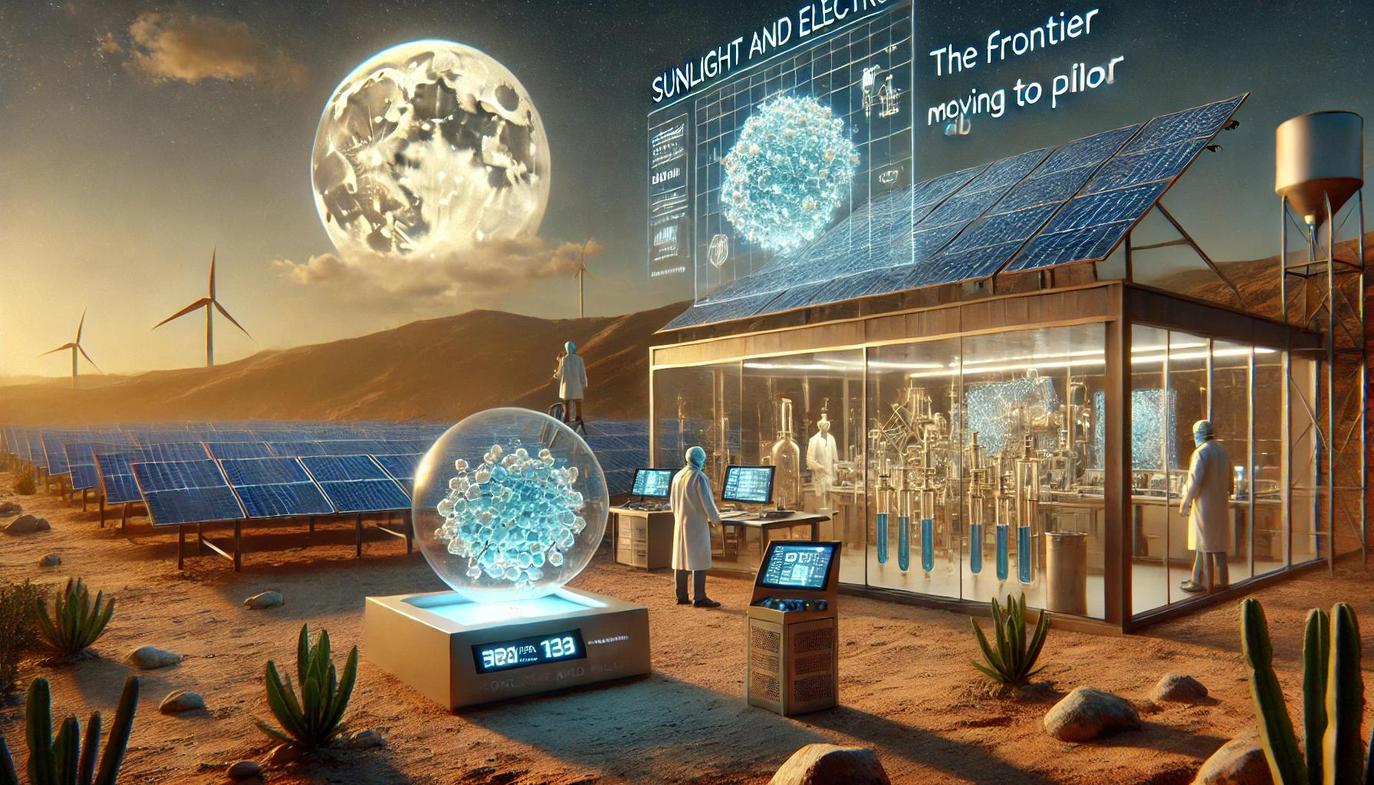
Sunlight and Electrons: The Frontier Moving from Lab to Pilot
Photoreforming With Sunlight
Researchers are rapidly improving catalysts that use sunlight and water to convert plastics into hydrogen and platform chemicals like formate and acetate in a process more commonly known as sunlight-driven microwave pyrolysis. These systems operate at low temperatures and pair naturally with renewable power. Recent reviews summarize pretreatment steps, reaction mechanisms, and stability challenges.
Electro-Routes You Should Watch
Electrified approaches, including joule-heated or plasma-assisted reforming, are being explored to co-convert plastics and CO₂ into syngas precursors for fuels. While these methods remain pre-commercial, they provide an important bridge between low-value waste streams and high-value molecules that heavy industry can use.

Who Buys, Why the Market is Growing, and What Decides the Winning Route
Selecting the right plastic-to-fuel pathway starts with knowing who will buy the output of the green e-fuels revolution and why. Marine carriers seek e-methanol that slots into port logistics, airlines fund power-to-liquid SAF to meet blend and safety rules, and petrochemicals demand cracker-grade liquids for circular polymers. With buyers defined, feedstock quality, energy prices, and policy incentives determine which technology wins in a given region, from plastic-to-hydrogen near industrial hubs to pyrolysis-to-cracker routes inside petrochemical clusters.
Shipping’s E-Methanol Momentum
Deep-sea shipping needs dense liquid fuels that move through existing logistics while meeting tougher emissions targets, which is why e-methanol is gaining traction. Denmark’s Kassø facility began commercial operations on May 13, 2025, supplying certified e-methanol produced from renewable power and captured CO₂. Early bunkering for vessels such as Laura Maersk signals real demand rather than pilot-only activity, and port infrastructure is scaling to handle methanol alongside conventional marine fuels.
What Bunkering Looks Like in Practice
At Kassø, solar-powered electrolysis pairs with biogenic CO₂ capture to synthesize methanol that is stored on site and transferred via standard bunkering hoses to container ships. Transparency on inputs and certification enables shipowners to count emissions reductions toward fleet targets, turning e-methanol into a practical decarbonization lever for ocean freight.
Aviation’s Power-to-Liquid Moves
Airlines operate under strict safety and energy-density constraints, so they are investing in power-to-liquid suppliers that make sustainable aviation fuel from CO₂ and water using renewable electricity. Investments like United Airlines backing Twelve demonstrate how carriers secure future supply, diversify beyond bio-based SAF, and push producers toward fuel specs that fit existing engines and airport fueling systems.
Jet-range molecules are achievable quickly, as plastic waste into jet fuel methods demonstrate rapid deconstruction kinetics and plastic waste fuel reactors document controllable distillation curves for circular polymer or fuel applications.
Petrochemicals Seek Circular Feed
When the objective is to make new plastics instead of combusting fuels, petrochemical buyers require cracker-grade liquids derived from waste plastics. This depends on two industrial capabilities. First, commercial oil-conditioning trains remove chlorine, oxygenates, metals, and heavy tails so the liquid meets steam-cracker requirements. Second, electrified steam-cracking pilots have shown that waste-plastic pyrolysis oil can be processed without relying on fossil diluents, which improves traceability for circular content and simplifies accounting for recycled material.
Carbon-To-Chemicals is Now a Market
Beyond fuels, carbon utilization is producing commodity chemicals. Commercial and licensed CO₂-to-methanol projects already convert point-source CO₂ into a platform molecule used in fuels and chemical manufacturing. Parallel progress in polymers shows how carbon captured from industry can reappear as polypropylene-grade outputs, tightening the loop between emissions and everyday materials.
Why Household and Enterprise Solutions Align
Decentralized systems like biodigesters cut methane at the home or community level, while energy-efficient aviation facilities reduce operational footprints across complex logistics. Both ends of the spectrum point to the same conclusion. Waste carbon becomes valuable when the conversion route fits local feedstocks, the offtake is real, and the policy framework rewards the environmental attributes that markets are willing to buy.
Regulatory Reality Check: The Rules that Pick Winners
Europe’s Mass-Balance Accounting Shapes What Counts
The European Commission launched a 2025 consultation to define how chemically recycled content in single-use plastic beverage bottles should be calculated through mass balance. This is a pivotal definition. If fuel use is excluded from recycled-content claims for bottles, projects will often favor routes that produce cracker-grade liquids for polymer loops rather than fuels. The Commission’s summary explains the accounting intent and the push for a level playing field across technologies. Review the official notice and industry briefs for the current wording and timing.
What that Means for Investors
If your revenue model depends on “recycled content” claims, mass-balance rules determine whether a given output stream qualifies. That is why companies pursuing pyrolysis-to-cracker and hydrothermal liquids often colocate with existing petrochemical assets in Europe. A conservative reading of the Commission’s consultation suggests polymer-loop outputs can be easier to credit than combusted fuels for bottle content targets. Cross-check the language before locking your product slate.
U.S. Compliance Context for Waste-to-Fuel Projects
The EPA finalized an Other Solid Waste Incineration (OSWI) rule in June 2025, effective August 29, 2025. While the rule targets incineration units, it influences how developers classify and permit certain waste-processing configurations. Developers should review the Federal Register text and EPA backgrounders to understand monitoring, emissions control, and siting implications for their specific technology stack. Start with the Federal Register entry and EPA OSWI pages for authoritative details.
Practical Takeaway on U.S. Siting
Compliance categories can shift a project’s cost structure and timeline. Teams should plan early for emissions testing, recordkeeping, and local permitting dialogues, especially when the configuration integrates thermal steps that regulators may scrutinize. Keep language precise in public communications to avoid conflating chemical recycling with incineration.

Route Selector: How To Choose the Right Sustainable Fuel Conversion Path
One rule governs everything: context decides the winner. The optimal route depends on four variables that interact locally: feedstock quality, energy price, nearby buyers, and policy definitions. When those are mapped correctly, the most efficient and sustainable pathway usually becomes obvious.
What Determines The Best Route
-
Feedstock: purity, polymer mix, contamination, moisture, and volume stability
-
Energy & Utilities: electricity price and carbon intensity, available steam, water, and heat
-
Offtake & Logistics: proximity to hydrogen users, steam crackers, ports, or airports
-
Policy & Credits: recycled-content accounting, fuel carbon intensity standards, hydrogen incentives
Start With Feedstock And End Use
Mixed, Dirty, Or Variable Streams with Local Hydrogen Demand
- Choose: Plastic-to-hydrogen routes.
- Why it fits: These systems tolerate contamination, can be distributed near end users, and can stack clean-hydrogen credits where they exist.
- Best locations: Industrial hubs and heavy-transport corridors that already consume hydrogen for refining, chemicals, steel, or fleet fueling.
- Execution tip: Secure a nearby H₂ buyer and grid-connection plan, then size the unit to match steady waste inflow and hydrogen demand.
Access To A Steam Cracker Or Petrochemical Complex
- Choose: Pyrolysis-oil conditioning targeting circular polymer loops.
- Why it fits: Meeting cracker specifications unlocks high-value offtake and enables verifiable recycled-content claims inside plastics supply chains.
- Best locations: Chemical parks with liquid-feed crackers and utilities for pretreatment, hydrotreating, and impurity control.
- Execution tip: Budget for a full conditioning train and quality assurance. Align with a cracker operator on acceptable ranges for chlorine, oxygenates, metals, and boiling curves.
Regions With Strong CO₂ Fuel Credits and Low-Cost Renewable Power
- Choose: CO₂-to-e-fuels such as e-methanol for marine use or power-to-liquid SAF for aviation.
- Why it fits: Policy rewards low-carbon molecules and early plants are already operating with offtake agreements from shipping and airlines.
- Best locations: Grid nodes with abundant renewables, available CO₂ sources, and port or airport infrastructure.
- Execution tip: Lock power purchase terms and carbon intensity baselines early. Match plant size to firm offtake and certification requirements.
Markets Where Recycled-Content Claims Are Essential
Choose: Routes that trace outputs into polymer loops rather than combustion.
Why it fits: In programs where bottle-content accounting excludes fuel use from recycled-content claims, polymer-to-polymer pathways score better.
Execution tip: Track mass-balance rules closely, align auditing and chain-of-custody systems, and coordinate communications so claims match the local standard.
Putting It All Together: A Quick Decision Flow
-
Is reliable H₂ demand within trucking distance and are feeds mixed or dirty → pursue plastic-to-hydrogen.
-
Is a steam cracker nearby with appetite for circular liquids → invest in pyrolysis-oil conditioning for polymer loops.
-
Is cheap, clean power available and CO₂ credits strong → develop CO₂-to-e-fuels for shipping or aviation.
-
Are recycled-content claims central to revenue or regulation → bias toward polymer-loop outputs and mass-balance alignment.
Use this selector as a checklist in project scoping. Map your local variables, run sensitivity on power price and policy credit values, validate offtake specifications with buyers, and the winning route will emerge with far less friction.
The Bottom Line on Waste Carbon: What Smart Buyers Know Now
Sustainability has grown up. The popular DIY clips are a useful spark, yet the real story sits in contracts, certifications, and plants that turn waste plastics and captured CO₂ into fuels and feedstocks that meet buyer specifications.
Everyday infrastructure contributes alongside corporate hubs, with Biodigesters That Recycle Household Waste lowering household emissions and Ryanair’s Eco-Friendly Hangar Facility optimizing energy use across ground operations.
Shipping is already bunkering e-methanol in Denmark. Aviation is investing in power-to-liquid suppliers to secure future SAF. Petrochemicals are conditioning pyrolysis oils and testing fully circular, electrified cracking runs.
Policymakers are defining how recycled content is counted and how waste units are permitted, which directly affects what scales first. Review the Kassø facility’s production data, the United × Twelve investment, Coolbrook’s cracking milestone, and the EU mass-balance consultation to see how technology, markets, and rules now reinforce one another.


