
In recent years, the accumulation of waste plastics has caused an environmental crisis, polluting oceans and other environments worldwide. The plastic items degrade, breaking down into tiny pieces of microplastics that make their way into the food chain, and we eat them. The threat of consuming these plastic fragments is yet unknown.
And as much as we’d love plastic recycling to be the perfect solution, it’s not. It’s problematic because the process of most common mechanical recycling methods lowers the quality of the materials for use in other products and therefore their economic value. Meanwhile, chemical recycling produces higher-quality products but requires high reaction temperatures with long processing times, rendering it too costly and cumbersome for mass adoption. Newer work is aimed squarely at that cost problem, including a molten salt route that breaks polyethylene down below 170 degrees Celsius.
Resultingly, a mere 9% of the millions of tons of plastic produced annually in the US is recycled every year. It’s just too difficult to reduce plastics to practical building blocks for other products.
Another environmental crisis we’re facing is rising greenhouse gas emissions. According to EPA reports, aircraft contribute 12% of US transportation emissions and 3% of the country’s total greenhouse gas production. Globally in 2018, the aviation industry generated 2.4% of total carbon emissions.
But scientists at Washington State University (WSU) have developed a new chemical treatment that could solve one of those problems by turning plastic waste into jet fuel. It doesn’t solve the issue of aviation emissions. Still, the industry needs fuel for now as it transitions its fleets to cleaner options like hydrogen fuel cells and batteries – so it might as well be using fuel that’s helping chip away at the plastic waste crisis.
The researchers demonstrated the effectiveness of the treatment by turning the most commonly used plastic into jet fuel ingredients within one hour at moderate temperatures. The components can be used to make other valuable hydrocarbon products, making it more cost-effective to reuse plastics.
Study author Hongfei Lin said:
“In the recycling industry, the cost of recycling is key. This work is a milestone for us to advance this new technology to commercialization.
Adjusting processing conditions, such as the temperature, time, or amount of catalyst used, provided the critically important step of being able to fine-tune the process to create desirable products. Depending on the market, they can tune to what product they want to generate. They have flexibility. The application of this efficient process may provide a promising approach for selectively producing high-value products from waste polyethylene.”
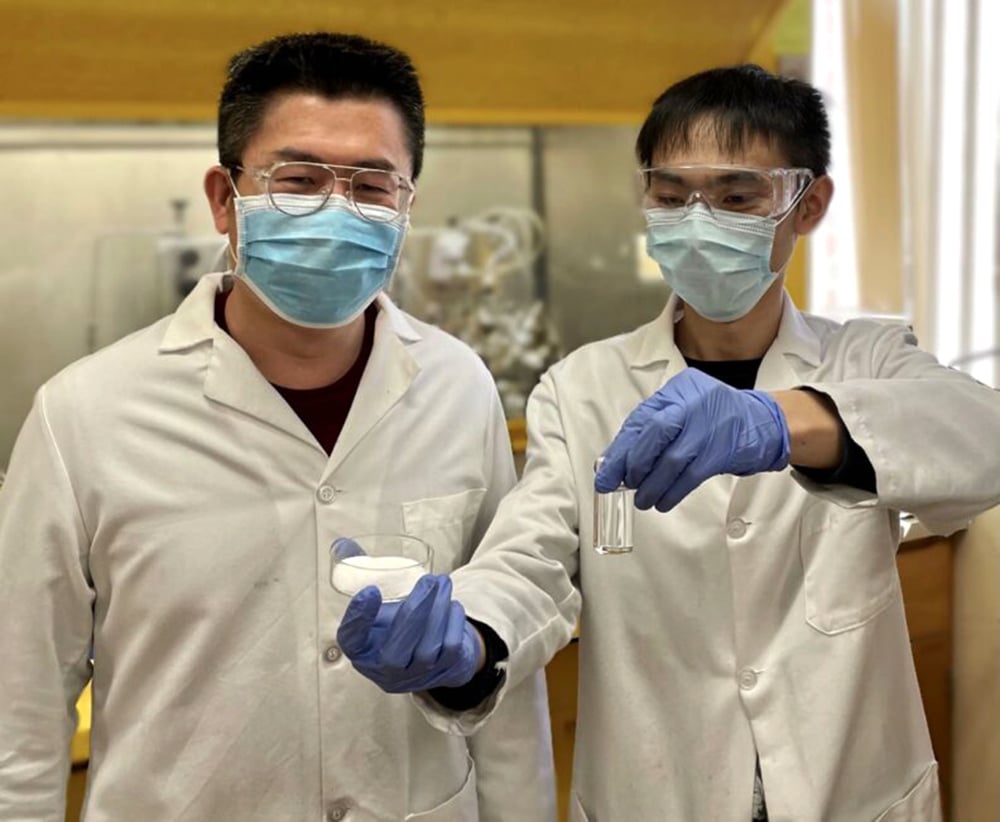
The team converted 90% of the plastic to usable components with the reaction, and they could easily fine-tune the process to make the products they want.
Study author Chuhua Jia said, “Before the experiment, we only speculated but didn’t know if it would work. The result was so good.”
The researchers are currently working out how to scale up the process to commercialize the technology.


