
The planet is burdened by an ever-rising quantity of rubber and plastic trash. That’s why teams of scientists worldwide are increasingly looking to the promise of closed-loop recycling to reduce plastic waste. One such group, coming from Princeton’s Department of Chemistry, recently announced a new polybutadiene molecule. They say it could advance the recycling goal through depolymerization, albeit after more research.
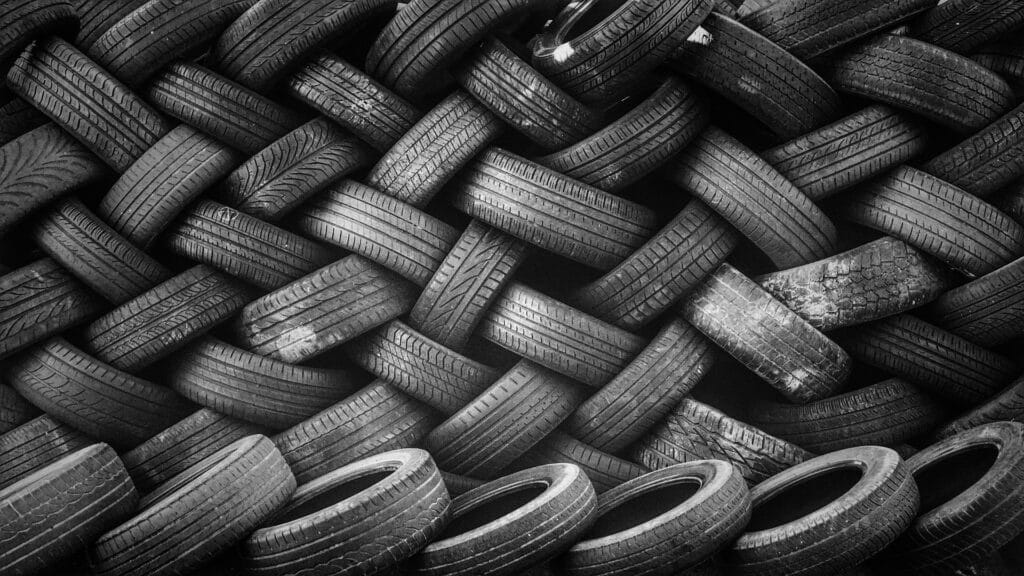
Polybutadiene is a material known for over a century and one of the top seven primary petrochemicals on the planet. The abundant organic compound is used to make plastic products and synthetic rubber; so, standard products like shoes and tires.
Alex E. Carpenter, an ExxonMobil Chemical chemist and collaborator on the research, said:
To take a widespread chemical that people have been studying and polymerizing for many decades and make a fundamentally new material out of it—let alone have that material have interesting innate properties—not only is that unexpected, but it’s also a big step forward. You wouldn’t necessarily expect there still to be fruit on that tree.
The Chirik lab reported that the molecule – named (1,n’-divinyl)oligocyclobutane – enchains in a repeating sequence of squares during polymerization. Scientists had never before realized such a microstructure. It enables the process to depolymerize (go backward) under certain conditions. Meaning, the butadiene can be “zipped up” to make a new polymer and then “unzipped” to an immaculate monomer for re-use.
Carpenter continued:
The focus of this collaboration for us has been on developing new materials that benefit society by focusing on some new molecules that [Princeton chemist] Paul Chirk has discovered that is pretty transformative. Humankind is good at making butadiene. It’s very nice when you can find other useful applications for this molecule because we have plenty of it.

Most of the chemical industry’s commodity plastic and rubber are produced using a small number of building blocks, such as butadiene, ethylene, and propylene. However, they often need to combine and then bolster them with other additives, which provide the performance properties desired – for example, the lightness of a shopping bag or the hardness of a bottle cap.
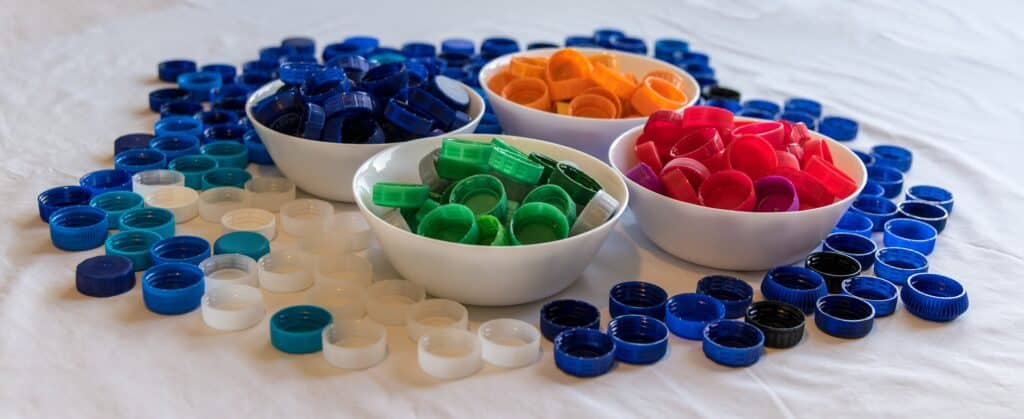
To recycle these items, all these “ingredients” have to be separated. The process is costly because of the chemical steps involved and the amount of energy required. So, while plastic is wonderfully convenient and cheap, it wasn’t designed with disposal in mind. That is the problem. But Chirik’s Lab has simplified the process enough to be economical.
Kennedy said:
The interesting thing about this reaction of hooking one unit of butadiene onto the next is that the ‘destination’ is only very slightly lower in energy than the starting material. That’s what makes it possible to go back in the other direction.
[Now] we have to learn what to do with that. Its strength limits us. I would like to see a higher molecular weight.
The project stretches back to 2017. C. Rose Kennedy, a postdoc in the Chirik lab then, now an assistant professor of chemistry at the University of Rochester, said that she was enchaining butadiene and ethylene in the early days.
Her colleague, Mohadjer Beromi, came up with the idea of removing the ethylene altogether – to use the neat four-carbon butadiene alone at elevated temperatures. That’s when Beromi “gave” the butadiene to the iron catalyst, yielding the new polymer of squares.
Mohadjer Beromi said:
We knew that the motif had the propensity to be chemically recycled. But I think one of the new and exciting features of the iron catalyst is that it can do [2+2] cycloadditions between two dienes, and that’s what this reaction essentially is: it’s a cycloaddition where you’re linking two olefins together to make a square molecule over and over again.
It’s the coolest thing I’ve ever worked on in my life.
They took the findings to ExxonMobil (in Baytown, Texas), which decided to support the work. That’s when the researchers began working with scientists from Baytown. Together they validated the structure and performed additional characterization studies using computer modeling and X-ray scattering work. Through this collaboration, they were able to characterize further oligocyclobutane and understand its performance properties.
Chirik, Professor of Chemistry at Princeton’s Edwards S. Sanford, said:
One of the things we demonstrate in the paper is that you can make tough materials out of this monomer. The energy between polymer and monomer can be close, and you can go back and forth, but that doesn’t mean the polymer has to be weak. The polymer itself is strong.
What people tend to assume is that when you have a chemically recyclable polymer, it has to be somehow inherently weak or not durable. We’ve made something that’s really, really tough but is also chemically recyclable. We can get pure monomer back out of it. And that surprised me. That’s not optimized. But it’s there. The chemistry’s clean.
I honestly think this work is one of the most important things to ever come out of my lab.
The lab has many more investigations planned to produce chemically recyclable materials for commercial use. Its next research phase will focus on enchainment, which they haven’t achieved beyond a certain number of units without the material becoming crystalline and insoluble. Nevertheless, they are excited about the prospects for oligocyclobutane and confident they’ll overcome any challenges present and to come.


