
The world’s ocean pollution problem is far worse than we thought. A new study found ten times as much plastic in the Atlantic Ocean than estimates calculated. A team of researchers surveyed the top 200 meters of water from 5% of the ocean and found between 12 and 21 million tons of microscopic particles. Extrapolating those figures to 100% of the sea gives a concentration of around 200 million tons of microplastic. It’s no wonder we’re finding microplastics in our fruits and vegetable and even in milk!
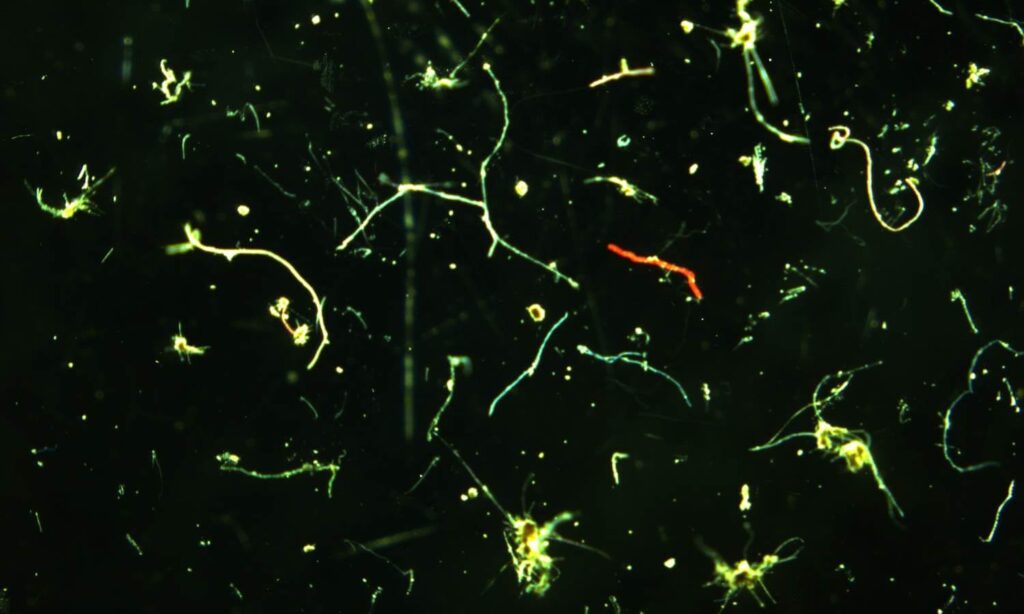
When plastic reaches the ocean, it stays there for decades, breaking down into smaller and smaller fragments. However, a lot of the microplastic also come from textile and clothing. And it’s making its way into our food.
Dr. Ian Kane, of the University of Manchester, who was the lead author of a separate study on microplastics, said:
The real problem is plastics that are sat around in the environment [which] can accumulate various pollutants and toxins on their surfaces. There’s evidence that some of these toxins may be released when in the guts of organisms, and then you have the effect of the food chain, whereby small creatures are eaten by bigger creatures, and eventually you get to our fish stocks and you’re eating a nice piece of tuna containing decades-old microplastics contaminated with all sorts of nastiness.
The hazards of consuming plastic are little understood. It could likely take a while to kick in at sub-lethal severe levels. However, researchers have found out already that immune cells die three times faster when exposed to microplastics, and plastic pollution leads to neurological mercury poisoning through our food.

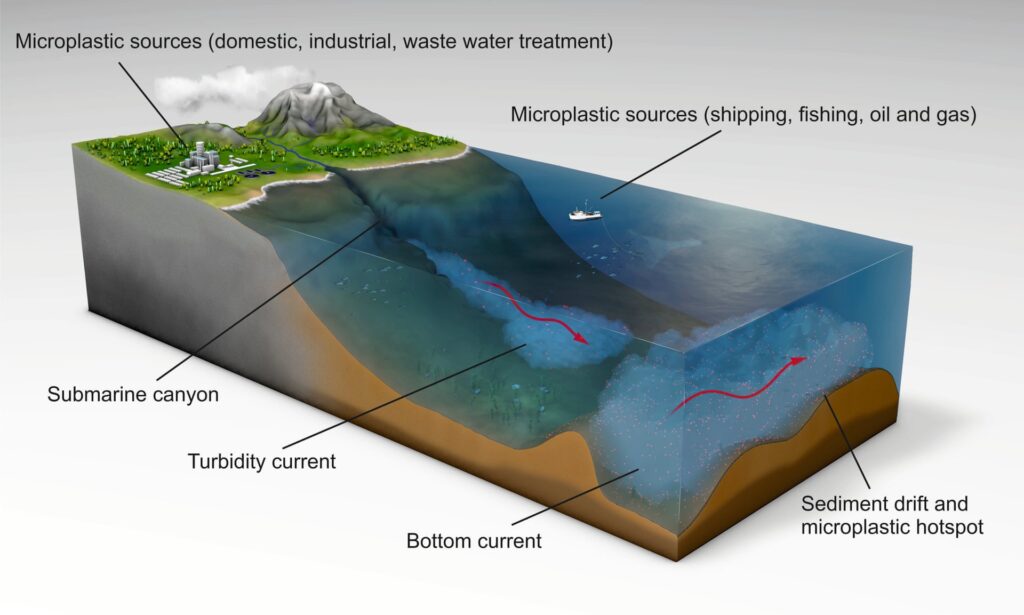
And the plastic isn’t just floating about at the top of the ocean. Research published earlier this year found accumulations of microplastics on the seabed in areas that are biodiversity hotspots. The particles make their way to these regions via strong currents, the same way that plastic pollution accumulates at the Great Pacific Garbage Patch. Unfortunately, this only intensifies the damage they may inflict on marine ecosystems.
The number of microplastics could well outnumber zooplankton. Meanwhile, corals are eating the particle along with the zooplankton. Sea Turtles also eat plastic, but the more significant pieces, because it smells like food.
The impact of marine life consuming plastic waste also isn’t fully understood. However, there have been some worrisome findings. For example, microplastics affect respiratory systems in Japanese rice fish, and animal life has been declining at the bottom of the lake from microplastics.
Jacqueline Savitz, from the conservation group Oceana, said:
Estimates of plastic pollution that have focused only on what is observed at the surface so severely underestimate the problem. This relationship between microplastics hotspots and biodiversity hotspots compels us to act to turn off the plastic production faucet – it shows that cleanups will never suffice and that recycling has done little to address the problem. Sadly, the petrochemical industry is doing just the opposite, and it will fall on policymakers to stem the flow of plastics into our oceans.

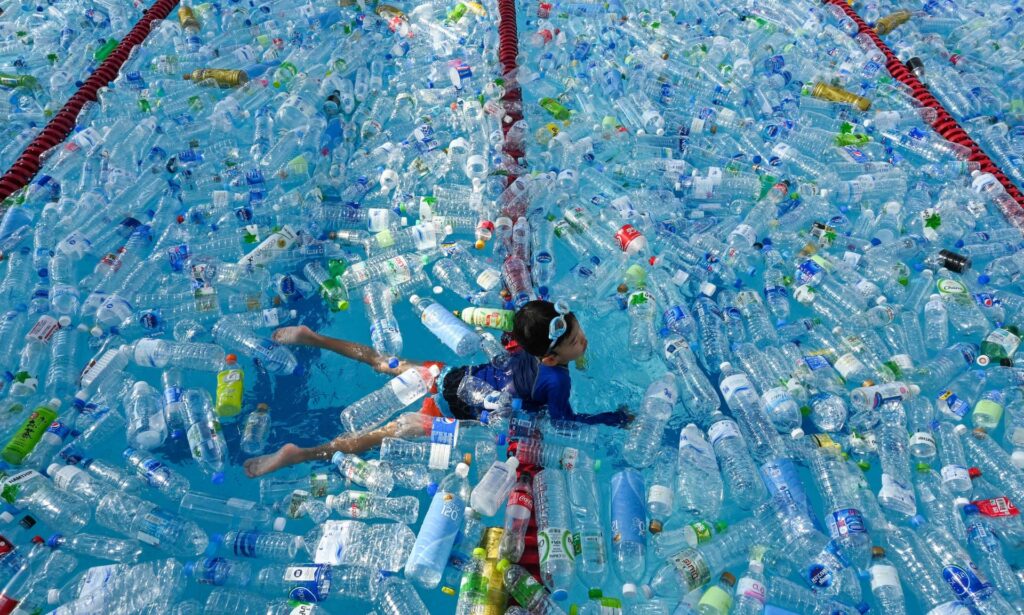
And despite all the beautiful groups – like Ocean Voyage Institute and The Ocean Cleanup – going out there and collecting tons of plastic, the pollution problem persists. Despite Australia putting netted bags in rivers to catch garbage, the Ocean Cleanup’s Interceptor project gathering debris floating in the rivers, and a Dutch startup coming up with the creative way of using bubbles to reduce pollution making its way into the ocean – the waste continues to accumulate. Even all the bag, bottle, sachet, cutlery, straw, Styrofoam, and cotton bud bans around the world haven’t made much of an impact.
Simon Reddy, international environment director at the Pew Charitable Trusts, said:
All the initiatives to date make very little difference. There is no silver bullet, there is no solution that can simply be applied – lots of policies are wanted. You need innovation and systems change.
What needs to happen is strict government intervention and an updated waste and water treatment industry. For example, policymakers could enforce filtration to prevent microplastics from reaching the sea in the first place. Several innovative inventions have been developed – from filters for laundry machines, to ferrofluid, to sound wave technology, to tiny magnetic springs that dissolve microplastics – all of which can be implemented at large to tackle this crisis. There’s even a drone specifically designed to detect microplastic in water.
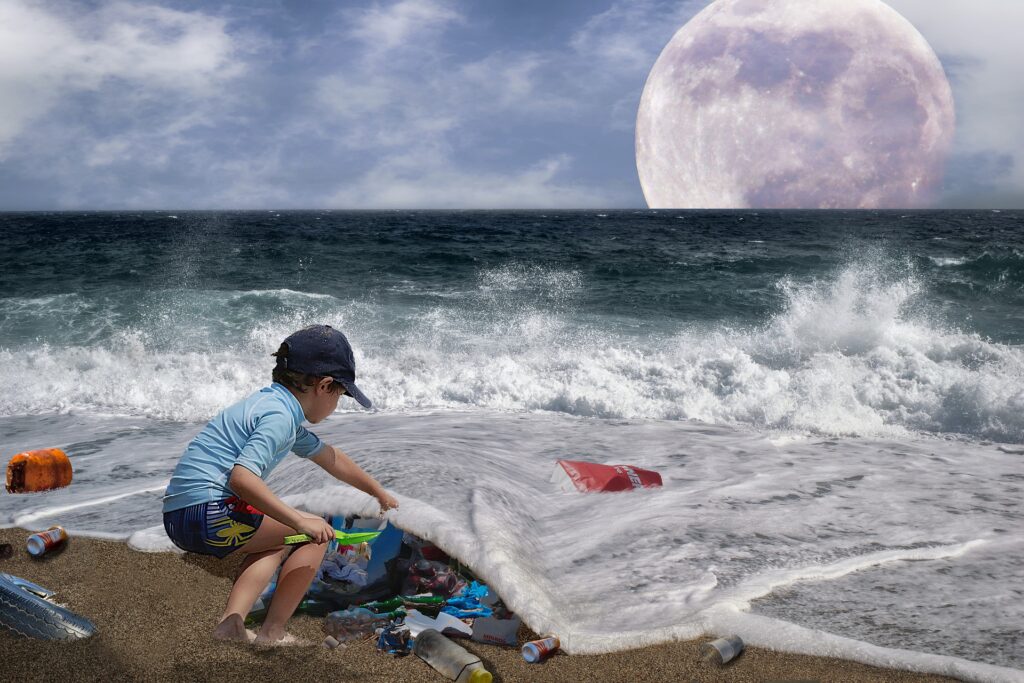
Furthermore, the amount of plastic entering the oceans is likely to triple in the next two decades if nobody does anything, according to a major study by the Pew Trusts and others. By 2040, there will be 29m tons of plastic waste polluting the oceans – which is the equivalent of 50kg for every meter of coastline on the planet. All efforts announced so far by nations and companies worldwide will only reduce the projected volume by around 7%. More needs to happen!


