
After wastewater is processed at water treatment plants, a sandy grit is left over. That grit usually ends up in landfills, though it’s non-biodegradable, and it can’t be recycled because it contains pathogens. Now, California State University-Bakersfield researchers have figured out how to turn it into an eco-friendly pothole repair material.
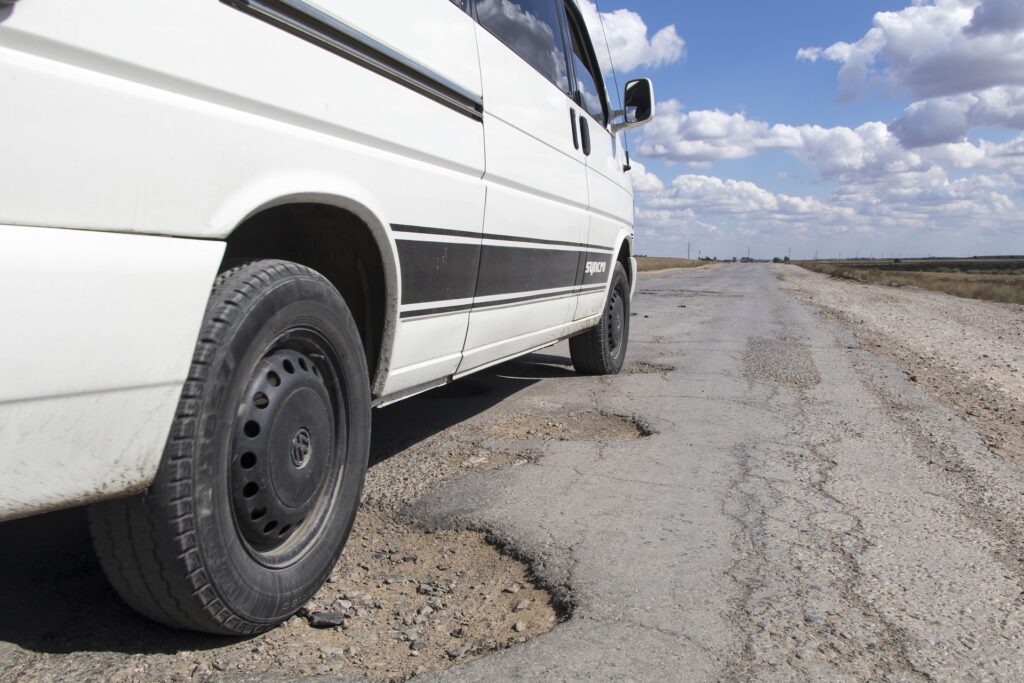
Potholes cause billions of dollars of damage per year to automobile tires, wheels, and suspensions. Currently, these holes are filled with asphalt. Unfortunately, that material contains toxic substances called polycyclic aromatic hydrocarbons, which can leach out, polluting the environment. These are not only dangerous to the environment, but also to the workers applying the patches, and to people who may be exposed to the hydrocarbons as they leach out of the asphalt.
The team, led by Dr. Zhongzhe Liu, started by combining wet grit, magnesium oxide, and calcium oxide, and mixing it to create a gritty substance in which pathogens can’t flourish. Then, they turned that substance into a grout by adding a mild acid known as potassium dihydrogen phosphate. The resulting material was a chemically bonded phosphate ceramic, which the team dubbed “grit assisted patch” (GAP).
When the researchers tested GAP in the lab, it showed to have a similar compressive strength to that of asphalt, but it’s believed to last longer than asphalt when filled in potholes ultimately. As a bonus, it’s non-toxic to humans.

The team is now evaluating how efficient GAP bonds to the existing pavement, and are further improving its compressive durability and strength. When complete, it will be tested on an operational roadway with regular traffic.
The research was presented on Aug. 18 at an online meeting of the American Chemical Society.


