
At the moment, plants remove about three gigatons of carbon dioxide from the atmosphere every year, as humans pump out over 11 gigatons. The balance is way out of scale. Planting more trees will help, but it likely will not be enough. Now, scientists discover that the world’s tropical forests are quickly losing their ability to absorb carbon from the atmosphere, worrying experts that a significant carbon sink will turn into a carbon source.
The research, published in Nature on March 4th, found that the Amazon could turn into a carbon source by 2035 due to wildfires, deforestation, and greenhouse gases in the atmosphere.
For 30 years in the African tropics and the Amazon, an international association of African and European scientists led by experts from the University of Leeds studied more than 300,000 trees. The team found that the traditional climate models that predict tropical forests will serve as carbon sinks for years to come are inaccurate. Instead, the uptake of carbon into the world’s tropical forests peaked in the 1990s, according to the University of Leeds.
Simon Lewis, prof of Global Change Science at UCL, and Lee White, Gabon’s Minister for Water, Forests, the Sea and Environment, explained:
Our findings show that back in the 1990s, intact tropical forests were absorbing 4.6 billion tons of carbon dioxide every year. This has slumped to an estimated 2.5 billion tons each year over the last decade. To put these colossal numbers in context, the decline of 2.1 billion tons each year is equivalent to five times the annual carbon dioxide emissions of the UK. Tropical forests have been helping us, but that help is starting to wane.
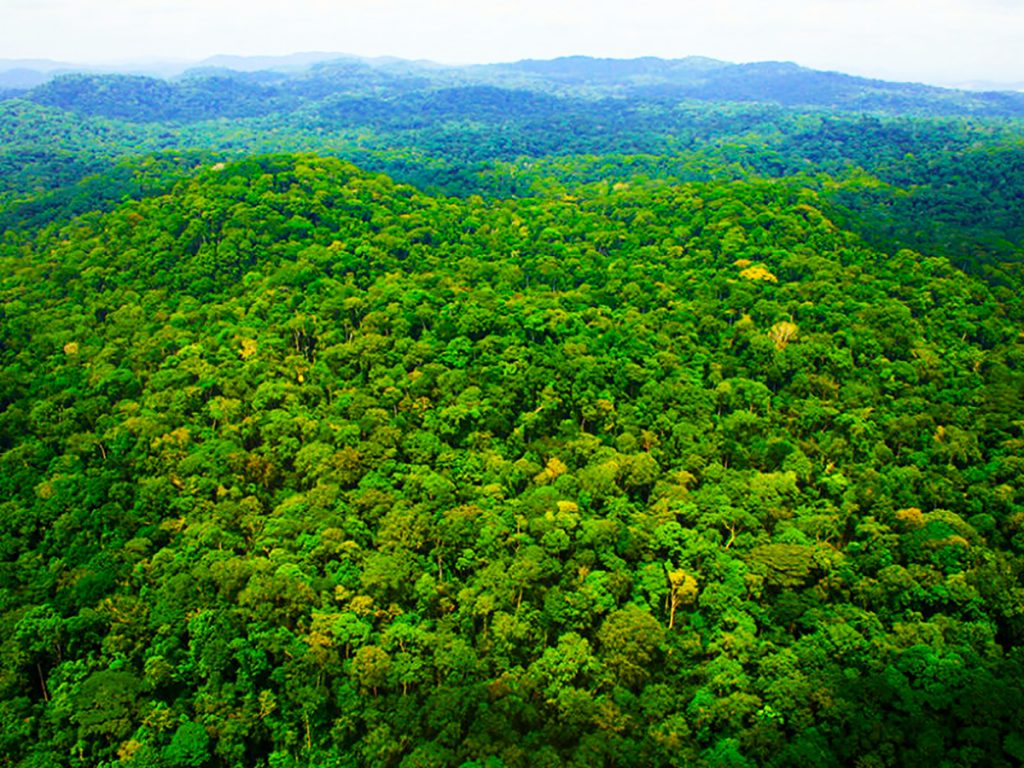
In the research, the team combined information from two major research networks of forest observations in the Amazon and Africa. They also camped out in remote field sites for years, tagging individual trees, measuring them, and estimating the height of every single tree within 565 different regions of the forest.
Every few years, the researchers would return to repeat the entire process, allowing them to estimate the carbon stores in the trees that survived and those that died. The team’s calculations revealed that the Amazon has been less resilient than the African tropics, but both are on a concerning trend line.
Also, greenhouse gases are striking already oversaturated tropical forests, which account for around 50% of all land-based carbon sinks. The overload of carbon is threatening the forests’ ability to provide people with food, medicine, water, and shelter.
Lewis added:
The cause of this is climate change impacts – in terms of heat stress and droughts – on these remaining intact forests. Humanity has been really lucky so far in that these forests have been mopping up our pollution, and they might not keep doing that for that much longer.
Meanwhile, plant scientists have observed that when levels of carbon dioxide in the atmosphere rise, most plants thicken their leaves. And since human-made atmospheric CO2 levels continue to rise each year, thick-leafed plants are likely to be in our future. However, scientists from the University of Washington discovered that plants with thicker leaves might intensify the effects of climate change as they would be less efficient in absorbing atmospheric carbon.
Lewis said:
There is a lot of talk about offsetting, but the reality is that every country and every sector need to reach zero emissions, with any small amount of residual emissions needing to be removed from the atmosphere. The use of forests as an offset is largely a marketing tool for companies to try to continue with business as usual.
Lewis and White explained that to avoid reaching the point where climate change is out of control, and carbon sinks become carbon sources, we need to see emissions decline by almost half by 2030.


