
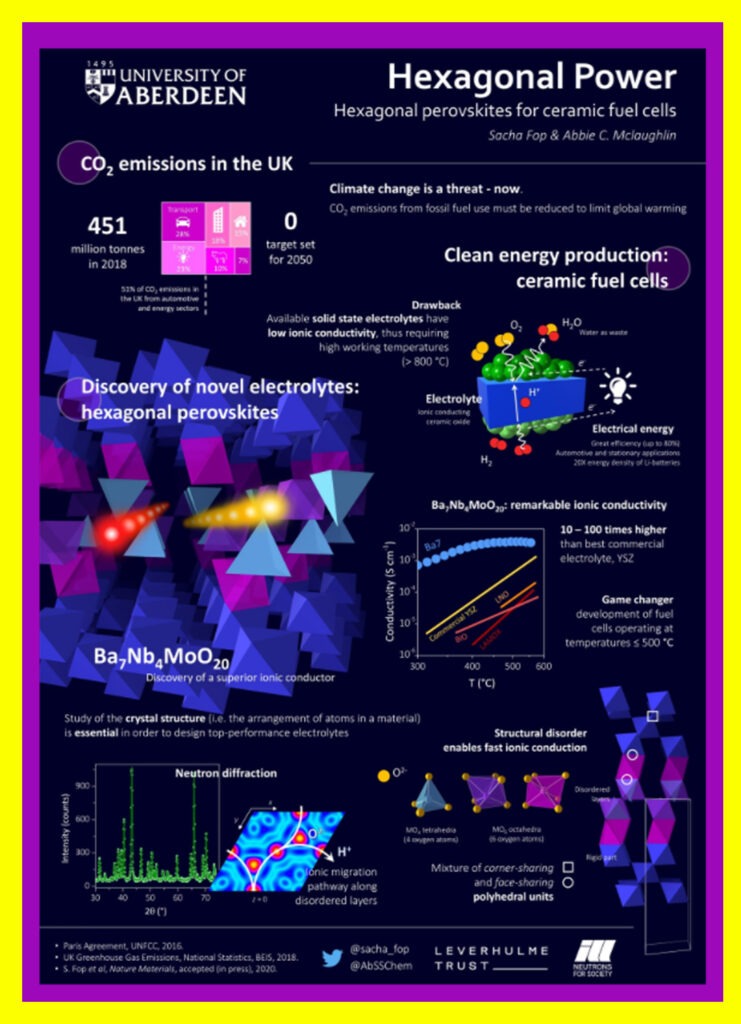
Researchers from the Scottish University of Aberdeen have made a “needle in a haystack” discovery that could revolutionize fuel cell technology and cut down global emissions. They found that a new family of chemical compounds, collectively known as hexagonal perovskites, could unlock the enormous potential of ceramic fuel cells.
Ceramic fuel cells are ultra-efficient devices that can do the following:
- Convert chemical energy into electrical energy
- Produce very low emissions if powered by hydrogen
- Provide a clean alternative to fossil fuels
- It can use hydrocarbon fuels such as methane, ‘meaning they can bridge the gap’ to a low carbon world.
Professor Abbie McLaughlin, who led the study, said:
Ceramic fuel cells are highly efficient, but the problem is they operate at really high temperatures, above 800°C. Because of that, they have a short lifespan and use expensive components. For a number of years, we’ve been looking for compounds that might overcome these issues in the relatively unexplored hexagonal perovskite family, but there are specific chemical features required which are hard to find in combination. For example, you need a chemical compound with very little electronic conductivity, which is stable in both the hydrogen and oxygen environments of the fuel cell.
Ceramic fuel cells could also be used to power homes and cars, but the high temperature of operation leads to a short life span. Therefore, it’s essential to lower the working temperature for long-term service, cost, stability, and safety.
McLaughlin added:
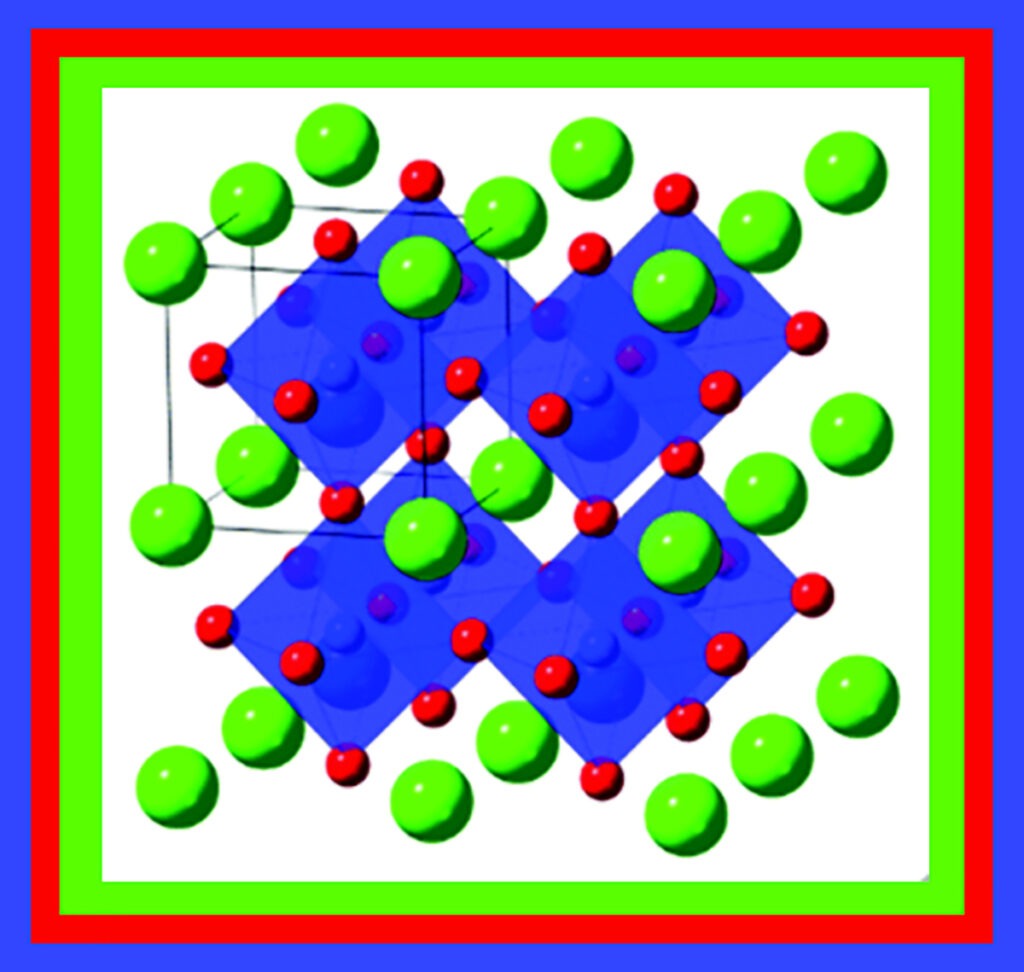
What we have discovered here is a dual proton and oxide ion conductor that will operate successfully at a lower temperature – around 500°C – which solves these problems. You could say that we’ve found the needle in a haystack that can unlock the full potential of this technology.
The results of their research are detailed in the journal Nature Materials.


