
Award-winning Ghanaian-British architect Sir David Adjaye has produced many large projects, such as the National Cathedral of Ghana and the NMAAHC. Yet, his firm’s latest work tops them all. It will involve transforming Ghana’s healthcare system by creating 101 new hospitals in the country.
Adjaye is known for combining artistic feeling and ethos for community-driven projects. His creative use of materials adapted designs, and creative sensibilities have placed him as one of the leading architects of his generation.
In 2017, Queen Elizabeth II knighted Adjaye, and TIME Magazine recognized him as one of the 100 most influential people of the year. Most recently, Adjaye was announced the champion of the 2021 RIBA Royal Gold Medal, approved personally by Her Majesty the Queen.
The project, named District Hospitals, is part of a larger scheme called Agenda 111 that, as its name suggests, will consist of 111 hospitals, of which Adjaye Associates will design 101. However, creating 101 unique hospitals would be a massive task and probably not a good use of resources. Therefore, the firm has designed a flexible and energy-efficient prefabricated hospital that will be replicated throughout the nation and adapted to any specific requirements.
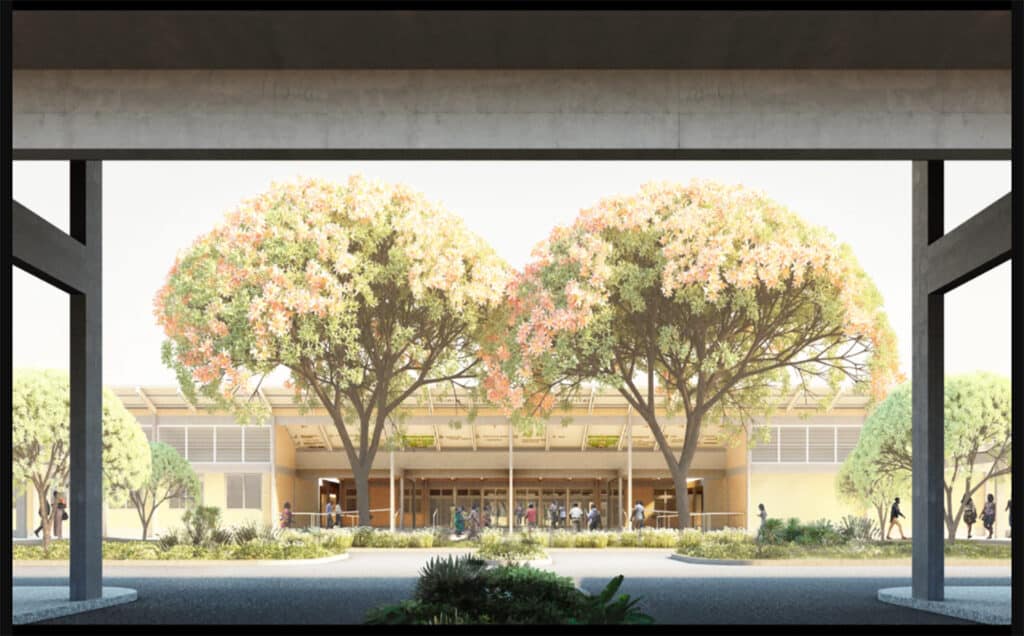
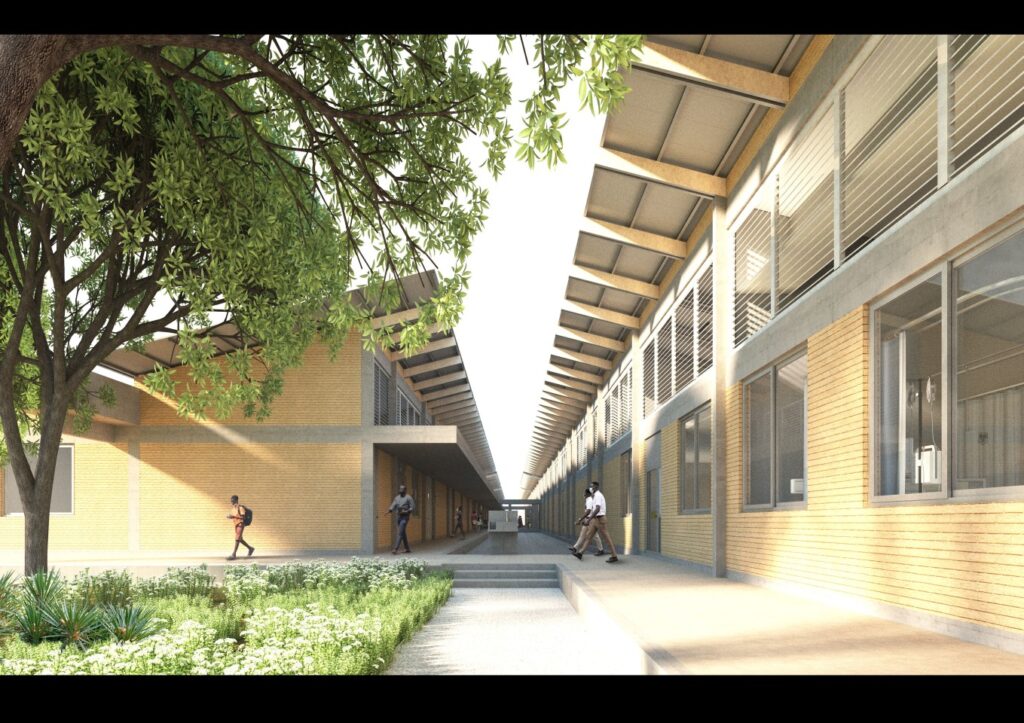
Each hospital facility is planned as a single-story campus measuring roughly 91,000 sq ft (8,500 sq m). It will feature patient reception and administration areas, labs and pharmacies, a surgical ward, maternity ward, pediatrics ward, isolation ward, accident and emergency room, and physiotherapy. Other areas like waiting rooms, a morgue, laundry, kitchen, and lodgings for staff and visitors, will be accommodated in adjacent buildings.
The overall design is inspired by the centuries-old Adinkra symbol, the Denkyem, which symbolizes a crocodile —a creature able to thrive with air and water, celebrated for adaptability and intelligence. The interior will be surrounded by greenery and arranged around a plant-filled central courtyard. Shading and excellent insulation will minimalize heat gain, while rainwater will be captured and stored for later use. Finally, promoting ventilation and natural light is also a primary goal.
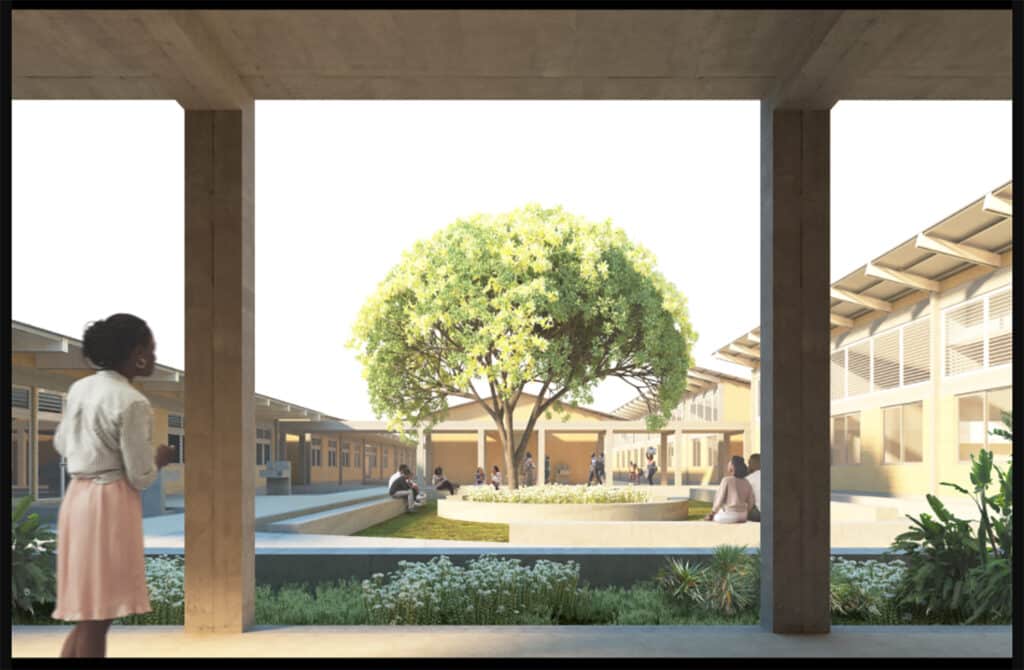
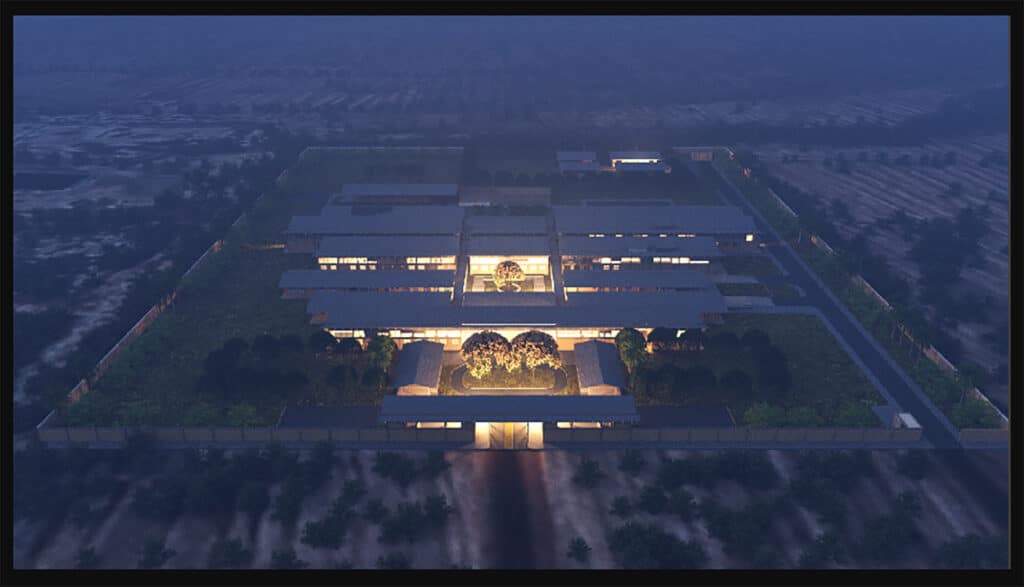
Construction has already begun on the first hospital. However, there’s no set date on when it’s expected to be complete or when all 111 hospitals will be up and running. This project will likely take multiple years to complete.
Last year, Ghana received a £27M (around US$35.5M) green loan from the UK government to fund the use of solar energy to sterilize drinking water for rural communities in Ghana.


