
A lawn mower that starts easily, cuts cleanly, and runs smoothly can last many years when you care for it the right way. Many owners replace mowers early not because the machine wore out, but because basic maintenance and storage were ignored. Small steps such as cleaning the deck, changing oil on time, and sharpening the blade protect the engine and reduce strain on every component.
Smart mowing habits also matter. Cutting grass that is too tall, too wet, or has hidden debris puts heavy stress on the mower and shortens its life. With a simple routine before, during, and after the mowing season, you can keep your mower reliable, avoid costly repairs, and protect your investment for the long term.
What Maintenance Keeps a Lawn Mower Running Longer?
Regular Cleaning and Blade Care Practices
Grass clippings, dust, and mud build up on the mower deck and underside, trapping moisture and causing rust. After each mow, let the engine cool, then brush or scrape off clumps of grass from the deck and wheels. Keep the discharge chute clear so the mower does not bog down. Periodically wash the deck with a hose, but avoid blasting water directly into engine parts. Blade care also plays a big role.
A dull blade tears grass instead of cutting it, which makes the engine work harder and uses more fuel. Sharpen the blade at least once per season, or more often for large lawns. Balance the blade and tighten the mounting bolt to prevent vibration and wear.
Engine Maintenance: Oil, Filters, and Spark Plugs
The engine is the heart of your lawn mower, and fresh oil is its best protection. Check the oil level before mowing, and top up if needed. Change the oil according to the owner’s manual, often after the first few hours on a new mower and then once or twice each season. Use the recommended oil type and dispose of the old oil properly.
Clean or replace the air filter so the engine can breathe; as recommended by the University of Illinois Extension, a clogged filter causes hard starts and poor performance. Inspect the spark plug for carbon buildup or wear. Replace it every season or as needed so the engine starts easily and runs smoothly. These simple steps dramatically increase engine life and reliability.
Checking and Replacing Worn-Out Parts
Over time, moving parts on your mower lose their shape, loosen, or crack, which can quietly shorten its lifespan. Make a habit of looking over the mower before and after mowing. Check the wheels for wobble, cracks, or worn treads that affect traction. Look at belts on self-propelled models: frayed or stretched belts slip and strain the transmission. Inspect cables for fraying and be sure levers move freely.
Replace damaged pull cords before they break. Examine the fuel line and tank for leaks or brittleness. Small plastic parts, such as chute guards and covers, also protect key components and deserve attention. Replacing low‐cost, worn parts early prevents bigger failures, helps the mower run more efficiently, and extends overall life.
How Should You Use a Lawn Mower to Prevent Damage?
Proper Mowing Techniques for Better Performance
The way you mow has a direct impact on how hard your mower must work. Set the cutting height correctly; aim to remove only one‐third of the grass blade at a time. Cutting too low, or “scalping,” makes the engine strain and exposes soil and roots. Mow with a steady, moderate pace instead of forcing the mower quickly through thick or tall grass.
Overlap your passes slightly so the mower does not struggle with thick uncut strips. Use sharp turns instead of dragging the front wheels sideways, which stresses the deck and wheels. When tackling tall grass, use the highest setting first, then lower it on a second pass. These simple techniques reduce wear and keep your mower running longer.
Avoiding Common User Mistakes That Cause Wear
Many lawn mowers fail early because of simple user mistakes. Running over rocks, branches, toys, or hosepipes can bend the blade, crack the deck, or damage the crankshaft. Walk the lawn before mowing and remove debris. Never tilt the mower the wrong way; tilting toward the carburetor or air filter can cause oil to flood the engine.
Consult the manual for the proper tilt direction. Do not mow through deep water or mud, which can rust components and clog moving parts. Avoid letting fuel sit for months in the tank, as old gasoline forms deposits and causes starting problems. Do not ignore unusual sounds or vibrations; they often signal loose or damaged parts that need quick attention.
Adjusting Mowing Based on Grass Type and Conditions
Grass type, growth rate, and weather should guide how you mow. Cool‐season grasses grow fast in spring and fall, so raise the cutting height slightly and mow more often to avoid heavy loads. Warm‐season grasses often tolerate lower cutting heights but still follow the one‐third rule. Never mow wet grass when possible; wet clippings clump under the deck, cause clogging, and make the engine work harder. If you must mow damp grass, clean the deck immediately afterward.
During hot, dry periods, cut higher to reduce stress on both the lawn and the mower. When grass is very tall or thick after heavy rain, take multiple passes instead of trying to cut everything at once. Matching your approach protects the mower.
Best Storage and Seasonal Care Tips for Longevity
How to Store Your Lawn Mower During Off-Season
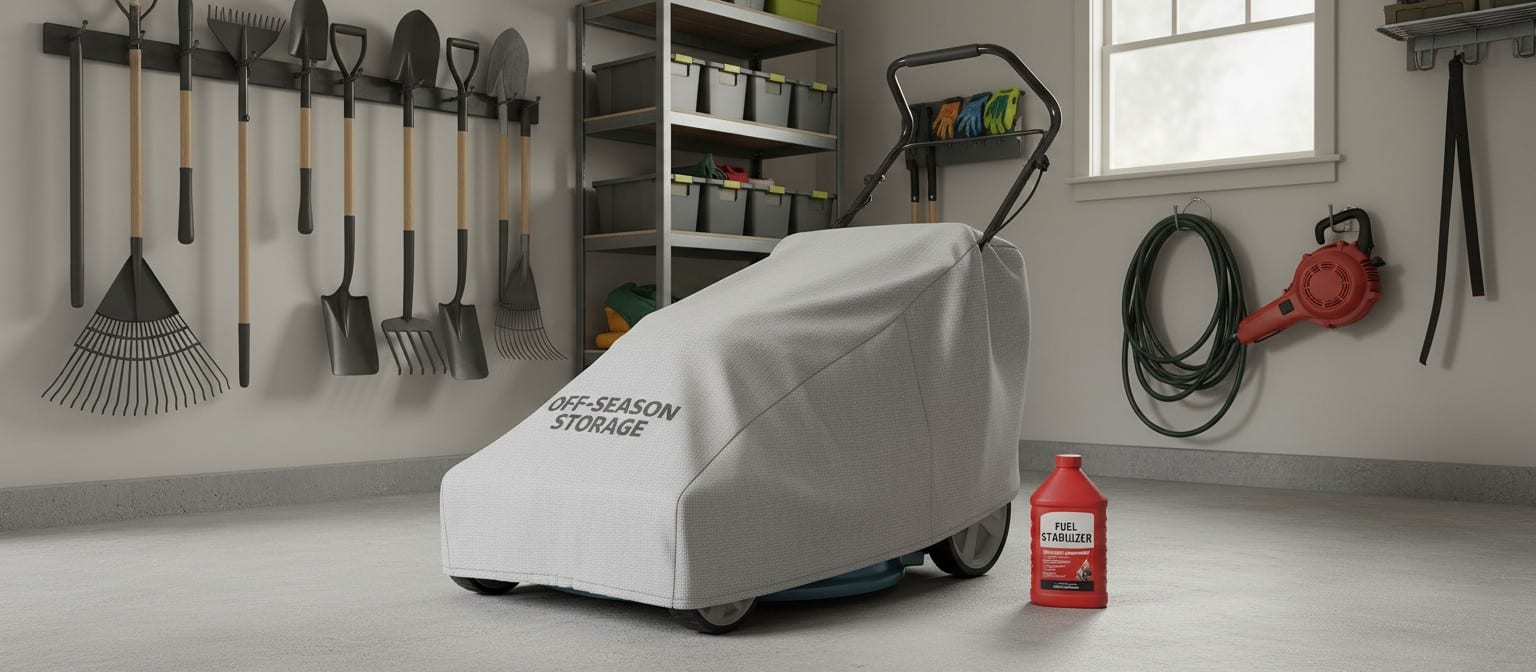
End-of-season storage has a huge impact on mower lifespan. Before storing, run the engine to warm it briefly, then change the oil so the engine sits with clean lubrication. Either run the fuel tank nearly dry or add a fuel stabilizer to prevent varnish and deposits. Let the engine run a few minutes after adding stabilizer. Clean the deck thoroughly and remove built‐up clippings and dirt.
Sharpen and balance the blade, or remove it and store it safely if you prefer. Store the mower in a dry, sheltered place such as a garage or shed, away from corrosive chemicals. Keep it on a level surface, and disconnect the spark plug wire for safety. Good storage habits prevent rust, leaks, and hard starts.
Protecting Your Mower from Weather and Moisture
Exposure to rain, snow, and constant moisture is one of the fastest ways to shorten a mower’s life. Whenever possible, avoid leaving the mower outdoors uncovered. If you must store it outside, place it on a hard, raised surface and use a breathable, weather‐resistant cover that keeps water off but allows condensation to escape. Do not wrap the mower in plastic, which traps moisture and encourages rust.
Keep the mower away from sprinklers and roof runoff. Wipe off rain or dew from metal surfaces after use. Inspect the deck, fasteners, and handle joints regularly for early signs of rust, and touch up paint or use rust‐inhibiting spray on bare spots. Protection from moisture keeps the frame, deck, and hardware solid for years.
Pre-Season Inspection and Tune-Up Checklist
Before the mowing season starts, give your lawn mower a full checkup so it runs reliably all year. Confirm that all nuts, bolts, and handle fasteners are tight. Check the blade for nicks, bending, or excessive wear, and sharpen or replace it if needed. Inspect the spark plug, clean the tip, and replace it if worn. Clean or replace the air filter to ensure proper airflow.
Examine the fuel line, tank, and carburetor area for leaks or cracks. Lubricate pivot points, wheel bearings, and cables as recommended in the manual. Make sure the drive system on self‐propelled mowers engages smoothly. Finally, add fresh fuel, check the oil level, and start the engine briefly. This quick tune-up reduces breakdowns and extends mower life.
Conclusion
Extending the lifespan of your lawnmower comes down to three simple habits: maintain it regularly, use it correctly, and store it properly. Cleaning the deck, sharpening the blade, and caring for the engine reduce strain on every part and lower the mower’s environmental impact.
Smart mowing techniques—such as setting the right cutting height, avoiding debris, and adjusting for grass and weather—keep the mower from working harder than it should. At the end and start of each season, proper storage and a careful inspection prevent rust, fuel problems, and surprise failures. You do not need special tools or advanced skills, only consistency. Follow these straightforward steps and solve the problem of your lawn mower starts then dies, and serve your lawn reliably for many years.

