
Using a specialized apparatus known as a reformer, reformer Pilates is a fantastic way to improve your flexibility, strength, and awareness of your body. Pilates on a reformer machine differs from the mat in that the practitioner performs a sequence of regulated motions while riding a sliding carriage connected to springs, which allows for changing resistance.
In addition to strengthening your core, this technique improves your alignment, balance, and coordination all at once.
Nervousness is a natural reaction for someone who has never attempted a Pilates reformer class. If you’ve never been on a reformer machine before, the sight of it could be frightening. But if you put in the time and effort to get yourself ready, you can ace that first class. Get ready for your reformer Pilates classes with the help of this comprehensive guide.
What is Reformer Pilates?
Get a good grasp on the basics of reformer Pilates before you hit the class. Reformer Pilates is a machine-based style of Pilates that differs from mat Pilates in that it uses a sliding platform, pulleys, and springs to generate resistance. You may strengthen your core, increase your flexibility, and correct your posture with the help of this machine.
Flexibility is a great quality of reformer Pilates. You may adjust the exercises to suit your current fitness level thanks to the springs’ adjustable resistance levels. Reformer Pilates is a great way to get a full-body workout, regardless of your fitness level.
Preparation for Your Reformer Pilates Class
1. Do Some Research on Studios and Instructors
Your experience can be greatly enhanced if you find the perfect studio and instructor. Find a studio that teaches beginners and has a solid reputation for competent instruction. Find a good teacher who works with new students by reading reviews or asking around for recommendations.
Try out a trial session or an introductory course before enrolling in a full course if you can. By doing so, you may get a feel for the tools and work closely with a teacher who can point out where you’re doing wrong and answer any questions you may have.
2. Familiarize Yourself with the Reformer Machine
You should familiarize yourself with the components of the reformer machine beforehand, even if your teacher will provide a rundown of it during class. The reformer’s components include a flat, gliding platform called the carriage, springs that provide resistance, a foot bar, and shoulder blocks. Straps are also available for use when exercising the legs or arms.
Watching some introduction movies online is an excellent way to familiarise yourself with the reformer. If you know how the machine operates, you can pay more attention in class without wasting time being confused.
3. Wear the Right Clothes
For your comfort and safety when doing reformer Pilates, it is crucial to choose the right clothes. You should dress in a form-fitting, elastic garment so that you may move freely without snagging on the reformer’s moving parts. Choose a tank top, fitting shorts, or leggings. A potential safety risk is that loose garments could become entangled in the straps or springs.
Wearing loose-fitting, supportive clothing is a good idea for Pilates because of all the stretching and movement involved. Pilates is usually practiced barefoot or with grip socks; however, the rules of your class may differ. For added stability and traction on the machine, try wearing grip socks with rubberized bottoms.
4. Hydrate and Eat Light
Staying hydrated before reformer Pilates class is essential, as the exercise demands a lot of core work and muscular engagement. To ensure you’re well hydrated for your session, drink water all day long before it.
Pilates involves a lot of core activation, so it’s best to avoid drinking a lot of water just before class so you don’t feel nauseous. If you want to nourish your body without feeling burdened, have a little lunch or snack around an hour before class. A handful of almonds, a tiny amount of fruit, or a smoothie can supply all the energy you need.
5. Arrive Early and Communicate with Your Instructor
You should attend your first reformer Pilates class early so you can get a feel for the space, meet your instructor, and ask any questions you may have. Let them know that you’re just starting with reformer Pilates at this point. Throughout the lesson, your instructor can correct your form, explain the equipment, and offer more assistance if needed.
Tell your teacher in advance if you’re going to be absent from class due to an injury or other physical restriction. As long as they keep you safe, they can make adjustments or recommend different workouts to meet your needs.
6. Focus on Your Form, Not Intensity
Control and precision, rather than intensity, are the tenets of reformer Pilates. Mastering proper form and keeping your core engaged throughout the workouts is more important than trying to push yourself to your limitations. You won’t need quick or powerful movements to overcome the reformer’s opposition.
While you are in class, your teacher will probably give you hints on how to stand and align yourself correctly. Following these signals precisely can help you avoid injuries and get the most out of your workout.
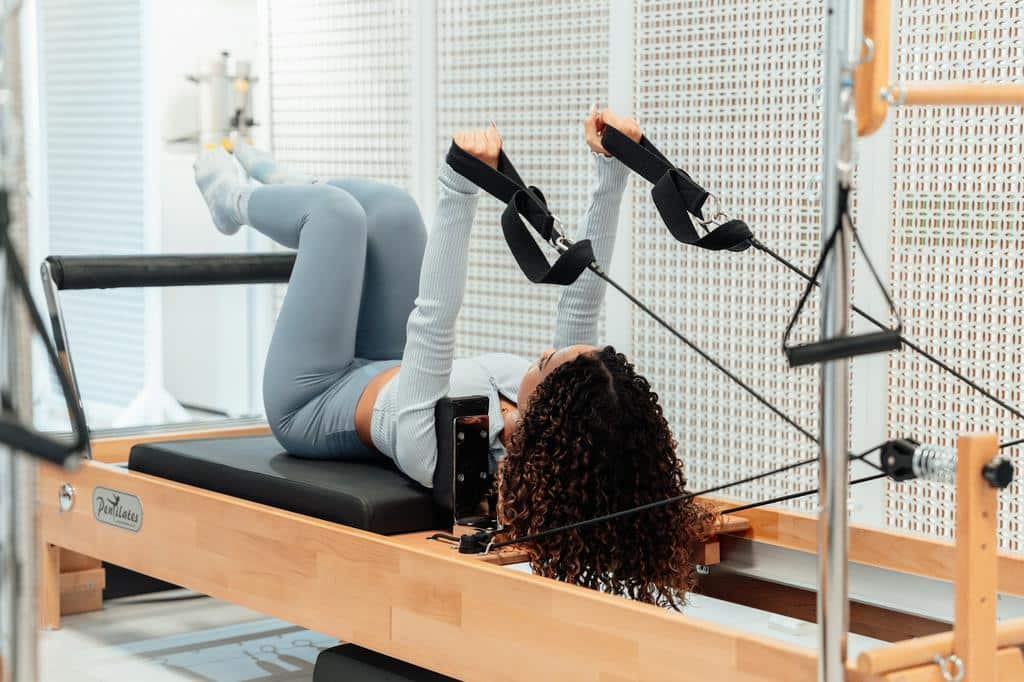
7. Be Patient and Consistent
It could take some time to get used to the reformer apparatus and the exercises in your first Pilates lesson. Feeling clumsy at first is normal, so try not to give up. Pilates is a discipline that demands dedication and perseverance to achieve mastery.
Be patient with yourself, and don’t get your hopes up too high. Strength, flexibility, and control can be enhanced with consistent practice. As you gain experience on the reformer, you’ll feel more at ease and observe a marked improvement in your core strength, posture, and general fitness.
8. Stretch and Cool Down After Class
Make sure to stretch and cool down after your class. When you stretch, you release muscular tension and lessen the likelihood of being sore the following day. Additionally, it helps with recovery, so you may return to your next class feeling revitalized instead of fatigued.
If your reformer Pilates class does not have a designated cool-down time, stretch gently before and after your workout. Reformer Pilates is great for strengthening your back, hips, and hamstrings.
Embrace the Journey of Reformer Pilates
Getting ready for your first reformer Pilates session might be nerve-wracking, but it’s worth it if you go into it with the correct frame of mind. Always keep in mind that Pilates is an evolving practice. As you work to improve your physical and mental health with reformer Pilates, remember to enjoy the ride.


