
Indonesia’s Ministry of Environment & Forestry is considering mass planting Pongamia trees to produce biofuel, restore degraded land, and offer a new crop for local communities to thrive economically and even use as food.
The Indonesian Archipelago, comprising over 17,000 islands, is under pressure due to several challenges. First, the government needs to restore 14 million hectares of degraded land to keep its vow to the UN while creating a green energy sector worth 23% of total grid contributions in only five years. This is significant as the country’s natural gas and oil reserves are expected to vanish by 2030, even while energy demand is increasing. However, Pongamia trees could offer a solution to both of these issues.
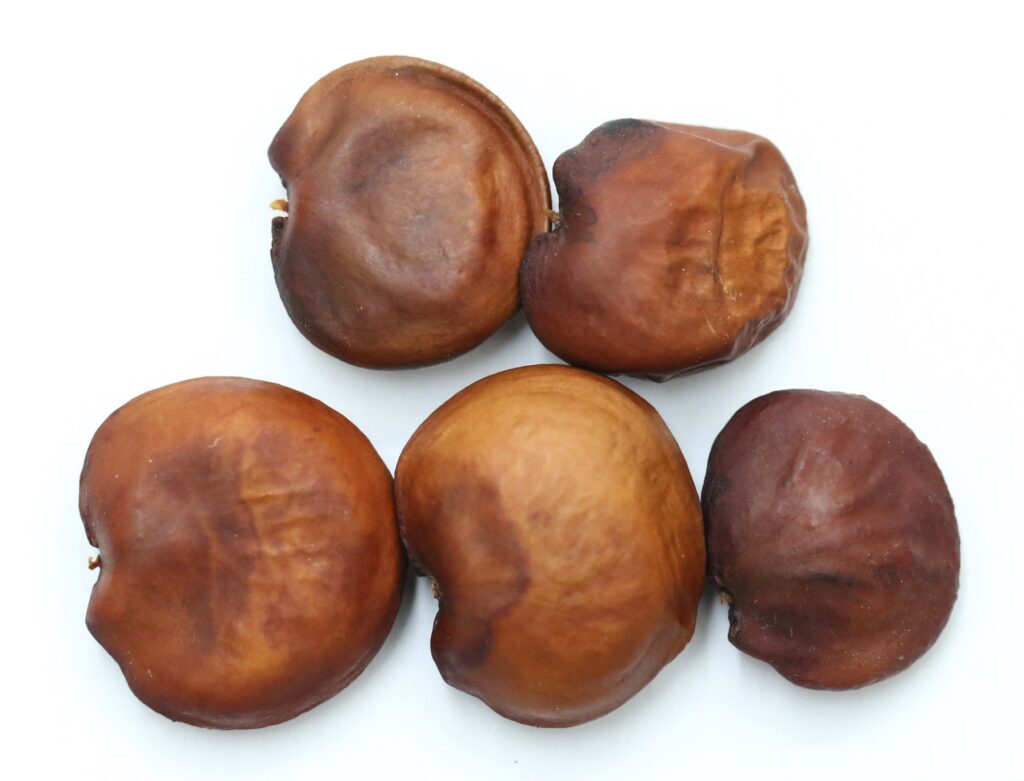
Pongamia pinnata is a tree species in the pea family with high oil content seeds. It can be found growing across Asia. Pongamia trees – also called Indian Beech, Karum tree, Kranji, and Malapari – grow well on degraded or marginal land in wet and dry climates. Traditionally, its orange/brown seeds are pressed into oil for soap making, wound healing, leather tanning, and so much more.
The government can’t just mass plant any tree and call it a day. Here are a few reasons why:
- Trees that grow fast may not live long enough to influence long-term change within the soil.
- Trees that grow long and strong are prone to be chopped down by citizens because they don’t produce anything.
- Trees that produce forest products may not support a functioning ecosystem among them or may not restore the land at all.
However, if 14 million hectares are to be renewed by the Paris Climate Accord targets, it’s vital to plant a suitable species. And that species is Pongamia.
Pongamia trees can thrive in arid and wetland, from sea level to 1,200 meters above it. It is one of the fastest-growing trees in the Indonesian Archipelago and is well suited on degraded soil, like on the borders of agricultural land. In addition, Pongamia improves the soil quality since it is a nitrogen fixer.
The oil’s potential as a biofuel crop has already been confirmed via modern extraction methods. One study found 44% more oil per seed extracted than traditional methods. Combining this oil with 5% gasoline can power diesel engines without compromising vehicle performance. This is vital as diesel generators power many remote Indonesian islands.
The Indonesian Forestry Ministry has partnered with the Center for International Forestry Research (CIFOR) to discover the vast potential of Pongamia. One of their scientists, Budi Leksono, pointed out that the trees can be used for food. When the seeds are pre-treated and dried, they can be turned into nutritious and delicious flour.

CIFOR’s next steps will verify if Pongamia plantations are suitable for abandoned mining land and degraded peatlands. The idea would be that since peatlands are one of the most carbon-rich soils on the planet, Pongamia plantations could capture CO2 from the atmosphere. In fact, this was done in Central Kalimantan Province on Borneo not too long ago.
Leksono concluded:
We planted the trees a year ago, and so far, they are growing faster than other similar species. This suggests they may be particularly tolerant to harsh conditions and would then be especially promising for restoration and rehabilitation of degraded land.
Finally, the South Korean Forest Service (another partner) is researching whether Pongamia can be grown alongside other Agri-forestry staples such as coffee. First, however, they need to check how and where the roots grow to see if they can coexist peacefully with others.


