
Our bodies need insulin – a hormone produced by beta cells in the pancreas – to regulate sugar levels. It either helps your body store sugar (the glucose from carbohydrates in foods) for future use or use it by converting it to energy. When beta cells in the pancreas have trouble producing insulin, it’s an ailment called diabetes. The current method to manage the condition is by directly injecting insulin into the bloodstream.
But there is one emerging treatment being developed by scientists at Washington University School of Medicine in St. Louis that involves converting stem cells into beta cells that secrete the hormone. It may just do away with daily shots once and for all. The cells do all the work by secreting insulin when they come into contact with blood sugar.
The team demonstrated the cells’ efficacy by implanting them in diabetic mice with dangerously high blood sugar levels. The procedure functionally cured the animals of the disease as the cells were able to control blood sugar levels for several months. The research has been published in the journal Nature Biotechnology.
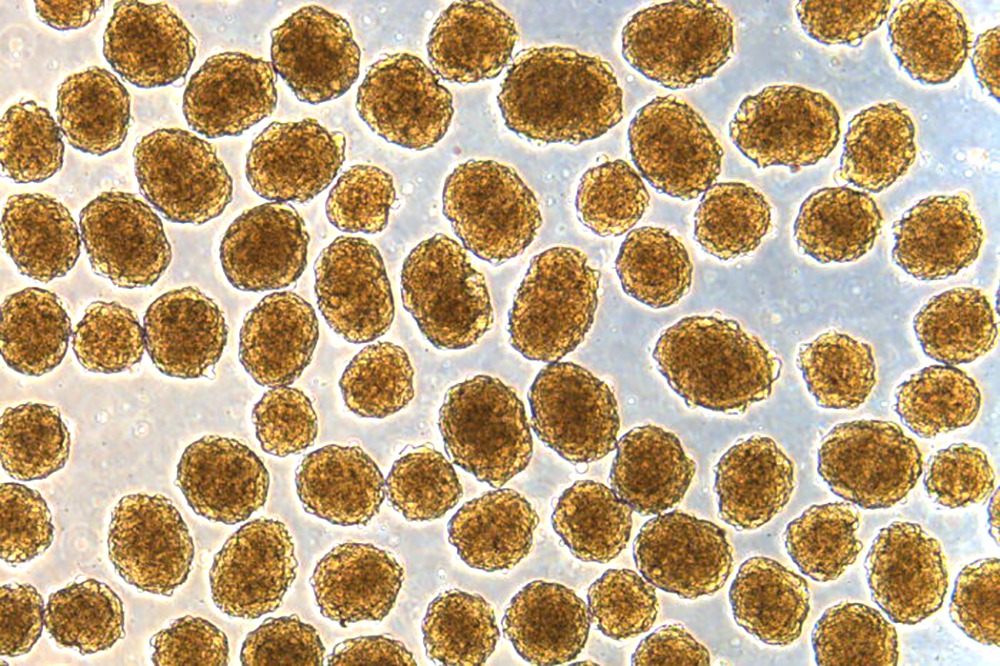
Jeffrey R. Millman, Ph.D., principal investigator and an assistant professor of medicine and biomedical engineering at Washington University, said:
These mice had very severe diabetes with blood sugar readings of more than 500 milligrams per deciliter of blood — levels that could be fatal for a person — and when we gave the mice the insulin-secreting cells, within two weeks their blood glucose levels had returned to normal and stayed that way for many months.
The discovery of how to convert human stem cells into pancreatic beta cells to produce insulin was part of a previous study by the same researchers. Since then, the team has improved the process of converting human stem cells into insulin-producing cells with a new and more efficient technique, and it even makes more effective blood sugar controlling cells.
Millman said:
A common problem when you’re trying to transform a human stem cell into an insulin-producing beta cell — or a neuron or a heart cell —is that you also produce other cells that you don’t want. In the case of beta cells, we might get other types of pancreas cells or liver cells.
The more off-target cells you get, the less therapeutically relevant cells you have. You need about a billion beta cells to cure a person of diabetes. But if a quarter of the cells you make are actually liver cells or other pancreas cells, instead of needing a billion cells, you’ll need 1.25 billion cells. It makes curing the disease 25% more difficult.
The new technique targets the cells’ cytoskeleton – its internal scaffolding – which is what gives a cell its form. The cytoskeleton is also what allows the cell to convert physical cues into biochemical signals; in other words, it dictates how the cell interacts with its surrounding environment. Understanding this has been key to enabling the team to produce more beta cells.
Millman said:
It’s a completely different approach, fundamentally different in the way we go about it. Previously, we would identify various proteins and factors and sprinkle them on the cells to see what would happen. As we have better understood the signals, we’ve been able to make that process less random.
We were able to make more beta cells, and those cells functioned better in the mice, some of which remained cured for more than a year.
As a bonus, the new technique even works across stem cells from various sources, meaning it could be used in the study of other diseases as well.
There is still a long way to go before this strategy can be tested on humans with diabetes. Next, the study will involve experimenting with larger animals and examining the cells over more extended periods. At the same time, the researchers are looking into how they can automate the process. They envision humans being able to use the cells to control diabetes on their own, as they do now with insulin injections.


