
Bacteria are simple lifeforms, but their resourcefulness and endurance keep surprising scientists. In 2017 and 2020, researchers found bacteria that survive off only air in cold environments. And now, scientists at Michigan State University (MSU) have uncovered a species called Geobacter sulfurreducens, which can survive exposure to toxic cobalt by building a metal “suit” like a mini Iron Man.
The Geobacter genus is comprised of some exceptionally resourceful bacteria. They can build conductive nanowires, “breathe” rust, and even produce electricity, meaning they could be used for creating microbial fuel cells that produce electricity from humidity or mud. Similar to the Air-gen that comprises protein nanowires, produced by microbes, to generate electricity from water vapor in the air.
Cobalt is lethal to most bacteria and other organisms. Geobacter sulfurreducens can protect itself from the toxic metal by mining cobalt from the rust, and instead of letting it penetrate through their membranes, they cloak themselves in it.
Gemma Reguera, the study’s lead author, said:
They form cobalt nanoparticles on their surface. They metalize themselves, and it’s like a shield that protects them. It’s like Iron Man when he puts on the suit.
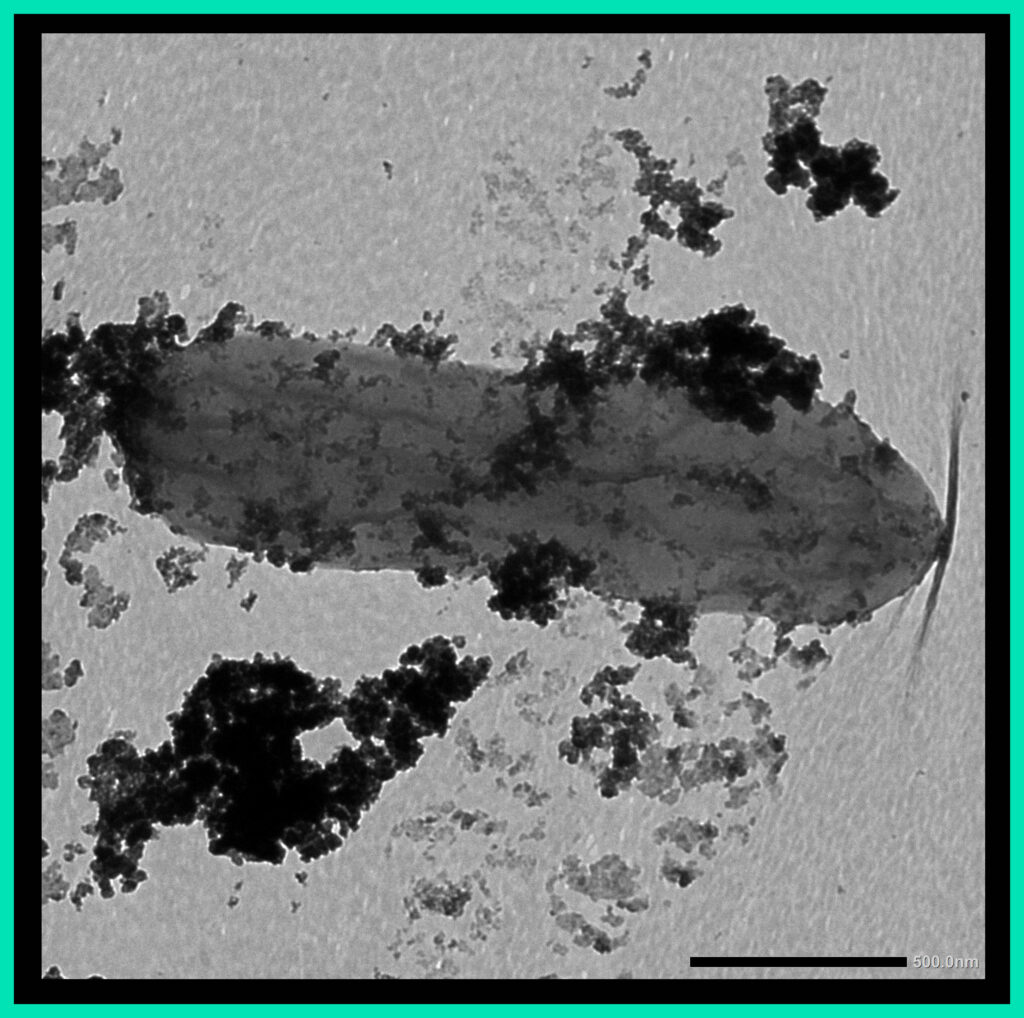
In the lab, MSU researchers exposed Geobacter to high cobalt levels to demonstrated its endurance and abilities. Microscopic images showed the bacteria covering themselves in the metal and continuing to thrive. Their findings are detailed in the journal Frontiers in Microbiology.
The team envisions the bacteria using this newfound skill to extract cobalt from discarded lithium-ion batteries for reuse or to absorb it from the environment. Next, the team will investigate if Geobacter could also soak up other toxic metals, such as cadmium.
Cadmium has toxic effects on the kidneys and the skeletal and respiratory systems. It’s classified as a human carcinogen (meaning it has the potential to cause cancer in humans). It is mostly present in the environment at low levels; however, human activity has caused those levels to rise significantly.


