
Every living thing needs to obtain energy from somewhere to survive. For plants, that’s sunlight. For animals, energy comes from food, whether it’s meat, plants, or both. Bacteria get their energy from a mix of these fundamentals or through “fixing” inorganic compounds in the soil.
In 2017, researchers from the University of New South Wales (UNSW) discovered bacteria in Antarctica that gained their energy from the air itself. In low-nutrient soil, these organisms instead pull carbon dioxide, carbon monoxide, and hydrogen out of the air, allowing them to thrive in environments where most would surely die. This process is called atmospheric chemosynthesis.
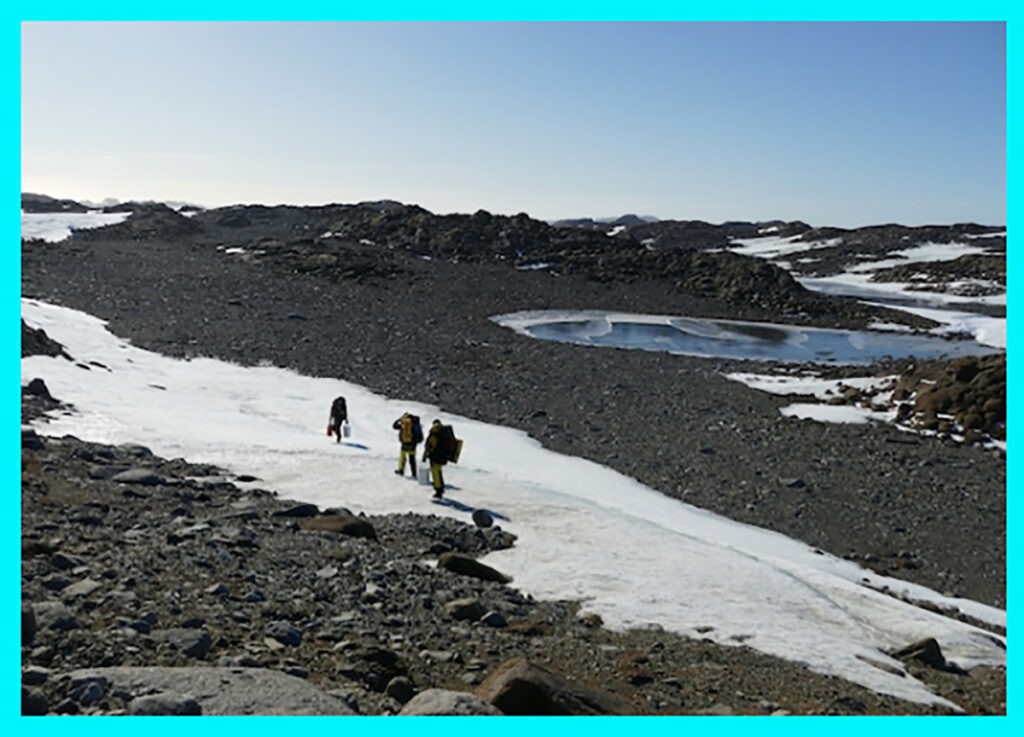
In the latest follow-up study, published in the journal Frontiers in Microbiology, researchers found that this ability may not be limited to Antarctica. The team found evidence that the two genes previously linked to atmospheric chemosynthesis are abundant in soil from the Arctic and the Tibetan Plateau.
The evidence was collected from 122 soil samples from 14 sites in these three regions. The researchers extracted and sequenced DNA from the samples and found that the two genes of interest were in all 122 samples.

Angelique Ray, the lead author of the study, said:
“By looking at the environmental parameters in the soil, that’s how we knew there were low carbon, low moisture, and other factors at play. So, we correlated the target genes for the carbon fixation process against the different sites and found the locations which are drier and lower in nutrients – carbon and nitrogen – had a greater potential to support this process, which made sense.”
The findings could help researchers better understand the planet’s carbon budget by revealing a previously unknown carbon sink and what kind of life forms may possibly exist on Mars or anywhere else in the solar system.
However, we may know sooner rather than later, as NASA’s Mars 2020 Perseverance rover is currently on its way to the Red Planet. Once it lands, it will analyze the soil for signs of ancient microbial life.
For now, the UNSW researchers plan to identify the bacteria that can live on atmospheric chemosynthesis. Some other known species that live on atmospheric chemosynthesis include red worms found in toxic caves in Colorado that survive by eating Sulphur-oxidizing bacteria and species of the deep-sea hydrothermal vent ecosystems. Among them is an archaeon that fixes nitrogen at temperatures above 90 degrees Celsius, using an enzyme that stays intact where almost all proteins would fall apart, as researchers in Bremen discovered. In 2019, scientists found evidence of sulfate-reducing microbial life existing 2,400 meters (7,875 feet) below the surface in a Canadian mine in Ontario.
Extremophiles are organisms that live in extreme environments. Most extremophiles are autotrophs, which are organisms that produce their own food using sunlight, carbon dioxide, water, or other chemicals. They survive and thrive in sulfuric acid gases, high temperatures, high salinity, hydrogen sulfide, and methane.
Assoc. Prof. Belinda Ferrari, the study’s senior author, said:
“As part of the next phase, we aim to isolate one of these novel bacteria in the laboratory – to obtain a pure culture. This is difficult because the bacteria are used to growing on very little, and an agar plate is different to their natural environment. Hopefully, then, we can fully understand the conditions these bacteria need to carry out this unique process of living on air.”
If you are interested in life forms that survive in the harshest of environments, check out the tardigrade. I wouldn’t be surprised if NASA’s Perseverance rover finds one of these ‘water bears’ on Mars, too!


