
When you manage commercial or multi-family properties, roof upkeep often feels like a reactive expense waiting for a leak. Unaddressed membrane wear, clogged drains, and waterlogged insulation quietly inflate your HVAC energy bills and threaten your structural decking, especially where harsh freeze-thaw cycles test every seam.
Taking a steady, preventive approach changes the math on your building overhead. You can cut wasted energy, catch hidden building maintenance problems early, and protect your roof assembly without disrupting daily business or tenant routines.
How Do You Build a Preventive Maintenance Plan?
A reliable maintenance schedule pairs routine seasonal walk-throughs with targeted upkeep that fits around your operations. Coordinate seasonal checks in spring and fall, your team or contractor can clear debris, reseal minor penetrations, and plan protective roof coatings before peak weather arrives.
For Northeast Ohio facility managers and multi-family property owners looking to pair regular inspections with coatings or flat-roof repairs, working with trusted local specialists for Parma commercial roofing keeps maintenance practical and well-documented. Scheduling work during off-peak hours also lets your tenants and staff carry on without noise or access bottlenecks.
Using Coatings and Scheduled Care to Extend Lifespan
- Schedule biannual walk-throughs: Book spring and fall inspections, plus checks after severe storms, to catch minor wear early.
- Keep drainage clear: Schedule routine debris removal around drains and scuppers so standing water never lingers.
- Apply protective coatings: Recoat aging membranes on schedule to restore reflectivity, seal minor surface wear, and stretch service life.
- Log every visit: Maintain a simple repair and inspection log so you know each roof section’s condition and budget ahead.
Coordinating Trades Around Rooftop Equipment
HVAC technicians, plumbers, and solar or telecom crews frequently cross your roof to service equipment. Require clear access paths, walk pads where helpful, and post-work checks so dropped tools or unsealed lines do not create fresh leaks.
How Do Compromised Roof Layers Drive Up Energy Waste?
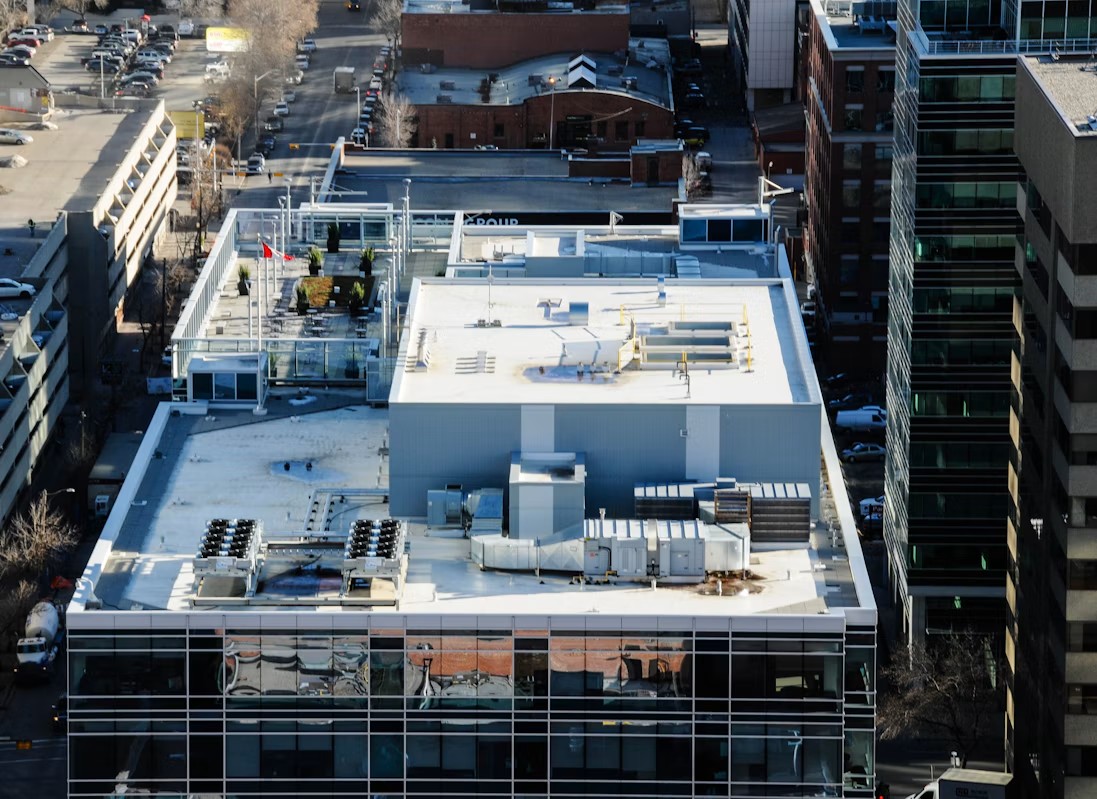
Your roof assembly works as a unified thermal barrier over your tenants and equipment. When moisture slips past aging surfaces or degrades polyiso insulation boards, heat moves far faster through the ceiling than your building design intends.
Dirt and grime on reflective TPO membranes create another quiet drain on efficiency. A roof coated in soot, pollen, or organic buildup loses much of its solar reflectance, forcing your cooling equipment to run longer during hot afternoons.
Why Wet Insulation Hurts Heating and Cooling
Water conducts heat far better than dry foam or fiber insulation. Once moisture saturates polyiso layers or dampens substrate materials, your thermal resistance drops sharply, and your heating and cooling systems work overtime to hold steady indoor temperatures. Reflective and cool roof coatings can trim cooling utility costs as well, though the savings vary widely with climate, roof insulation levels, and how much dirt the surface carries. Keeping those surfaces clean and dry helps your mechanical systems cycle less often and keeps monthly utility bills predictable.
What Early Warning Signs Threaten Your Roof Structure?
Small flaws on a flat or low-slope roof rarely stay harmless for long. Ponding water sitting on a membrane after rain adds dead weight to the structure and speeds up wear on nearby materials.
Heat-welded seam separation and flashing cracks give wind-driven rain easy entry points around curbs, vents, and parapet walls. When water enters those openings and freezes overnight, expanding ice pries joints wider and pushes moisture down toward your roof decking and interior ceilings.
Checking Drainage, Seams, and Flashing
- Clear roof drains: Remove leaves, twigs, and grit around scuppers, drains, and downspouts so water moves off the deck quickly.
- Inspect welded seams: Walk key zones to spot lifting edges, blisters, or open laps along membrane seams before wind catches them.
- Examine wall flashing: Check metal counterflashing and sealants around HVAC curbs and penetrations where movement often opens gaps.
- Watch interior ceilings: Track ceiling stains, damp drywall, or musty odors on top floors as early clues of hidden roof moisture.
Handling Freeze-Thaw Cycles on Low-Slope Roofs
Winter freeze-thaw swings punish standing water and hairline splits alike. You should check low spots and drainage paths before temperatures fall and again right after heavy snow or ice melts so trapped water cannot soak into vulnerable joints.
Using Infrared Moisture Scans to Catch Hidden Leaks Early
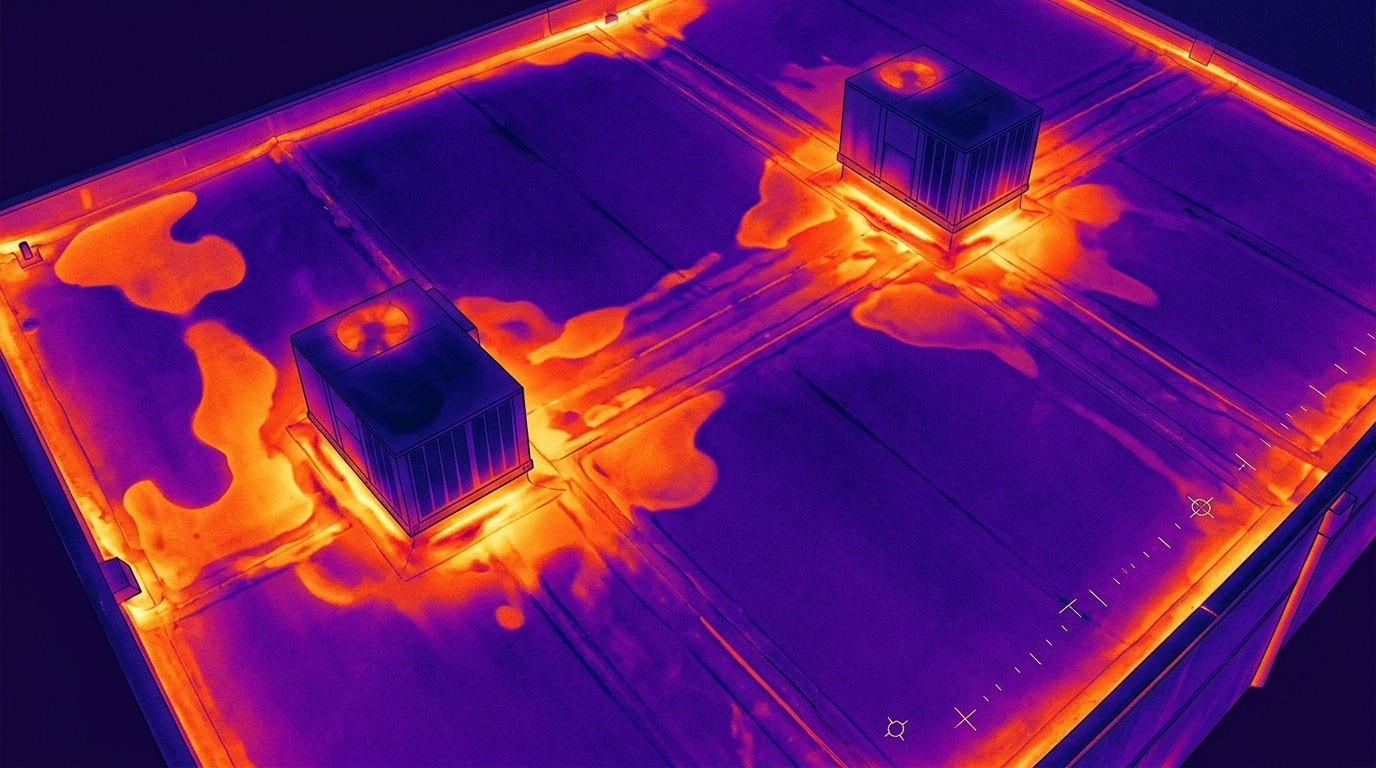
Surface walk-throughs are essential, yet water can travel several feet beneath a single-ply or modified bitumen membrane before showing up as a ceiling stain indoors. Scheduling a non-destructive infrared thermography scan every couple of years lets you pinpoint trapped moisture while the damage is still localized and affordable to fix. As commercial building envelope specialist Nicholas J. O’Hare notes in FacilitiesNet’s guide on preventive roofing inspections, “Repairing these small defects before they become major issues will save thousands of dollars down the road”. Catching saturated insulation early keeps a minor patch from escalating into a full tear-off.
Knowing When to Restore Instead of Replace
When a low-slope roof nears the end of its initial warranty period, property managers often assume a disruptive, full-scale tear-off is the only path forward. However, if the underlying decking and insulation remain dry and structurally sound, fluid-applied restorative coatings can seal hairline wear and extend service life, typically for 25 to 30 percent of the cost of a full tear-off and replacement. According to BUILDINGS’ breakdown of restorative roof coatings, “If your roof has more than 15- to 25-percent wet insulation, it should be replaced — the cost benefits of restoration are not viable at this point”. Tracking moisture levels over time preserves your eligibility for cost-effective restoration before saturation crosses that threshold.
Protecting Manufacturer Warranties Through Documentation
Most commercial roofing warranties require proof of regular maintenance to remain valid if a material defect or weather claim arises later. Without dated inspection reports, debris-clearing logs, and photos of completed repairs, manufacturers can deny coverage on the grounds of owner neglect. Keeping a centralized digital binder with every biannual check, contractor invoice, and rooftop access log protects your warranty coverage while giving asset managers clear data for multi-year capital budgeting.
Steady seasonal inspections and targeted membrane care protect your building equity, hold onto thermal efficiency, and keep emergency structural replacements off your calendar. With a clear plan in place, you stay ahead of wear and keep your properties comfortable and reliable year-round.

