
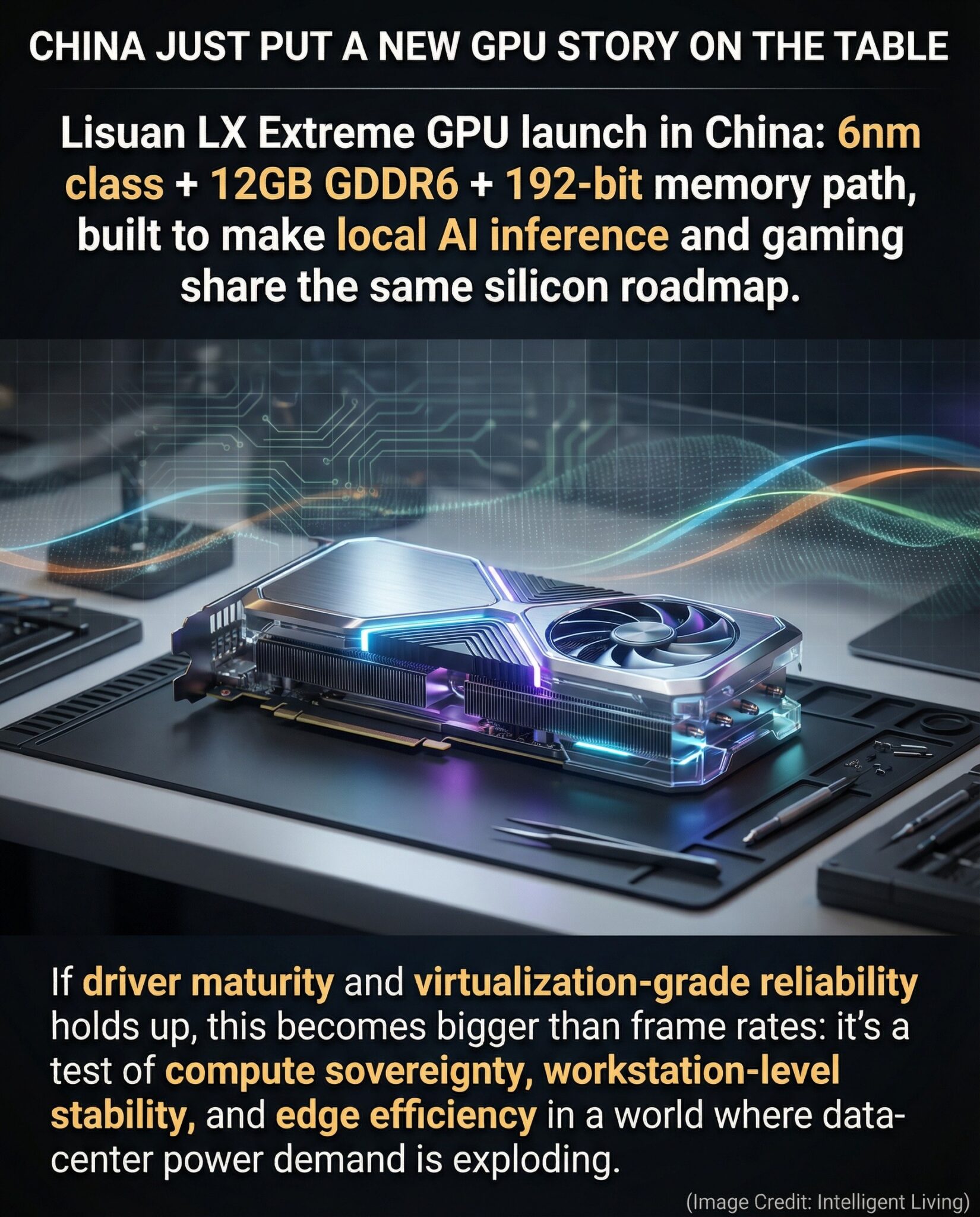
Lisuan Technology unveiled the LX family of graphics processors, a multi-tier lineup designed to redefine domestic hardware standards in China. Featuring the 12GB “Lisuan Extreme” gaming card alongside pro-grade LX Ultra and Pro models, this series integrates advanced ECC memory and multi-instance virtualisation. This launch marks a strategic shift toward high-performance, locally developed silicon that bridges the gap between consumer entertainment and enterprise-level AI inference.
Hardware availability underscores the push for semiconductor self-sufficiency and personal compute sovereignty. The transition to advanced 6nm architecture enables households and development teams to evaluate sustainable personal AI hardware. This architecture transforms the workstation from a niche tool into a versatile foundation for modern digital infrastructure, ensuring that high-speed throughput remains accessible outside of centralised data centres.
China Launch Analysis and Initial Market Evaluation
Technical Specifications and Official Launch Timeline
- Initial reports specify a March 17 preorder window and June 18 retail date in China while noting that repeatable third-party benchmark coverage was limited at announcement time.
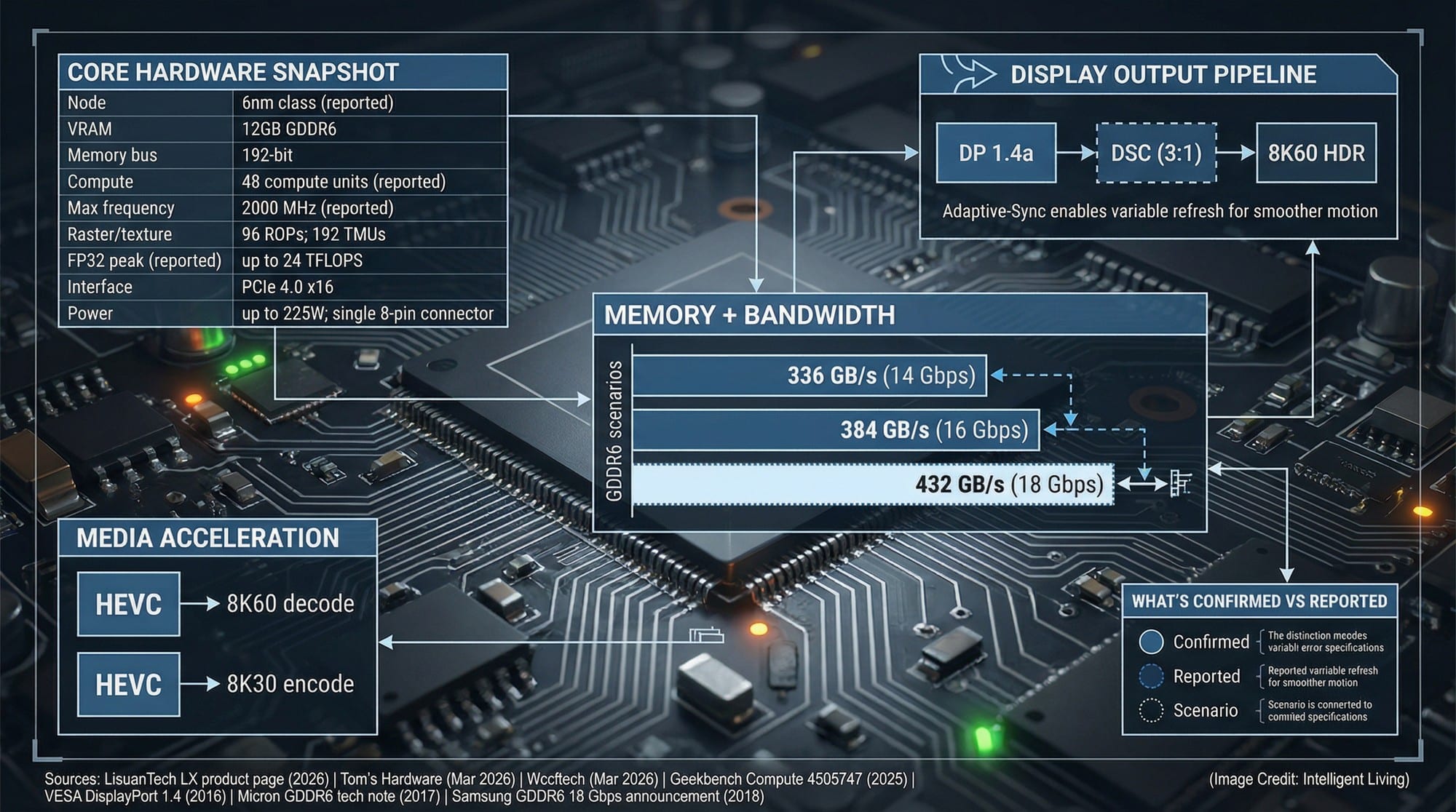
- Technical materials list: 12GB GDDR6, four DisplayPort outputs, HEVC encode and decode support, and modern APIs such as DirectX 12 and Vulkan 1.3 including GDDR6 support and modern API standards.
- DisplayPort 1.4-class output often relies on Display Stream Compression to push higher pixel rates without changing the physical connector.
- Provisional performance comparisons require verification via standardised testing and driver maturity within public benchmarks.
Strategic Roadmap for Unified Hybrid Architectures
A Unified Architecture for Hybrid Workloads
Market viability depends on stable driver ecosystems and toolchain integration alongside raw silicon development. Unified memory and driver stability support both consumer and enterprise tiers within a single hardware roadmap.
The Workload-Blending Bet
Positioning focuses on workload blending. Market analysis describing Lisuan’s 7G100 as a hybrid silicon architecture captures the core bet: one graphics stack that also claims relevance for on-device AI.
Infrastructure Shifts toward Edge Efficiency
Edge deployments now extend beyond industrial labs into consumer environments, shifting the focus from peak theoretical performance to consistent environmental throughput. The same underlying shift shows up in decentralised AI infrastructure now appearing in consumer electronics, where hardware reliability is paramount.
The LX hardware bridge supports multi-generational use cases. The architecture serves distinct priorities within a single system:
- Enthusiasts optimize frame pacing and thermals for AAA gaming.
- Professionals utilise local transcription and 4K video editing to eliminate cloud subscription costs.
Technical Architecture of the Lisuan Extreme GPU
Consumer Hardware Specifications and Performance Metrics
The LX consumer variant integrates a modern display engine with hardware acceleration designed for creator-focused workflows:
- Modern display engine with four DisplayPort outputs.
- 12GB GDDR6 frame buffer for AAA gaming and 1440p assets.
- Hardware media acceleration supporting HEVC and AV1 codecs.
This configuration ensures the headroom required for high-resolution content production and consistent frame rates. Media acceleration utilises the H.265 video compression standard to manage high-resolution assets efficiently. High-speed GDDR6 delivers the bandwidth necessary for modern textures, prioritising signal integrity through high-speed VRAM layout documentation.
Full-lane PCIe 4.0 configurations eliminate the performance bottlenecks associated with high-speed CPU-to-GPU data movement. This standard ensures newer GPUs and fast storage operate as a matched set during heavy data transfers.
Why these Numbers Matter for Everyday Builds
Significant VRAM headroom supports high-resolution assets and hybrid workloads. High VRAM capacity supports shifts from high-end gaming to intensive professional production. Expansive multi-monitor configurations utilise the four DisplayPort outputs to support concurrent gaming, video editing, and live-streaming dashboards.
Long-term hardware viability is often limited by memory pressure rather than raw compute throughput. This constraint drives high-capacity RAM configurations reaching 256GB for local AI development. Multi-functional workstations frequently manage concurrent tasks, including 1440p gaming, 4K video rendering, and meeting summarisation via local AI models. Sustained performance in these mixed environments depends more on memory capacity, codec optimisation, and driver stability than theoretical peak speeds.
Analysis of TrueGPU Hardware Optimisation Features
Lisuan brands a set of features under names such as TrueGPU, Ultimate Cache, NRSS upscaling, and Max-E power optimisations. These labels represent three primary engineering targets:
- Cache and compression technologies mitigate memory pressure by prioritising proximity between active datasets and compute blocks, reducing latency caused by external VRAM access.
- AI-driven upscaling reconstructs high-resolution images from lower-resolution renders using NRSS algorithms. Output quality varies based on model training, inferencing approaches, and driver-level integration.
- Max-E power-balancing features maintain high clock speeds within strict thermal and voltage envelopes to ensure sustained performance stability.
PCIe Bandwidth and VRAM Access Optimisation
Resizable BAR functions as a critical PCIe base address negotiation capability, allowing the CPU to access the entire GPU frame buffer per transaction.
Variable Refresh Rate Without the Buzzwords
Technical implementation of Variable Refresh Rate (VRR) relies on DisplayPort Adaptive-Sync to eliminate screen tearing and stuttering during frame time fluctuations.
Why AI Scaling Breaks the Simple Math
Scaling AI performance requires more than raw core counts, as inference throughput is often constrained by bandwidth and data coordination overhead. Efficiency in multi-GPU communication frequently degrades as scaling overhead increases, highlighting the importance of advanced cache behaviour and optimised memory access.
Enterprise Workflow Integration and Driver Infrastructure
Professional Differentiators for the LX Ultra, Pro, and Max Series
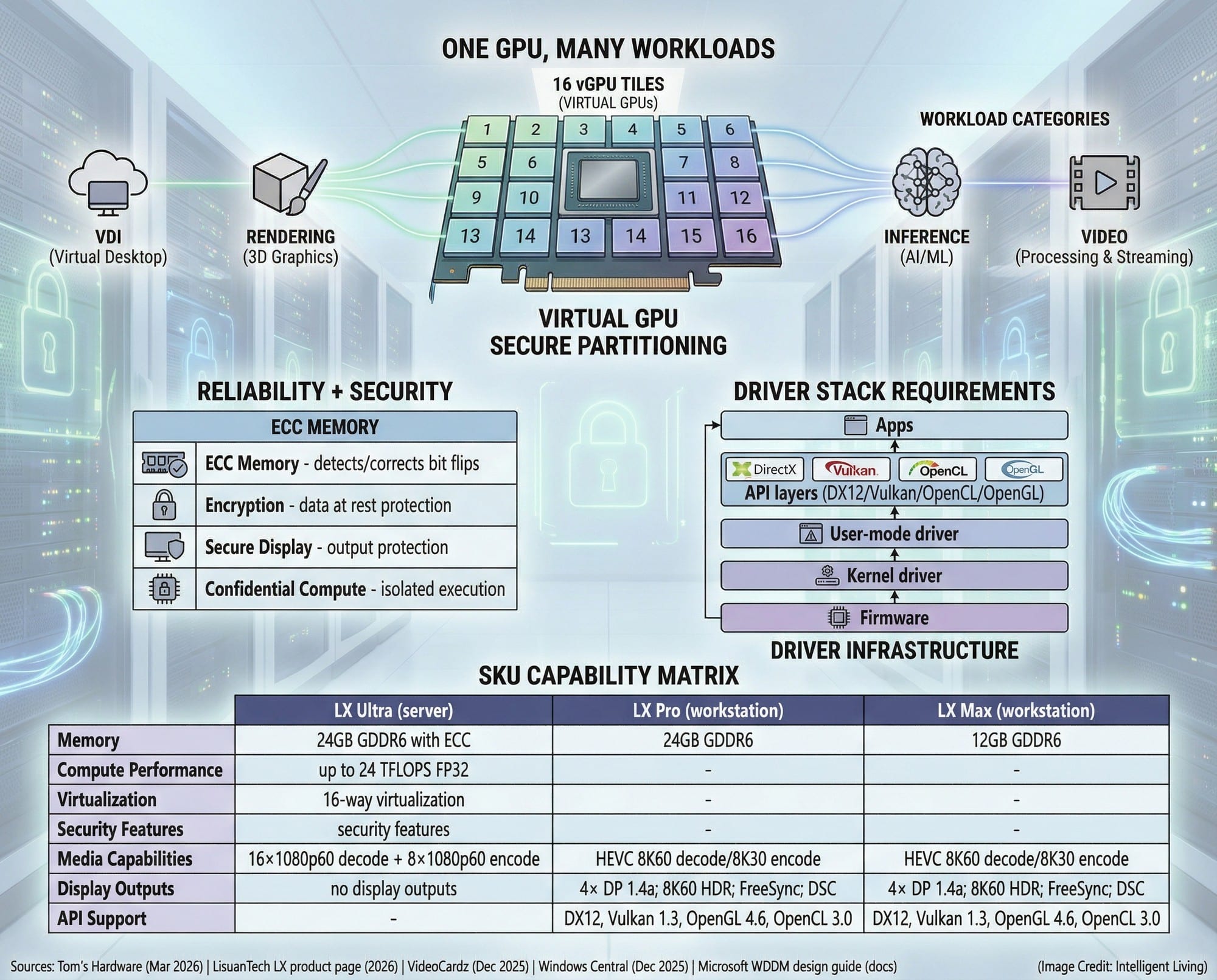
Pro-facing SKUs prioritise hardware utilisation, consolidation, and secure compute over raw frame rates. Press rollups identify enterprise LX workstation variants as core differentiators.
Secure Partitioning for Enterprise Compute
Secure partitioning enables a single physical GPU to host multiple isolated workloads concurrently. In many enterprise deployments, accelerator virtualisation signals a focus on higher utilisation rather than one user per card.
Error Correction Code (ECC) memory proactively detects and corrects bit flips during long-running workstation tasks. This reliability prevents output corruption in high-precision compute pipelines where bit flips can go unnoticed.
Why Utilisation is an Energy and Cost Story
Multi-tenant hardware scheduling minimises costs per rendered frame and inference token by hosting concurrent workloads. Utilisation economics guide modern accelerator assessments, where inference power efficiency remains a critical sustainability lever for cloud-scale designs.
Idle hardware represents inefficient energy consumption and lost operational output. Systems managing daytime production can pivot to host scheduled inference jobs or virtual workstations at night, maximising the return on investment through multi-tenant scheduling.
Software Ecosystem Compatibility and Ecosystem Viability
The LX API suite establishes a baseline for ecosystem compatibility that requires sustained driver maturity to succeed.
Why API Support Still Needs Context
Support depends on specific hardware feature levels that define baseline capabilities in real titles. Vulkan matters for cross-platform performance and for engines that prioritise low-level control. The Vulkan 1.3 roadmap bundled commonly requested features into core requirements to standardise modern render paths.
Specialised creator pipelines, simulation stacks, and niche engines lean on OpenCL 3.0’s unified specification or OpenGL 4.6 core behaviour.
Anti-Cheat and Real-World Friction
Gaming adoption requires seamless anti-cheat compatibility and frequent driver updates to maintain stability. Inconsistent driver updates or anti-cheat incompatibilities create operational friction that can undermine the credibility of a new GPU architecture. Stability work flows through the Windows Display Driver Model architecture, requiring deep systems engineering.
Performance Benchmarking and Global Market Positioning
Comparative Technical Analysis: Lisuan Extreme vs. NVIDIA RTX 4060
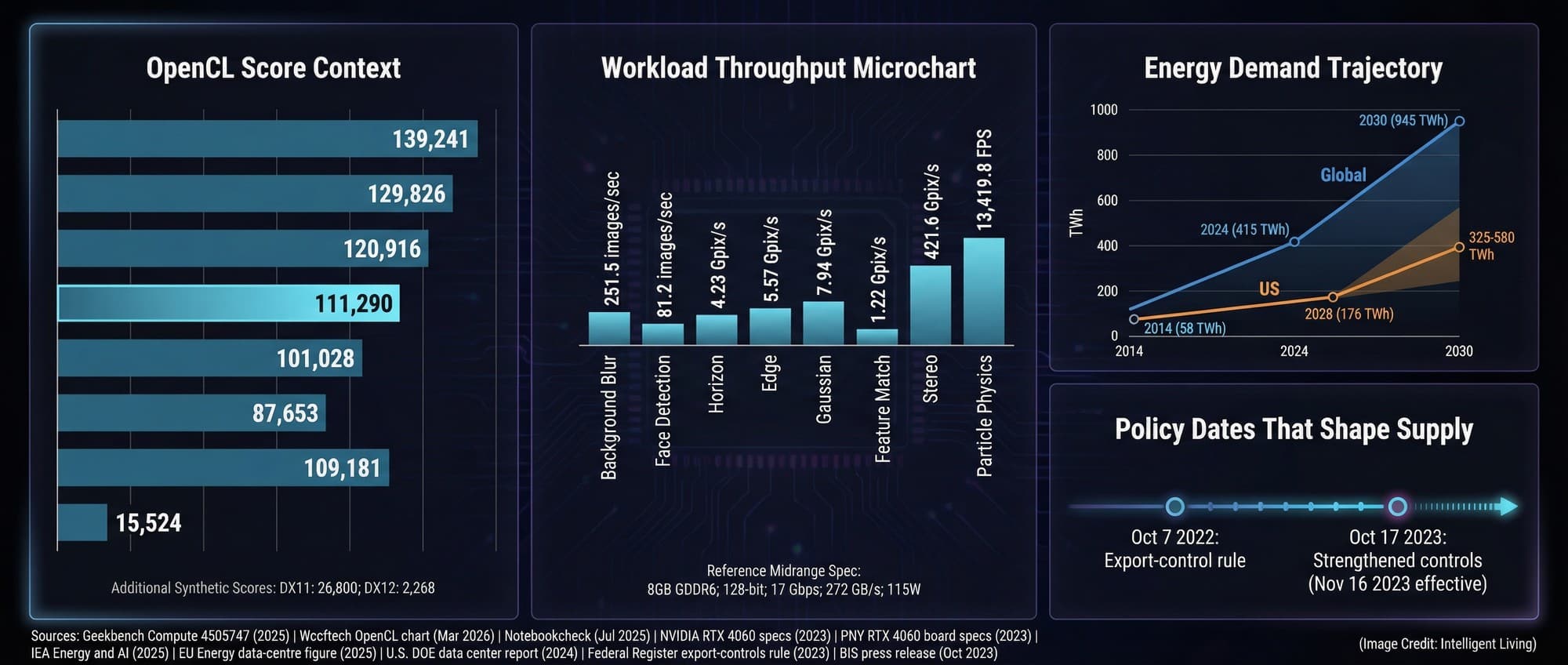
The following data provides system-design context rather than a definitive performance verdict. Coverage of board-level details commonly cites specific interface widths and power envelopes. For an established baseline, NVIDIA’s official RTX 4060 family specs provide a reference point for bus width and compute metrics. Retail board configurations reveal lane maps such as the RTX 4060 board spec with PCIe Gen4 x8.
| Attribute | Lisuan “Extreme” Consumer Card (as reported/listed) | RTX 4060 Baseline (official/retail example) |
|---|---|---|
| VRAM | 12GB GDDR6 | 8GB GDDR6 |
| Memory Bus | 192-bit reported | 128-bit |
| PCIe Link | PCIe 4.0 x16 reported | PCIe Gen4 commonly x8 on retail boards |
| Board Power | Up to 225W reported | Around 115W on many retail cards |
| What This Suggests | More headroom on memory interface and power budget | Higher efficiency targets and mature ecosystem |
What this Does and Does Not Prove
Increased bus width and frame buffer capacity improve bandwidth potential, especially in workloads that spill large datasets through VRAM. Provisional specifications cannot predict frame pacing, latency spikes, or real inference throughput without disclosed memory speeds and stable drivers. VRAM supply constraints are reshaping modern compute expectations for local AI development, as seen in VRAM supply constraints during hardware procurement.
Close-Out: What this Means if it Holds Up
Sustained LX family stability in production workloads carries broader market implications.
- Local Compute Viability: High-capacity VRAM variants reduce local workflow constraints. In parallel, compact AI supercomputers highlight how quickly personal inference expectations are moving toward dedicated local stacks.
- Utilisation and GreenOps: Modern compute operations increasingly utilise carbon-aware GreenOps frameworks to manage power intensity. Operational sustainability is measured by work-per-watt metrics over time.
- Strategic Autonomy Under Policy Pressure: Strict semiconductor export controls dictate procurement plans and drive the necessity for domestic fabrication.
- This dynamic is visible in advanced compute packaging bottlenecks that currently restrict global GPU availability.
- Competition to expand advanced packaging capacity continues as manufacturers race to resolve production shortages.
- Chiplet integration frequently increases critical mineral intensity, impacting supply resilience. These pressures drive the development of domestic chip ecosystems as essential national infrastructure.
- The Energy Trade-Off: Global forecasts link AI infrastructure demand to accelerated growth in data centre power consumption. Domestic planning now accounts for projected electricity demand increases tied directly to compute expansion.
- Cooling and power management involve complex resource trade-offs that are now central to data centre siting. In drought-prone regions, inefficient cooling strategies can significantly strain local water supplies.
- The move toward photonic data centre networking aims to resolve interconnect bottlenecks.
- These trade-offs drive the exploration of extraterrestrial compute feasibility as a potential solution to terrestrial power limits.
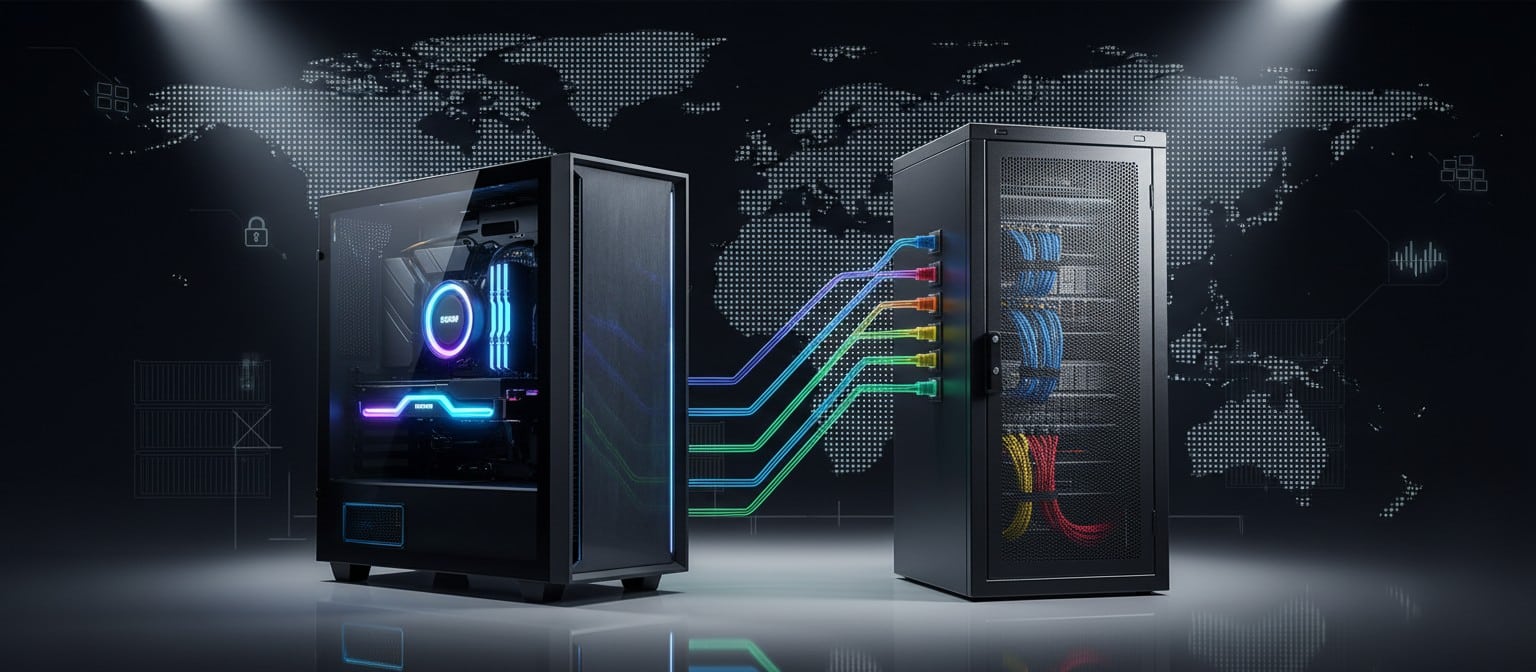
Strategic Development of Domestic Semiconductor Ecosystems
The LX family’s market viability hinges on concurrent driver stability and hardware availability. While paper specifications suggest a robust architecture, the real-world utility will be proven through sustained performance in diverse environments. If the TrueGPU architecture maintains its claimed efficiency across gaming and pro-tenant virtualisation, it will offer a credible alternative to international incumbents, especially as regional supply chains prioritise domestic integration.
The definitive market success of this launch depends on several critical indicators:
- Independent benchmarks that test frame pacing, driver stability, and real engine workloads.
- Clear disclosure of clocks, memory speed, and sustained performance at typical temperatures.
- Evidence that pro features translate into reliable multi-tenant deployments.
- Pricing, warranty behaviour, and supply consistency outside early launch channels.
Expanding local compute stacks to 12GB and 24GB capacity mitigates critical bottlenecks in modern AI development. By pairing consumer-friendly gaming features with enterprise-grade security and ECC support, Lisuan is positioning itself at the centre of a new hardware category. This move not only supports individual creators but also reinforces strategic autonomy in a landscape where high-end accelerators are increasingly treated as instruments of national policy. The success of this launch will be measured by its ability to turn powerful silicon into a dependable, everyday infrastructure.
Frequently Asked Questions: Lisuan LX Extreme GPUs and Availability
When will Lisuan LX cards be available for purchase?
Preorders begin March 17 with a June 18 retail launch in China; international distribution dates remain unconfirmed.
How does the Lisuan Extreme compare to the RTX 4060?
The Lisuan Extreme offers a larger 12GB GDDR6 buffer and a wider memory bus, though real-world performance depends on final driver maturity.
Which AI models are compatible with the LX pro-grade hardware?
The architecture is designed to support local inference for large models, including Qwen3, DeepSeek, and OpenClaw, within optimised environments.
What are the primary differences between LX gaming and pro SKUs?
Pro variants include 24GB VRAM options, ECC memory for error correction, and vGPU support for secure multi-tenant virtualisation.
Does the Lisuan Extreme support modern gaming APIs?
Yes, it features full compatibility for DirectX 12, Vulkan 1.3, OpenGL 4.6, and OpenCL 3.0 to support current AAA titles.


